
The United States said on Tuesday that progress had been made in efforts to secure an agreement on reopening the Strait of Hormuz, raising hopes of easing tensions with Iran and helping drive global oil prices lower.
US Secretary of State Marco Rubio said discussions involving Iran and Oman had produced progress, although no final agreement had yet been reached.
"No final agreement has been concluded yet," Rubio said, adding that Washington hoped one could be reached "very soon".
US Treasury Secretary Scott Bessent told CNBC that an agreement to reopen the strategically important waterway could be reached "today or tomorrow".
Mediation efforts continue
Qatar, which is acting as a mediator alongside Oman and Pakistan, said efforts remained under way to find a short-term solution that would allow dialogue to resume.
Qatari foreign ministry spokesperson Majed Al Ansari described ongoing attempts to secure a breakthrough that would facilitate renewed negotiations.
On Tuesday, US President Donald Trump and Qatar's Emir Sheikh Tamim bin Hamad Al Thani discussed efforts to achieve a de-escalation between Washington and Tehran during a telephone conversation, according to the Qatari royal court.
Oil prices retreat
As diplomatic contacts intensified, oil markets reacted positively.
The price of Brent crude, the international benchmark, fell 5.26% to $79.36 per barrel, its lowest level since 10 July.
Investors appear to be betting that a reopening of the Strait of Hormuz would reduce disruption risks to global energy supplies.
Background to the dispute
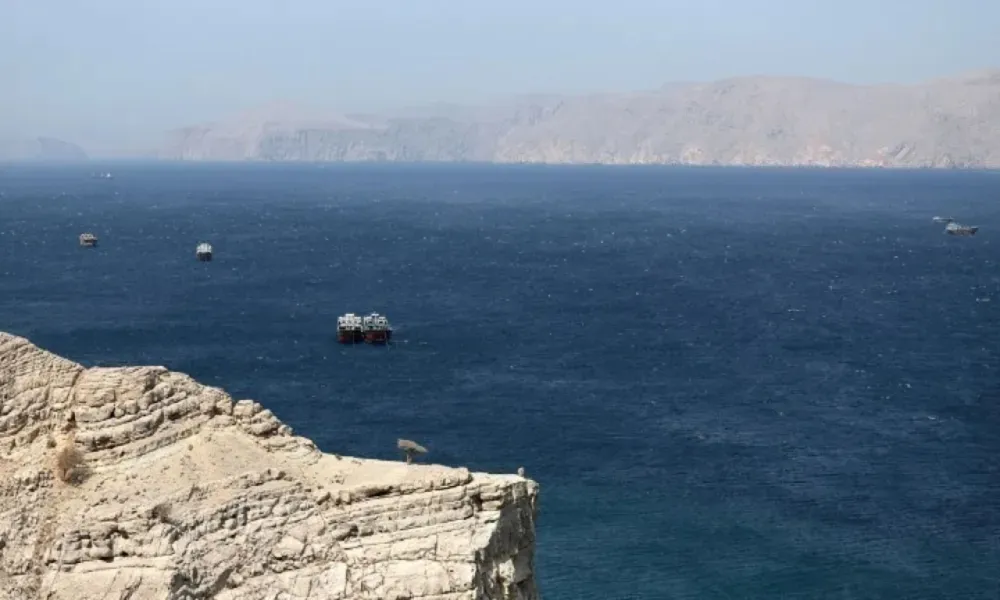
The crisis centres on the Strait of Hormuz, one of the world's most important maritime routes for oil and gas shipments.
A preliminary understanding between Washington and Tehran, described as the Islamabad Memorandum of Understanding, had initially been intended to launch a renewable 60-day process aimed at ending hostilities in the Middle East and addressing unresolved issues, including Iran's nuclear programme.
It also allowed shipping traffic to resume through the strait after Iran effectively closed the waterway following the outbreak of hostilities on 28 February. In response, the United States imposed restrictions on Iranian Gulf ports.
However, the truce collapsed in early July when fighting resumed. Iran again restricted access through the strait following renewed US air strikes, and vessels attempting to pass without Tehran's approval have faced increasing risks.
During the night between Monday and Tuesday, a cargo vessel was struck by a projectile and caught fire after attempting to transit the area, according to the British maritime security company Vanguard Tech. One crew member remains missing.
Iran rejects direct talks with Washington
Tehran has denied that it is currently conducting direct negotiations with the United States.
Iranian foreign ministry spokesperson Esmaeil Baghaei said:
"We are not negotiating with the United States at this time. We are negotiating with Oman to guarantee safe passage through the Strait of Hormuz."
The comments reportedly angered President Trump, who had alternated between threats of military action and calls for a diplomatic resolution.
Last week, Trump warned that Iran could be hit hard militarily, before later announcing that planned large-scale strikes coordinated with Israel had been postponed.
Dispute over navigation rights
Iran has made clear that it does not favour a return to pre-war arrangements and wants vessels crossing the Strait of Hormuz to use a route running along its coastline.
Tehran also seeks to maintain greater control over traffic through the waterway and to introduce transit fees, proposals rejected by Washington and other countries, which argue that such measures conflict with international maritime law.
Baghaei said over the weekend that negotiators were attempting to reach agreement on a route acceptable to both sides while respecting national sovereignty and security interests.
Tensions spread to the Red Sea
Meanwhile, instability has also intensified in the Red Sea.
An Indian vessel sank on Tuesday after being attacked, according to a Yemeni official cited by AFP.
Indian authorities said all 14 crew members were rescued.
Yemen's internationally recognised government blamed the attack on the Houthis, while the Iran-aligned movement has recently announced a blockade of Saudi ports and carried out attacks on Saudi oil tankers.
In response, Saudi Arabia has launched strikes against Houthi military infrastructure and announced the formation of a naval coalition.