
Limassol has long been a city whose growth has outpaced its infrastructure, leaving it vulnerable to both private-sector pressures and shortcomings in public planning.
From chronic traffic congestion and residents being priced out of the city, to an investment boom that authorities failed to anticipate adequately, many of Limassol's challenges stem from rapid expansion without corresponding infrastructure upgrades. According to the commentary, the city's beaches have become another casualty of that trend over the past decade.
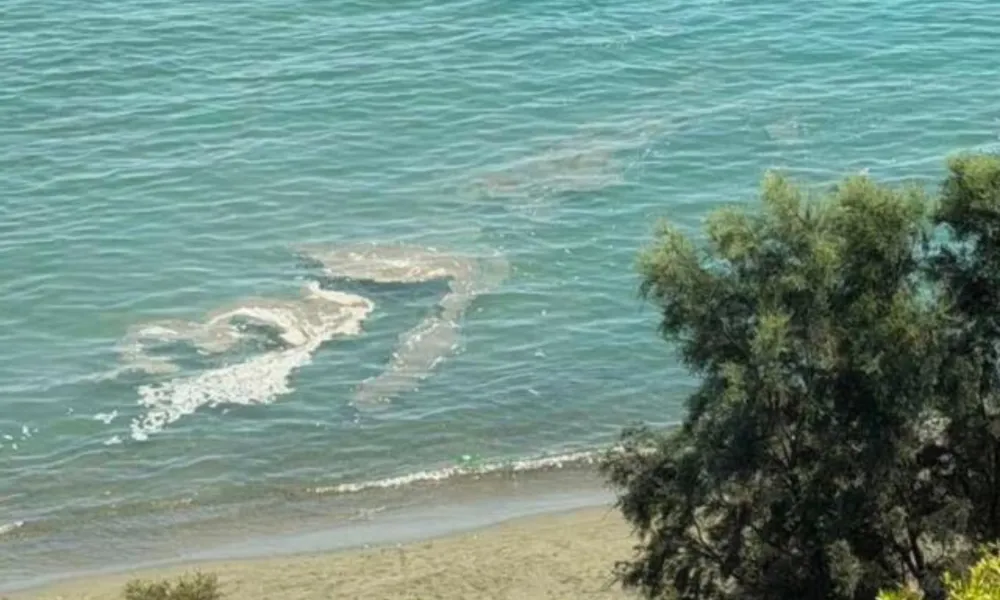
While older residents may argue that concerns over coastal pollution are not new, the scale and frequency of the problem appear more pronounced today. What may once have been isolated incidents linked to specific conditions has, in the view of many beachgoers, become a more persistent issue.
Official water-quality tests continue to classify coastal waters as being of "excellent" quality. However, the article argues that public perception is also shaped by what swimmers can see, smell and experience firsthand.
The author does not challenge the validity of the measurements conducted by the competent authorities but suggests that water circulation, natural renewal of seawater and the methodology used in testing may not always align with public impressions at affected beaches.
A multi-layered problem
According to the commentary, the pressures on Limassol's coastline are the result of multiple factors, but the common thread is the absence of comprehensive planning for a city that grew more rapidly than authorities were prepared to manage.
The sea off Limassol faces pressure from a range of activities, including:
- Increased shipping traffic.
- Operations linked to the port anchorage area.
- Vessels remaining offshore for extended periods.
- Waste and wastewater management associated with maritime activities.
The article argues that these issues have existed for years and require stricter oversight.
At the same time, the growth in leisure boating, together with increased activity around the marina and old harbour, has created additional environmental pressures that have not always been matched by adequate monitoring mechanisms.
Infrastructure questions remain
The commentary also raises questions about:
- Pipelines discharging into the sea.
- Stormwater management systems.
- Whether existing infrastructure can cope with a city that now accommodates significantly larger numbers of residents, visitors and commercial activities than it did a few decades ago.
According to the author, responsibility for marine management is fragmented across multiple government bodies and agencies.
These include the Shipping Deputy Ministry, the Department of Fisheries and Marine Research, the Department of Environment, the Cyprus Ports Authority, local authorities and other stakeholders.
While each institution has a role to play, the article argues that the broader picture is often lost amid divided responsibilities.
Beyond pollution
The commentary contends that when environmental problems emerge, public debate frequently centres on which authority was responsible, which agency should have carried out inspections and who should have acted sooner.
For a coastal city whose economy and identity are closely linked to the sea, the author argues that such an approach is insufficient.
Ultimately, the article suggests that pollution itself is not the only concern.
Rather, the deeper issue is a mindset that treats the sea primarily as a space for economic development through marinas, ports, investment projects and tourism.
Limassol's growth has been driven by high-rise developments, technology companies, forex firms and international investment. The question posed by the author is whether the city can preserve the natural assets that made it attractive in the first place.
The commentary concludes that if economic growth leaves behind a coastline that residents and visitors hesitate to enjoy, the result may not represent genuine progress, but rather a cost passed on to future generations.