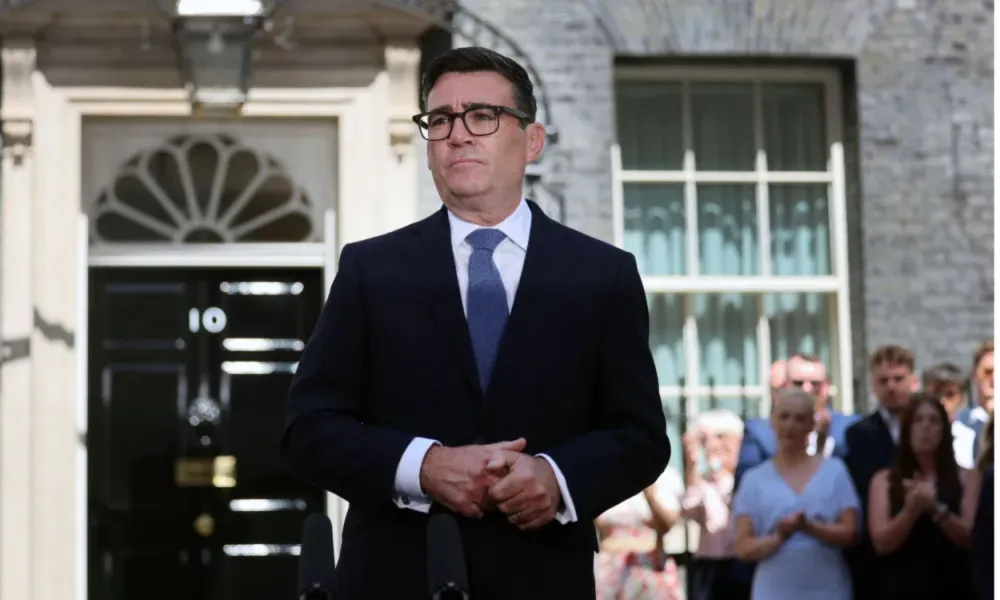

Andy Burnham officially took office as Britain's prime minister, pledging to "bring hope back" to the country and promising the biggest changes to Britain's political and economic model in the past 40 years, according to the BBC.
In his first speech outside Downing Street, Burnham announced that he would unveil a 10-year "new plan for Britain" later this year, setting out a vision for "the country we all want to live in."
He also promised measures within days to tackle the cost-of-living crisis and ease pressure on households, while explaining how those policies would be funded.
"Let's build a new national spirit of unity, common purpose and optimism. Let this be the moment when Britain begins to believe again, the moment we bring back hope," Burnham said.
John Healey appointed Chancellor
According to the BBC, Burnham moved quickly to form his new government, removing several figures seen as loyal to former prime minister Sir Keir Starmer.
Rachel Reeves left the Treasury, while former Deputy Prime Minister and Justice Secretary David Lammy and Communities Secretary Steve Reed also exited the cabinet.
Reeves was replaced by John Healey, a long-serving Labour figure who had left Starmer's government following disagreements over defence spending.
Healey will now be tasked with finding the additional resources needed to meet Britain's defence commitments without breaking fiscal rules.
Speaking to the BBC, Healey said he and the prime minister would work "in complete alignment" to maintain fiscal discipline while creating a buffer against economic uncertainty.
He added that the government's goal was to make life more affordable for working people across Britain.
Ed Miliband moves to Foreign Office
Ed Miliband was transferred from the Energy Ministry to the Foreign Office, replacing Yvette Cooper, who became Health Secretary.
Miliband told the BBC it was the "honour of a lifetime" to become foreign secretary, a post previously held by his brother, David Miliband, between 2007 and 2010.
Shabana Mahmood remained home secretary, while Louise Haigh took on a key coordinating role as First Secretary of State, Chancellor of the Duchy of Lancaster and Cabinet Office minister.
Angela Rayner returned to government as Housing Secretary, a role she had also held during the Starmer administration.
Rayner had resigned in September 2025 after admitting she had underpaid tax on an £800,000 apartment in Hove.
Former Health Secretary Wes Streeting, who had been viewed as a potential rival to Burnham in the Labour leadership race, was appointed Defence Secretary.
Ending homelessness a top priority
According to the BBC, Burnham's first policy commitment as prime minister was to end rough sleeping.
He had made a similar pledge during his tenure as Mayor of Greater Manchester, although he had not fully achieved that goal.
The new prime minister also identified increasing youth employment, building more council housing and meeting Britain's defence spending commitments among his priorities.
"We will help people live well by building a more preventative state that invests in people's success rather than paying for failure," he said.
Burnham also indicated that changes to the personal income tax allowance were under consideration ahead of his government's first budget this autumn.
The issue had featured prominently during his successful election campaign in Makerfield.
However, he acknowledged that raising the tax-free allowance would be difficult under current economic conditions.
Asked whether the change could be funded by restoring the top rate of income tax to 50%, Burnham said it was too early to comment.
Britain's current tax-free allowance stands at £12,570.
Social care reform
Burnham also said he did not want to leave office without reforming Britain's social care system.
He argued that Westminster governments' record on the issue over the past 30 years "cannot be justified."
Liberal Democrat leader Sir Ed Davey, however, criticised Burnham's opening speech for failing to place sufficient emphasis on social care, Europe and environmental protection.
Meeting King Charles
Just over a month after returning to the House of Commons as MP for Makerfield, Burnham was received by King Charles at Buckingham Palace.
According to the BBC, the meeting lasted nearly 35 minutes, during which the King formally invited him to form a government.
Burnham accepted and then travelled to Downing Street, where he was greeted by cheering supporters.
Unlike his predecessors, he used neither a lectern nor notes during his first speech outside Number 10.
"I am fully aware that I am the sixth person in the last ten years to walk down this road and the seventh prime minister since 2016. This is a moment for reflection and renewed determination," he said.
Burnham argued that his generation of politicians must "raise the bar" and respond to new challenges.
"Britain must show the world it can regain its stability. That is our challenge: to make politics work and make it work better."
He described his premiership as a "reset switch for Britain" that would bring the most significant changes to the country's political and economic model in four decades.
After completing his speech, he kissed his wife, Marie-France van Heel, greeted supporters and entered the prime minister's residence.
Opposition reactions
Conservative leader Kemi Badenoch welcomed Burnham to the role but argued that he had failed to present a clear programme for government.
"Britain needs a leader who can make difficult decisions, not someone trying to please everyone," she said.
Badenoch also criticised Burnham's pledge to reverse policies associated with Margaret Thatcher.
Nigel Farage, leader of Reform UK, called for a general election, arguing that Burnham could not introduce "the biggest political changes in 40 years" without a fresh public mandate.
Green Party leader Zack Polanski said Britain needed bold policies and suggested Burnham's speech would leave many voters doubtful about his willingness to challenge entrenched wealth and power.
First call with Trump
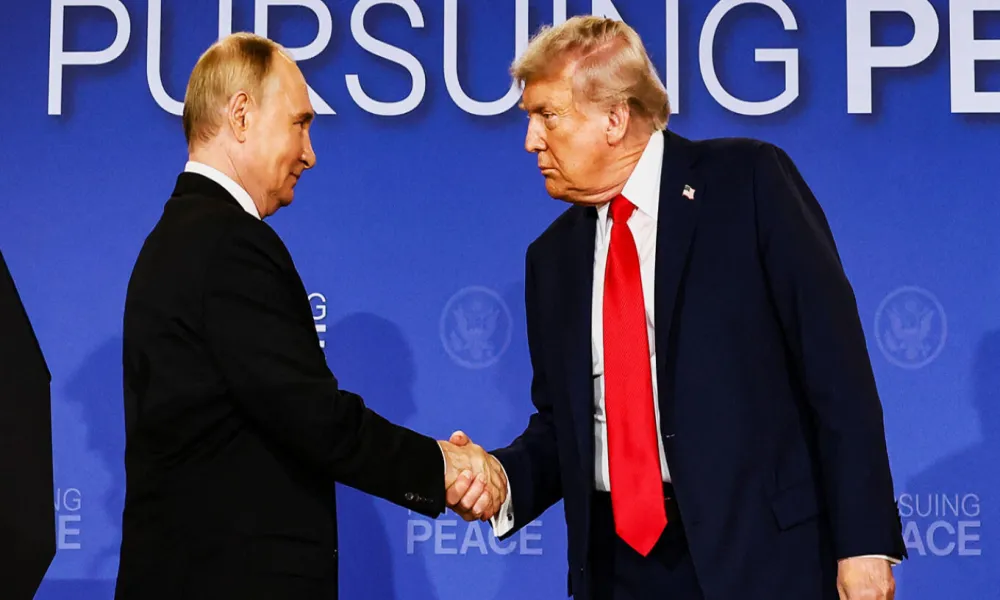
Shortly after taking office, Burnham held a telephone conversation with US President Donald Trump.
According to a Downing Street spokesperson quoted by the BBC, the new prime minister outlined his vision for Britain and stressed that the security of the UK and its allies would be at the top of his agenda.
The two leaders also discussed developments in the Middle East and the World Cup.
Burnham told Trump he hoped to show him what Manchester has to offer during a future visit.
The British prime minister also spoke with Ukrainian President Volodymyr Zelenskyy.
In a social media post, Zelenskyy said he greatly appreciated assurances that support for Ukraine and the Ukrainian people would remain steadfast.
European Commission President Ursula von der Leyen described her first conversation with Burnham as "very good," adding that both sides were committed to strengthening ties between the European Union and Britain.
Starmer's departure
The day of political change began with Sir Keir Starmer leaving Downing Street, two years after Labour's landslide election victory in July 2024.
Surrounded by aides and supporters, the outgoing prime minister said Burnham had his full backing.
"I leave with dignity. I leave with a smile and proud of everything we achieved," Starmer said, according to the BBC.