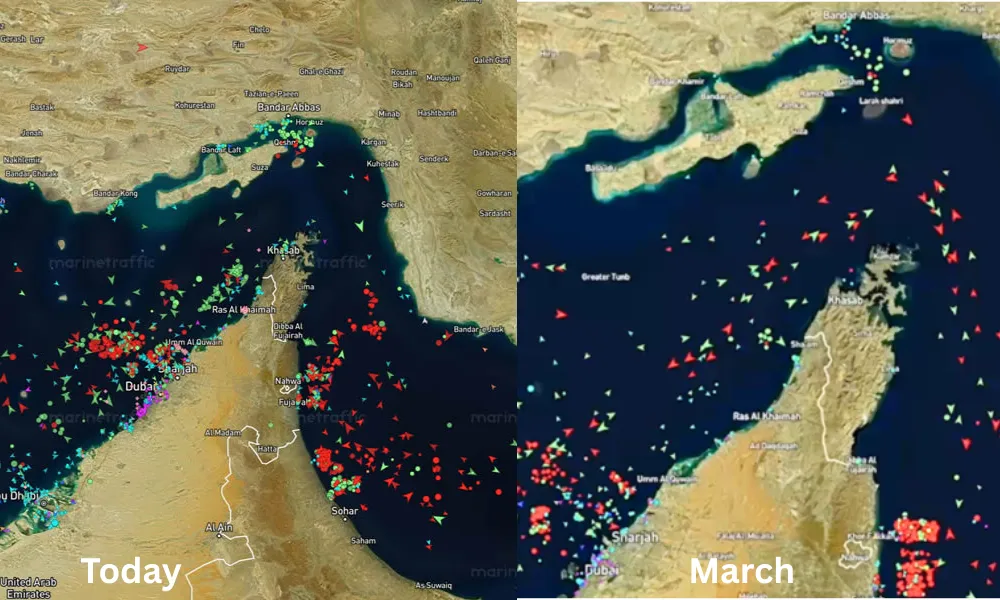


Three Saudi-flagged supertankers carrying a combined 6 million barrels of crude oil sailed through the Strait of Hormuz on Thursday, hours after US President Donald Trump signed an agreement with Iran intended to end the war that has disrupted global energy markets.
In Lebanon, however, where more than a million people have been displaced by fighting, Israeli forces carried out fresh airstrikes on Thursday morning, raising fresh doubts over how far Trump is willing to go in pressing his wartime ally to end an offensive he has pledged to stop.
Trump signed the memorandum of understanding with Iran on Wednesday, as did Iranian President Masoud Pezeshkian, bringing the agreement into force two days earlier than had been expected. It provides for the immediate reopening of the Strait of Hormuz and the lifting of a US blockade on Iranian ports.
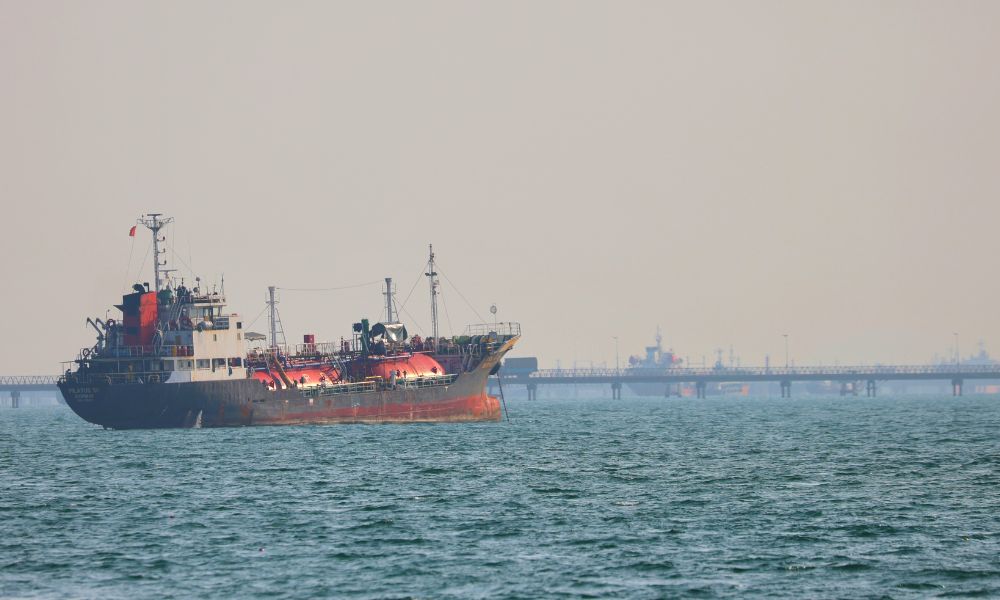
Shipping industry sources say it will take time for transit through the strait to return to pre-war levels, since safe passage still needs to be confirmed and mines cleared. Even so, there were early signs of change. Vessels that had previously switched off their transponders to conceal their location were broadcasting their positions again as they prepared to cross.
Benchmark Brent crude futures fell a further 2%, dropping below $78 a barrel, their lowest level since the conflict began.
The agreement opens a 60-day window for negotiations toward a final settlement of the war, which Trump launched in February together with Israeli Prime Minister Benjamin Netanyahu.
Israel, however, was excluded from the talks that produced the agreement, even though it has led its own offensive in Lebanon since March, seizing a large part of the south in pursuit of Hezbollah fighters who had opened fire across the border in support of Iran. Iran had consistently insisted that any peace deal also cover Lebanon, and in what appears to be a significant concession, the memorandum signed by Trump explicitly calls for a permanent end to the war in Lebanon and for the country's territorial integrity and sovereignty to be guaranteed.
Lebanon has emerged as one of the most sensitive issues in the wider peace effort. Trump has become increasingly critical in recent days of Israel's conduct there, accusing it of destroying entire buildings unnecessarily in its campaign against Hezbollah.
Israel has said it has no intention of withdrawing from Lebanon regardless of what Trump negotiates, and on Thursday released a new map showing an expanded area of southern Lebanon under occupation by its troops, which it describes as a buffer zone.
Two Israeli officials, including one close to Netanyahu, told Reuters that Israel was in talks with Washington over keeping its troops in Lebanon. The official close to Netanyahu described the discussions as "stubborn" and said Israel would not back down, while the other official said the outcome would depend on whether Trump chooses to force the issue by threatening consequences for Israel.
Fighting in Lebanon eased at the start of the week, when Trump first announced that a deal had been reached, but it picked up again over the following days and continued on Thursday morning even after his signature on the agreement.
Lebanon's state news agency, NNA, reported that three people were killed in Israeli airstrikes on the southern towns of Kfartebnit and Zebdine on Thursday. Reuters journalists also reported hearing an Israeli drone flying low over Beirut and its southern suburbs.
For many displaced Lebanese, the sense that the war is far from over is widespread. Mohammed Doghman, who fled the southern city of Nabatieh for Beirut, put it simply: "Iran and the Americans are done. Fine. In Lebanon it's not over yet." He said people deserved a clear answer on whether the war had truly ended or whether it would resume.
In Qlailieh, near the southern port city of Tyre, a small number of displaced residents had returned to inspect the remains of their homes, reduced to rubble that many compared to the destruction in Gaza. One Tyre resident, Abdelkarim al-Dahi, likened Israel and Hezbollah to the cat and mouse from the Tom and Jerry cartoons, saying simply: "They don't stop."
Netanyahu has long touted an especially close relationship with Trump, one that has produced significant shifts in US policy in Israel's favour during the Republican president's first term and ultimately led to the joint decision to go to war with Iran this year. Trump's apparent change of position on Lebanon, however, has opened one of the widest rifts in US-Israeli relations in decades, with the agreement reached with Iran drawing criticism from across Israel's political spectrum. Israeli commentators have suggested the country may soon face a stark choice between maintaining military pressure at the cost of Trump's diplomatic backing, or preserving that relationship by winding down a campaign many in Israel regard as its most urgent priority.
When Trump launched the war against Iran nearly four months ago, he described his goals as dismantling Iran's nuclear programme, ending its capacity to strike its neighbours, halting its support for allied militant groups in the region and creating the conditions for Iranians to overthrow their hardline leadership. Although he had initially called for Iran's unconditional surrender, Trump ultimately signed an agreement that met none of those original objectives.
US officials say the negotiations now under way could still produce a robust agreement on Iran's nuclear programme, arguing that Washington retains significant leverage over Tehran, including Trump's threat to resume bombing if he is dissatisfied with the outcome. Critics, including some hawkish figures within Trump's own party, counter that Iran emerges from the conflict in a stronger position than before, having withstood an attack by a superpower, asserted control over the strait and secured valuable exemptions from financial sanctions.
Source: Reuters