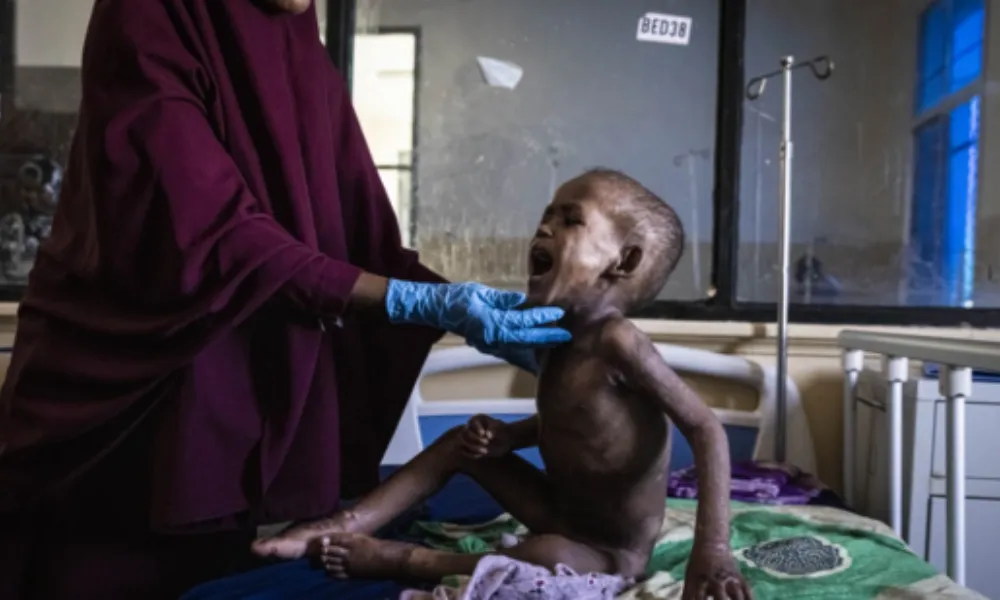
Global progress in reducing preventable deaths among children and adolescents has slowed significantly over the past decade, leaving many countries at risk of missing international child survival targets by 2030, according to research published in The BMJ.
Researchers analysed data from 200 countries and territories covering the period from 1990 to 2024, examining mortality trends from birth up to the age of 24 and identifying where progress has stalled.
Nearly 5 million under-five deaths in 2024
The studies, which included researchers from UNICEF, the World Health Organisation and the United Nations Department of Economic and Social Affairs, found that although deaths among children under five have fallen substantially over the past two decades, an estimated 4.9 million children in this age group died in 2024. Almost half of those deaths were among newborns.
The leading causes of death among children under five were complications from preterm birth, which accounted for around 860,000 deaths, and respiratory infections, which accounted for around 660,000. Most of these deaths occurred in sub-Saharan Africa and South Asia.
Researchers said the pace of improvement has slowed markedly. The under-five mortality rate fell by an average of 3.9% a year between 2000 and 2015, but by only 1.5% a year between 2015 and 2024.
If current trends continue, an estimated 27.3 million children will die before reaching the age of five between 2025 and 2030, while 60 countries are projected to miss child survival goals.
Deaths among older children and adolescents
The research also estimated that around 1.4 million children and adolescents aged 5 to 19 died in 2024. Among this age group, road traffic injuries accounted for 113,138 deaths, while malaria was also among the leading causes.
The researchers warned that, despite the overall decline in child mortality since the 1990s, progress remains deeply unequal across regions, age groups and sexes.
They also acknowledged limitations in the studies, including differences in the quality and availability of data between countries, as well as uncertainty linked to statistical modelling and projections. However, they said the findings offer one of the most comprehensive and up-to-date assessments of global child and adolescent mortality.
The authors called for renewed political commitment and sustained funding to reduce preventable deaths and protect every child’s right to survival.
In a linked editorial, experts described the slowdown in mortality reduction over the past decade as an unfolding tragedy and called on wealthy countries to significantly increase international development assistance.
Source: AMNA