
AKEL General Secretary Stefanos Stefanou has left open the possibility of running in Cyprus’s 2028 presidential election, stressing that the party’s immediate priority is to reach policy agreements with other political forces rather than select a particular candidate.
Speaking on Politis 107.6 & 97.6 radio’s Proini Epitheorisi programme, hosted by Katerina Iliadi, Stefanou said AKEL would seek cooperation with opposition parties. He also denied reports that the party had approached Taso Yiasemides about a potential presidential candidacy.
Stefanou does not rule out presidential bid
Asked whether he would consider running for president himself, Stefanou said he was not ruling out the possibility, adding that such an option remained under consideration within the party.
However, he stressed that AKEL first wanted to establish a common policy framework with other political forces before discussing potential candidates.
The aim, he explained, was to identify a candidate capable of attracting support from as many political parties as possible.
“For us, the compass will be the political agenda,” Stefanou said, referring to the party’s efforts to reach agreement on issues that define what it describes as progressive change.
He added that any eventual candidate would need to address key issues concerning the Cyprus problem, the economy and society.
Talks planned with ALMA, Greens and EDEK
Stefanou said AKEL was preparing to begin a round of consultations with opposition parties that disagree with the current government.
The party intends to pursue discussions with ALMA, the Greens and EDEK, although Stefanou noted that some parties were currently occupied with congresses and leadership elections. EDEK’s congress, he said, was scheduled for December.
On DIKO, Stefanou said AKEL was not ruling out dialogue but acknowledged two significant obstacles to cooperation.
First, he argued that DIKO was a key party supporting the government and backing policies that AKEL opposes.
Second, he said DIKO’s current leadership had moved significantly towards the political right in recent years. He also referred to statements by party officials supporting cooperation with the Democratic Rally (DISY).
No contact with Yiasemides
Stefanou rejected reports that AKEL had contacted Taso Yiasemides about a possible presidential candidacy.
He said neither he nor any other member of the party’s leadership had sounded out Yiasemides about the prospect.
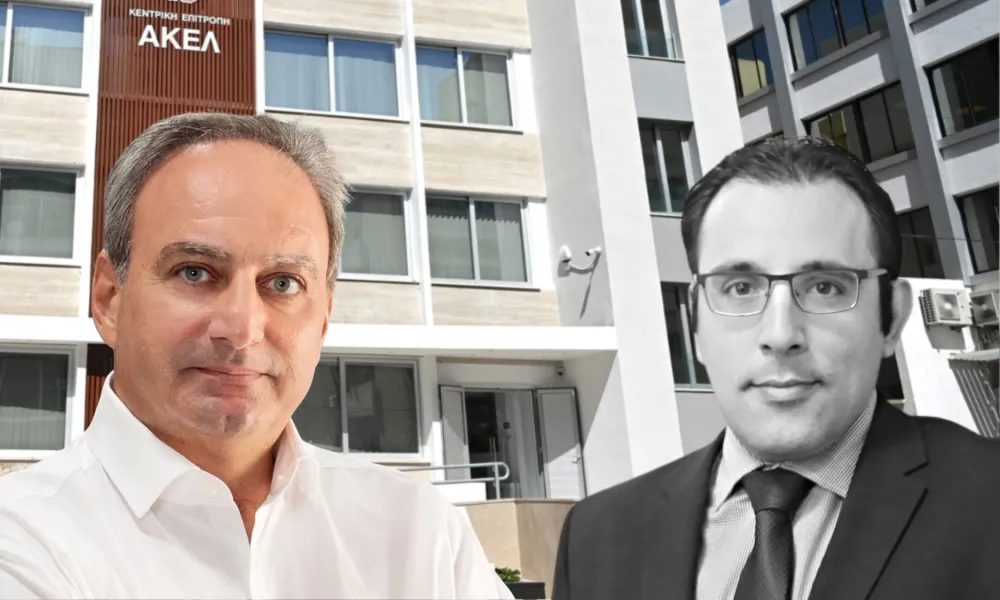
Stefanou added that he had seen Yiasemides in a photograph accompanying media reports and joked that, without it, he might have struggled to recognise him at a potential meeting.
He stressed that AKEL had not drawn up a list of potential candidates and that discussions about names would only follow consultations with other political parties.
Regarding Andreas Mavroyiannis, who has said he intends to run regardless of AKEL’s decision, Stefanou said this would not affect the party’s plans.
He described Mavroyiannis as an independent figure entitled to make his own decisions, adding that AKEL had maintained contact with him after the 2023 presidential election.
The party, he said, would not seek to force anyone to follow a particular course of action.
‘We are not late’ in preparing for 2028
Stefanou dismissed suggestions that AKEL had been slow to prepare for the 2028 presidential election, insisting that the party was operating within an appropriate timeframe.
He argued instead that other political forces had moved too quickly, creating the impression that AKEL was lagging behind.
According to Stefanou, some parties had effectively pushed the country into a premature and prolonged election campaign more than 16 months before the presidential vote.
AKEL renews calls for windfall taxes
Turning to the cost of living, Stefanou reiterated AKEL’s support for taxing windfall profits made by banks and energy companies, including businesses in the photovoltaic sector.
He said the party would not wait until the 2028 presidential election to pursue the issue. AKEL had already submitted relevant proposals and was pressing for them to move from the House of Representatives’ Finance Committee to the plenary session.
Stefanou said the objective was not to punish businesses generating substantial profits but to increase state revenue, allowing more funding for social policies and measures to tackle energy poverty.
He argued that addressing the cost of living required a combination of policies rather than relying solely on benefits and subsidies.
Measures should also include boosting incomes and developing infrastructure capable of providing services to citizens, he said.
French protests highlight wider social concerns
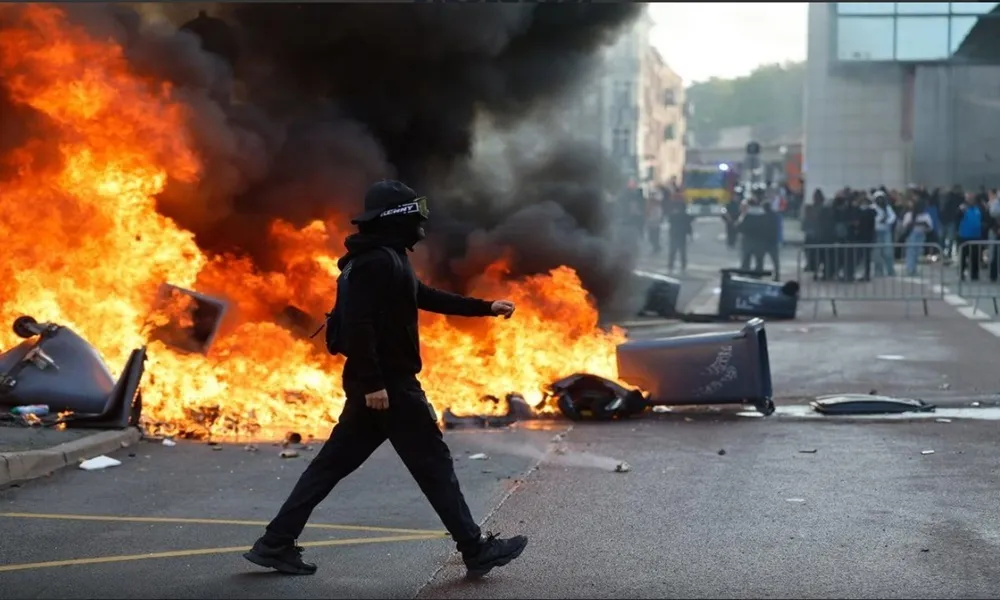
Commenting on protests in France, Stefanou said he did not condone violence and noted that, according to media reports, the organisers themselves had distanced themselves from incidents of unrest.
He argued that the demonstrations were linked to demands for better educational conditions as well as broader social pressures, including rising prices, low incomes and the increasing cost of living.
Attributing the protests exclusively to the actions of extremist groups, he said, overlooked the underlying social problems fuelling anger and frustration across several European countries.
Turning to Cyprus, Stefanou suggested that the lower level of public participation in mass demonstrations was linked to cultural traditions and psychological factors.
He also acknowledged that AKEL faced difficulties in mobilising citizens, despite its efforts to pressure the government to introduce measures addressing the rising cost of living.