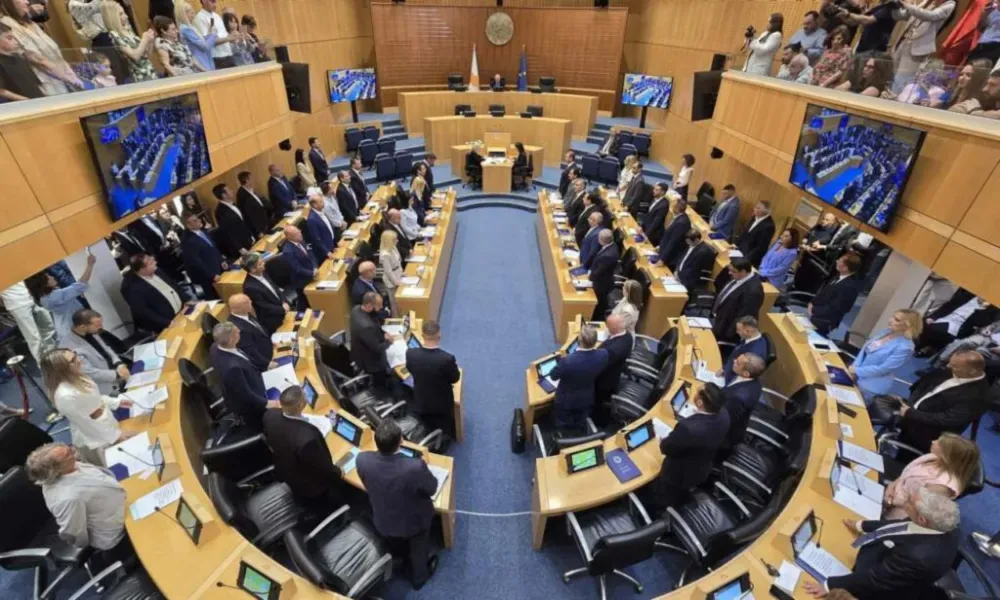

The new House of Representatives is set to face a demanding legislative agenda from September, with major reforms in justice, anti-corruption, migration, energy and housing already before parliament, alongside a substantial backlog of unfinished bills inherited from the previous legislative term.
Among the most significant new initiatives are the government's judicial reform package, proposals to strengthen the Independent Anti-Corruption Authority, changes to the financial sector, legislation promoting renewable energy, new migration rules and measures aimed at protecting tenants from excessive rent increases.
At the same time, lawmakers will have to revisit a number of long-standing issues left unresolved before the dissolution of the previous parliament.
Judicial reform and anti-corruption
A package of judicial reform bills submitted on 17 June is expected to be among the first major issues examined by MPs.
The proposed changes affect several core aspects of the justice system, including:
- The powers of the Chief Registrar.
- The operation of the Supreme Constitutional Court and Supreme Court.
- The Advocates Law.
- Public Service legislation.
- Interpretation legislation.
The package also includes amendments limiting the authority of the Ombudsman in matters relating to courts falling under the jurisdiction of the two supreme courts.
Anti-corruption measures are also expected to receive significant attention.
The ALMA – Citizens for Cyprus movement has submitted two legislative proposals aimed at expanding the powers of the Independent Anti-Corruption Authority, including giving it the ability to appoint criminal investigators to examine suspected corruption offences rather than simply forwarding findings to the Attorney General.
The Democratic Rally (DISY) has also tabled proposals intended to strengthen the authority's institutional and operational framework.
Financial sector and energy reforms
Legislative activity is also expected in the financial sector.
On 9 July, the Ministry of Finance submitted a series of bills covering:
- Banking supervision.
- Macroprudential oversight.
- Capital adequacy requirements for investment firms.
- Investment services and regulated markets.
Additional bills concerning the public service were submitted on the same date, addressing positions exempt from interdepartmental promotion procedures and the evaluation of candidates for appointments and promotions.
Energy policy is also on the agenda after the submission of legislation promoting the use of renewable energy sources, aimed at aligning Cyprus with European Union requirements.
Meanwhile, legislation extending the term of the Deputy Minister for European Affairs until 31 December 2026 remains pending after parliament rejected a request for urgent examination in July.
Housing and migration
Among the measures with direct social impact is a proposal by ALMA designed to protect tenants of primary residences from excessive rent increases.
The proposal introduces a special protection framework while avoiding an extension of existing rent-control provisions and without affecting contracts already in force.
Another proposal, submitted by DISY MPs Andreas Constantinou and Michalis Kounounis, seeks to speed up citizenship applications for athletes who represent or have represented Cyprus in European or international competitions, setting a three-month deadline for processing.
In taxation, DISY MP Fotini Tsiridou has proposed shorter deadlines for reviewing tax objections and appeals.
The National Popular Front (ELAM) has submitted legislation addressing capital gains tax issues relating to property-exchange agreements and development projects.
Migration remains a central issue.
On 14 July, the Interior Minister submitted legislation amending immigration laws to bring Cyprus into line with European rules governing the return of third-country nationals residing illegally within EU member states.
The same day, the House Interior Committee submitted amendments intended to improve the handling of dangerous buildings, particularly in the historic centres of major municipalities.
Another proposal seeks the creation of a National Library System providing a unified framework for the organisation and development of libraries across the Republic.
Backlog from previous parliament
The new parliament also inherits a range of unfinished reforms.
Foremost among them is the long-discussed reform of the Legal Service and the separation of the powers of the Attorney General, with a package of 38 bills remaining unresolved.
Reform of the prison system is also pending after the previous parliament requested revised proposals from the executive branch.
Health sector legislation
Several significant health-related files are also awaiting action.
These include:
- Nursing and Midwifery legislation.
- Rules governing the employment of nurses from third countries.
- Greek-language requirements for healthcare professionals.
- University clinics and university hospitals.
Disagreements remain, particularly regarding the role of private hospitals.
Parliament must also consider proposed amendments to legislation governing the State Health Services Organisation (OKYPY) to provide patient representation on its board.
Other pending health matters include legislation relating to:
- Biomedical laboratories.
- Biobanks.
- Blood donation.
- Recognition of the dietitian profession.
Social policy and displaced persons
Another unresolved issue concerns the Loss of Use Fund, which relates to properties owned by displaced persons.
The previous parliament was unable to bridge differences regarding compensation mechanisms, with the government favouring the use of existing structures managed by the Central Equal Distribution of Burdens Agency.
Other outstanding issues include:
- Property purchases by foreign nationals.
- Reform of legislation governing jointly owned buildings.
- Child benefit.
- Single-parent families.
- Guaranteed Minimum Income.
- Unemployment benefits.
Major reforms such as pension reform and changes to the framework governing collective agreements have yet to be formally submitted as comprehensive bills.
Source: CNA