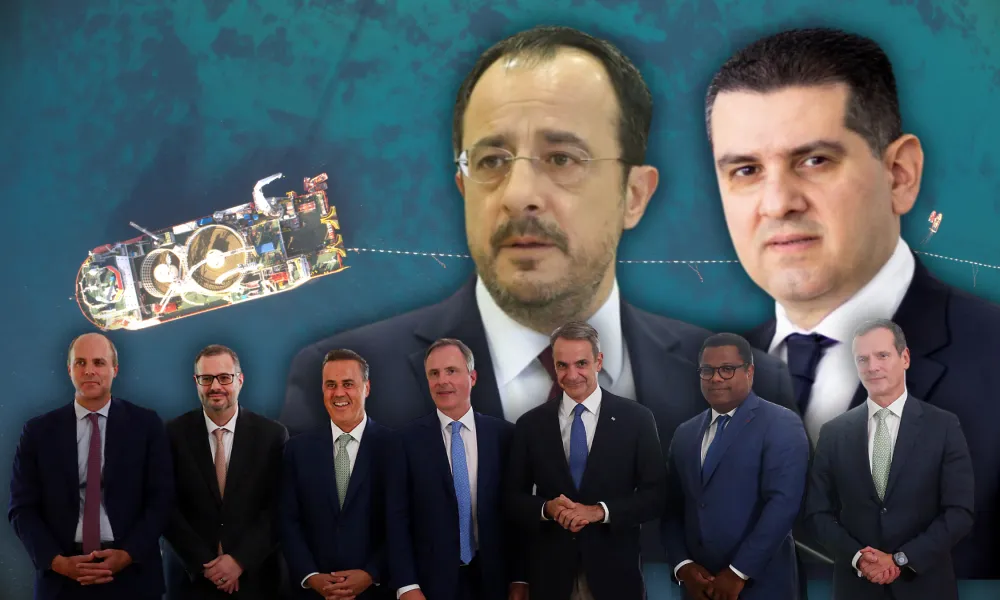

The agreement signed in Athens for French investment group Meridiam to acquire a 66% stake in the Great Sea Interconnector has brought the Greece-Cyprus electricity cable back into the spotlight in Turkey. This time, however, Turkish media coverage has focused less on the financial terms and more on France’s increased involvement and whether it could shift the balance with Ankara in the Aegean.
This is the common thread running through most of the reports. Meridiam is not viewed merely as a major investor capable of unblocking and advancing the GSI. Its involvement is also seen as adding political weight by bringing Paris more directly into a project that Turkey has long linked to its claims in the Eastern Mediterranean.
Ankara’s position on the project
Hürriyet’s headline, “French support for the Greek-Cypriot cable project”, reflects this approach. The newspaper reiterates Ankara’s position that the cable’s route passes through areas claimed by Turkey and that work cannot take place there without the Turkish side being taken into consideration.
For Hürriyet, the most significant aspect of the agreement is the French involvement. It argues that Athens, by bringing a powerful French group into the project, is seeking additional political backing in its dealings with Turkey while attempting to revive a project already affected by regional geopolitical tensions.
The report refers to the “shadow of Ankara” continuing to hang over the GSI, pointing directly to the earlier cable route surveys and Turkey’s response in the maritime area south of Kasos.
Gazete Oksijen offers a similar interpretation, recalling in its headline that Turkey deployed warships when surveys for the project were previously attempted.
According to Oksijen, Meridiam’s entry means Athens is not simply bringing a new investor into the project. It is also exposing France more directly to the GSI’s geopolitical risks.
The newspaper notes that the surveys were effectively suspended following Turkey’s reaction and identifies this as one of the project’s main challenges. The key question, it says, is what will happen when survey vessels return to the area and whether the involvement of a major French group will change the situation.
Yeni Akit calls agreement ‘dangerous’
Yeni Akit adopts a significantly harsher position, describing the agreement as “dangerous” and presenting it as another move against Turkish interests in the Eastern Mediterranean.
In its assessment, Meridiam is not simply an investor. The group’s participation is portrayed as part of a broader effort by Greece and Cyprus to strengthen their international alliances and gain greater political leverage against Turkey.
Yeni Akit also places particular emphasis on the prospect of the project eventually connecting Greece, Cyprus and Israel. It presents the GSI as part of a wider regional plan that Ankara believes is intended to marginalise Turkey.
The newspaper therefore repeats Ankara’s established position that no project can proceed in maritime areas where Turkey claims rights without taking what it describes as Turkish “rights and interests” into account.
Meridiam’s interests in Turkish infrastructure
Sözcü approaches the development from a different, more economically focused perspective.
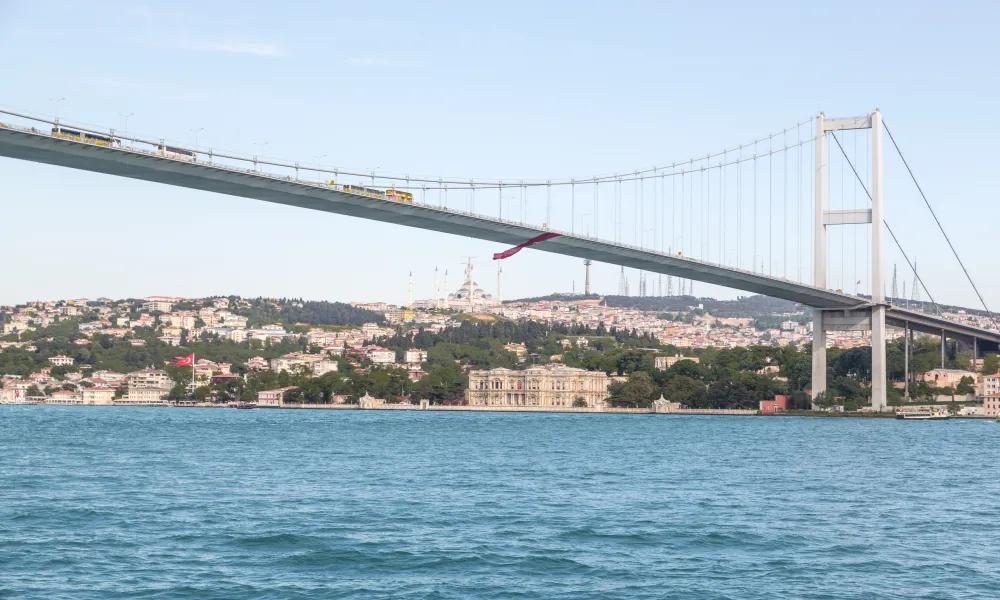
The newspaper highlights that Meridiam, now taking a major stake in the GSI, is also working with Turkish construction company Makyol in pursuit of major infrastructure projects inside Turkey. These reportedly include operating rights for bridges over the Bosphorus and motorways.
Sözcü’s headline captures what it sees as the contradiction: “The French company bidding for the bridges is now laying the neighbour’s electricity network.”