
The Council of the European Union under the Cypriot Presidency and the European Parliament reached a provisional agreement on Wednesday to simplify rules governing the classification, labelling and packaging of chemical products (CLP), as well as related regulations on cosmetics and fertilisers.
The agreement marks the final outstanding element of the Omnibus VI legislative package, which aims to reduce administrative and regulatory burdens on businesses while maintaining a high level of protection for human health, consumers and the environment.
'Tangible results'
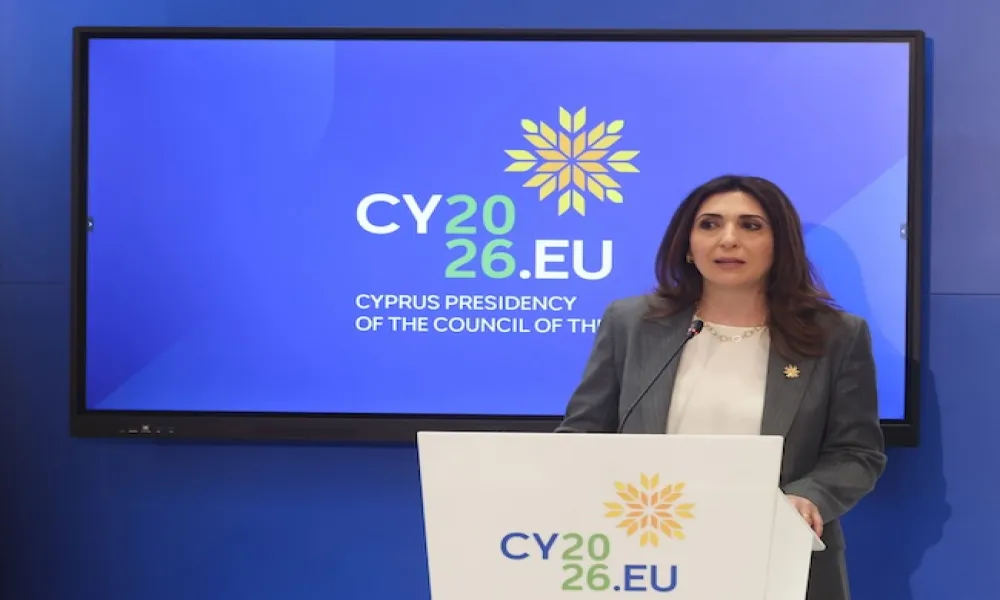
Welcoming the deal, Deputy Minister for European Affairs Marilena Raouna said the Cypriot Presidency had delivered “yet another tangible result” within the framework of the “One Europe, One Market” roadmap and the EU’s broader simplification agenda.
According to Raouna, the agreement reduces unnecessary administrative burdens, supports innovation and circularity, and maintains strong standards of protection for consumers and the environment, delivering practical benefits for both the chemicals industry and citizens across the European Union.
A statement from the Cypriot Presidency noted that the agreement includes an extension until 1 January 2030 for the entry into application of the new rules, aligning implementation timelines across three key EU legislative acts: the revised CLP Regulation, the Cosmetics Products Regulation and the Fertilisers Regulation.
Simplified labelling
More specifically, negotiators agreed on simplification of labelling requirements in the chemicals sector while maintaining essential safeguards for consumer protection.
This includes more flexible readability rules for products circulated between businesses, while strict requirements remain in place for products intended for the general public.
Special exemptions will also apply to small packaging formats, such as certain printer ink containers, allowing the use of digital labelling in specific cases, provided that essential information is clearly displayed on the outer packaging.
The agreement further provides for longer transitional periods for label updates when new scientific assessments determine that a substance is more hazardous than previously thought, giving companies additional legal certainty and time to comply.
In relation to cosmetics, the deal introduces a differentiated system of transitional periods for the withdrawal of carcinogenic, mutagenic or reprotoxic (CMR) substances, depending on their level of risk. EU institutions have also called on the European Commission to issue guidance on identifying and using safer alternative substances.
The agreement maintains strict notification requirements for the use of nanomaterials in cosmetics prior to market placement, ensuring a high level of protection for public health and the environment.
Fertilisers
In the fertilisers sector, the amendments are largely technical and focus on simplifying approval and registration procedures for materials used in CE-marked fertilisers. The Commission will also modernise procedures for substances such as microorganisms, animal by-products and polymers, which have faced challenges under the current regulatory framework.
At the same time, obligations under the REACH Regulation are maintained for substances classified as particularly hazardous, ensuring that simplification measures do not lead to a reduction in safety standards.
The provisional agreement will now be submitted for formal approval by both the Council and the European Parliament and is expected to be adopted officially in 2026.