
Sunday’s parliamentary ballot on May 24 has changed the political landscape in Cyprus. The centre of gravity has shifted back towards the traditional parties, DISY and AKEL, which are now expected to make the most decisive choices over presidential candidates in 2028. Those processes are likely to begin soon, while President Nikos Christodoulides appears visibly weakened.
At the same time, developments on the Cyprus problem will also unfold in the months ahead. UN Secretary-General António Guterres is seeking a way to keep the prospect of reunification alive before handing over to his successor in December.
A resilient two-party axis
The two main political poles, DISY with 27.2% and AKEL with 23.9%, proved highly resilient, drawing on deep-rooted influence and party mechanisms. Both emerged from the election pressure as winners and with a degree of relief.
They will now seek to capitalise on their dominant role as the principal parties of power by choosing their own presidential candidates. Their strategy is to attract additional sections of society left politically homeless, around 17%, as well as unaffiliated voters.
The manoeuvres by DISY president Annita Demetriou and AKEL general secretary Stefanos Stefanou over the election of the House Speaker on June 4 are part of that strategy, creating a dilemma for the other parties and, by extension, for society.
DIKO, with 10%, remained in the power game, but does not appear capable of playing a decisive kingmaker role. It is the only parliamentary party supporting Christodoulides, a fact that complicates rather than strengthens its position under the new balance of power.
ELAM, with 10.9%, increased its parliamentary representation, but under pressure from DISY began to lose momentum for the first time. It remains a reserve anti-AKEL vote pool for DISY, which is expected to keep applying pressure over time.
The two new political formations, ALMA with 5.8% and Direct Democracy with 5.4%, entered parliament with modest percentages. They are expected to have limited influence and cohesion and will face a test in retaining their supporters.
A weakened president
The election result limits President Christodoulides’ choices in the final stage of his five-year term. With around 20 months remaining, he is expected to try to reach out to DISY. But what happens next appears to go beyond his own objectives.
His only remaining asset is the influence that comes with being the sitting president. Over the summer, he is expected to make a last effort to build bridges with DISY, offering significant concessions in ministerial posts in an attempt to draw the party into the government.
Christodoulides appears to have former president Nicos Anastasiades as an ally. Anastasiades is so far the only figure to have called on the DISY leadership, on April 26, to “overcome bitterness” over the 2023 split, arguing that “Nikos Christodoulides comes from within the party’s ranks”.
The parliamentary election result showed that DISY’s leadership under Annita Demetriou can set its own course towards 2028. DISY achieved notable party consolidation, with a strong rise in Nicosia, which remains the backbone of its liberal wing. It also managed to offset losses to ELAM in recent years.
Demetriou is now in a stronger position and can allocate roles while offering prospects to a wide range of younger party figures. Many of them are eager to move into key positions of power in 2028.
The Cyprus problem
The election result is also being assessed by the United Nations. The two main poles, DISY and AKEL, are ideological rivals but remain the most moderate forces on the Cyprus problem.
María Ángela Holguín, Guterres’ personal envoy, returns to Cyprus on June 6 and will stay for several days. She is expected to organise an original public event on June 10 at Ledra Palace with the technical committees of the two communities.
This time, however, she appears to be changing tactics, abandoning the futile effort to secure substantial confidence-building measures after no way was found to open even a single crossing point.
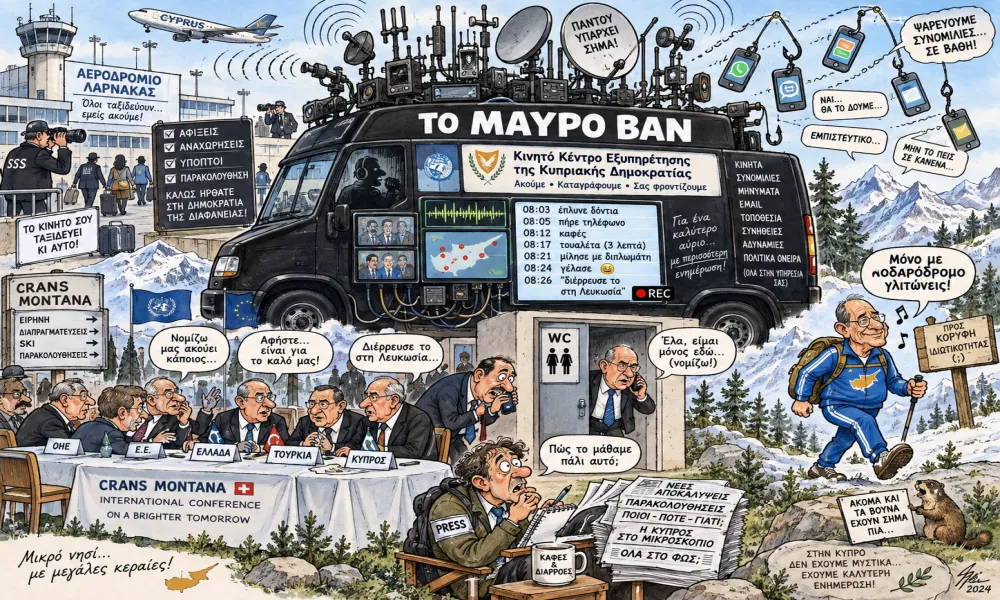
Guterres is considering an informal five-party meeting in July with the participation of the three guarantor powers. Diplomatic circles say he has expressed an intention to submit a document as a framework for a strategic agreement.
That would require the consent of the two Cypriot leaders, as the process remains Cypriot-owned, as well as the green light from Ankara. After nearly 10 years of deadlock, and without a comparable decisive move, such a scenario appears too ideal to be realistic.
A less ambitious step would be to turn the negotiating material on the convergences reached up to Crans-Montana into a UN document.
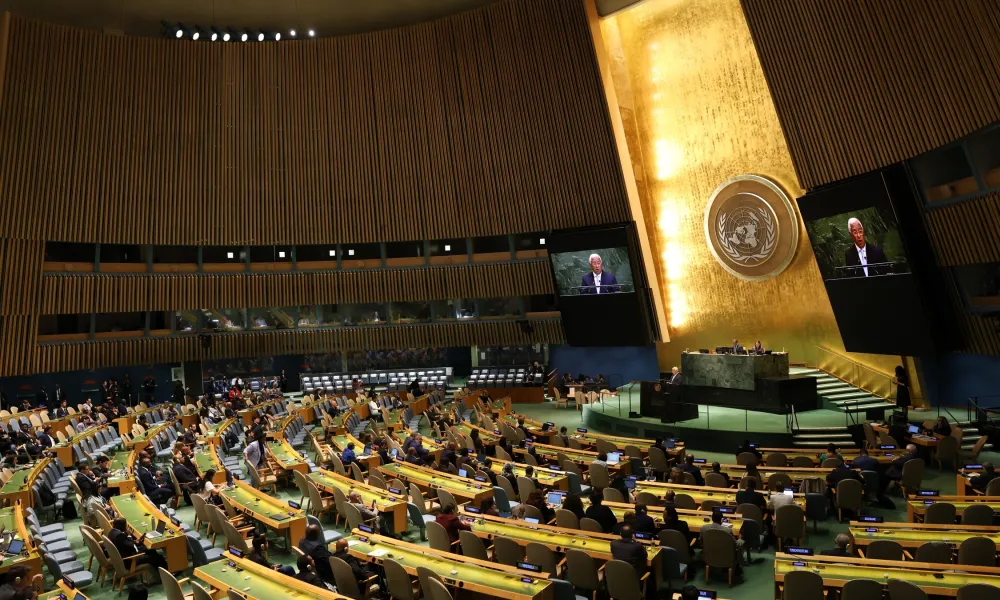
All these ideas remain under consideration by Guterres, but he will also need to consult his successor at the UN. The next secretary-general is expected to be appointed between October and December from a list of candidates, with the possible selection of a woman from Latin America, provided she is also approved by the Security Council.