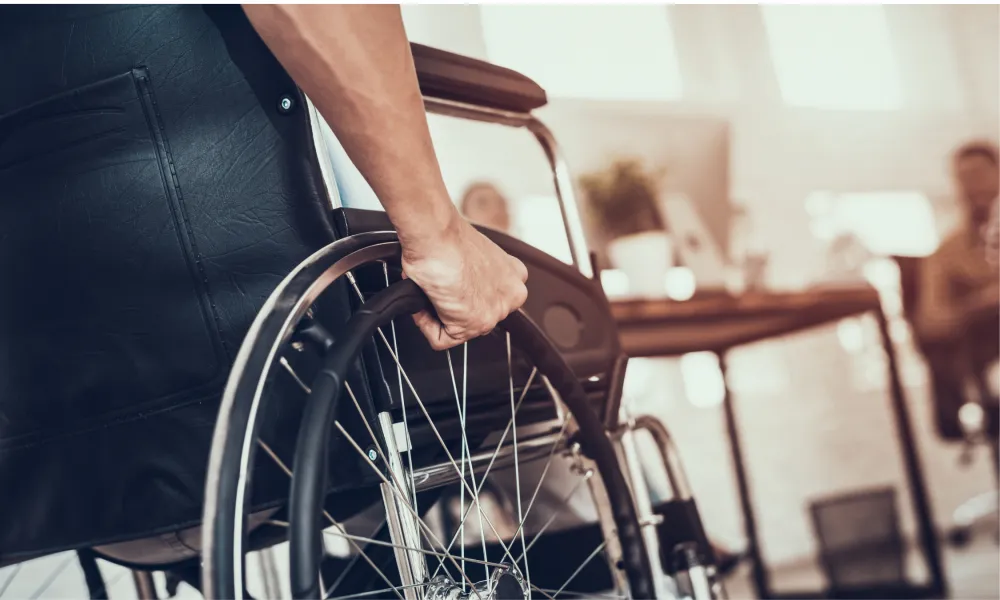

Young people with disabilities, including some as young as 19 and 26, are ending up in care homes for the elderly in Cyprus not because such facilities meet their needs, but because no suitable alternatives exist.
People with mental health conditions, autism and other disabilities are living under the same roof, and in some cases in the same room, as elderly residents suffering from dementia and Alzheimer's disease.
The situation was outlined before the House Labour Committee by Cyprus Confederation of Organisations of the Disabled (KYSOA) head Themis Anthopoulou, who said the problem had been building for decades as the state failed to create the housing and independent living services required for people with disabilities.
Figures presented to the committee suggested the issue is far from isolated. According to the Deputy Ministry of Social Welfare, around 150 people with mental health conditions are currently living in elderly care homes. Including other categories of people with disabilities, the total is estimated at close to 300.
‘Trapped’ in homes
Anthopoulou spoke of people who are effectively "trapped" in care homes because of the lack of alternative options. She said there are young people with severe disabilities and complex needs who require individualised care, including one-to-one support, while the current framework allows staffing ratios of up to one caregiver for every 25 residents.
A problem decades in the making
Anthopoulou said the situation did not emerge overnight. Numbers had been rising for years without the creation of the necessary alternative structures and services and, she warned, addressing the issue now would require tens of millions of euros.
"Let's not stop at identifying the problem," she said, calling for personalised support based on the nature of each person's disability and genuine independent living options so that care homes no longer serve as a last-resort solution for people aged 19, 26 or 30.
The issue of institutionalisation was also raised strongly by committee members. Committee chairman Giorgos Koukoumas said housing people with disabilities in elderly care homes amounted to institutionalisation and failed to provide the specialised care they needed.
Questions were repeatedly raised over why, despite the issue being known for years, the separation of care structures and the necessary legislative changes had yet to move forward.
Outdated legal framework
The Deputy Ministry of Social Welfare acknowledged that the institutional framework requires revision.
The current legislation dates back to 1991 and, despite years of discussions on modernising it, a new bill has yet to be prepared.