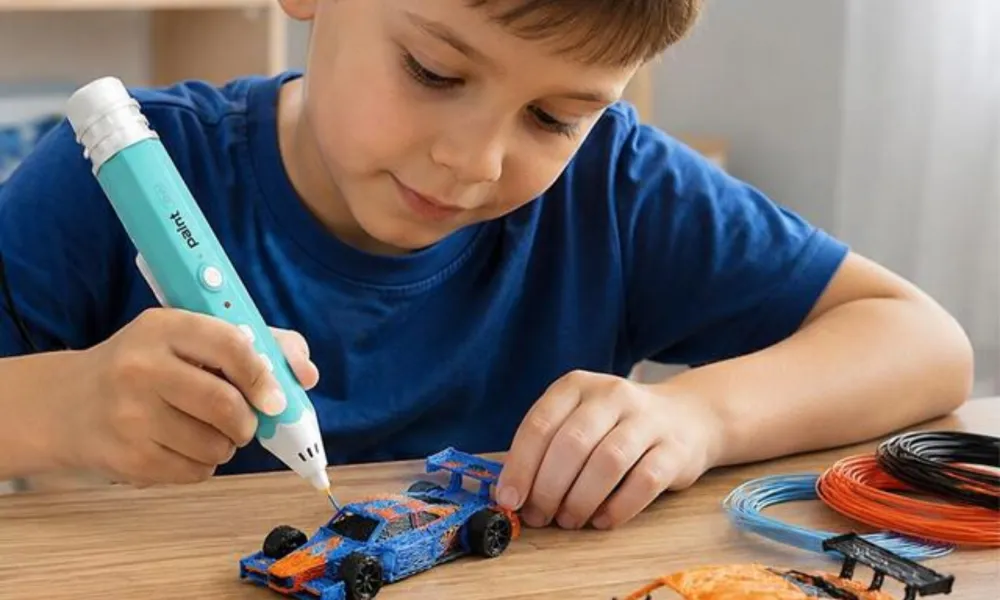

Cobalt can be present in products ranging from children’s make-up and chalk to 3D pens, batteries, magnets and metal toys, prompting the European Union to tighten restrictions on its use in toys.
In its metallic form and in several of its salts, cobalt has been classified as a category 1B carcinogen, category 2 mutagen and category 1B reproductive toxicant. Cyprus is now moving to incorporate the new EU provisions into national legislation after failing to meet the original implementation deadlines.
Health risks linked to cobalt
The classifications mean cobalt can cause cancer, is suspected of causing genetic mutations and can harm fertility or the development of an unborn child.
Category 1B is used where a substance is regarded as having carcinogenic or reproductive toxicity in humans, mainly on the basis of strong evidence from animal studies. Category 2 for mutagenicity covers substances suspected of causing genetic damage.
The EU’s Scientific Committee on Health, Environmental and Emerging Risks (SCHEER) examined a range of products and materials in which cobalt may be present.
Cobalt occurs as an impurity in nickel and metal alloys, but can also be used in pigments, children’s make-up classified as toys, batteries and materials used in 3D pens and toy 3D printers.
Concerns over 3D pens and powdered products
For 3D pens and printers, SCHEER identified inhalation as an area requiring particular attention and concluded that materials containing cobalt should be avoided in 3D printing.
Potential risks were also identified in chalk, “chalk bombs”, pigments and other powdered toy materials. The committee recommended using cobalt-free pigments and did not identify safe uses that should be permitted within this category.
For children’s make-up, the available data were insufficient to determine safe uses of cobalt.
Exposure also cannot be ruled out from batteries, particularly small button batteries.
Where cobalt remains permitted
The new European rules do not impose a complete ban on cobalt. Instead, its use remains permitted under strict conditions in three specific categories of toys or toy components.
The first covers toys and components made from stainless steel, where cobalt may be present as an unintended impurity in nickel.
Depending on their construction, this category can include metal toy cars and trains, miniature kitchen utensils and metal construction sets containing screws, nuts and metal plates.
The second category covers toy components intended to conduct an electrical current. Such parts can be found in remote-controlled cars and other electronic toys, electric train sets and tracks, and interactive toys containing circuits, wires or metal conductors.
The third category concerns neodymium-based magnets, including those used in magnetic construction sets. Their use is allowed only when the magnets cannot be swallowed or inhaled.
Cyprus missed EU deadlines
The European Commission issued the Directive on 28 January 2026, giving member states until 29 July to adopt and publish the necessary measures and until 29 August to begin applying them.
Cyprus did not meet the deadline.
The Commission subsequently sent a letter of formal notice to Cyprus, Croatia and Hungary over the incomplete transposition of the Directive, giving the three countries two months to take the required measures.
Failure to comply could lead to the next stage of the infringement procedure.
Following the Commission’s intervention, the Consumer Protection Service placed amending regulations under public consultation to incorporate the cobalt provisions into Cypriot legislation.
The proposed rules would add cobalt to the list of carcinogenic, mutagenic or reproductive toxic substances subject to restrictions in toys.
The consultation opened on 11 September and closes on 30 September.
The draft does not introduce a general ban on cobalt. Instead, it incorporates the specific exceptions contained in the EU Directive for uses considered safe under certain conditions.