At a time when Europe is discussing the need for common guidelines on newborn screening, Cyprus remains at the minimum level of coverage. According to a recent briefing by the European Parliamentary Research Service, the Cypriot newborn blood screening programme includes only two conditions: congenital hypothyroidism and phenylketonuria, also known as PKU.
This picture confirms data presented within the European project Screen4Care, bringing back to the forefront a critical public health question: why is a newborn in Cyprus screened for such a small number of conditions, when in other EU member states the corresponding programmes have expanded to include dozens of diseases?
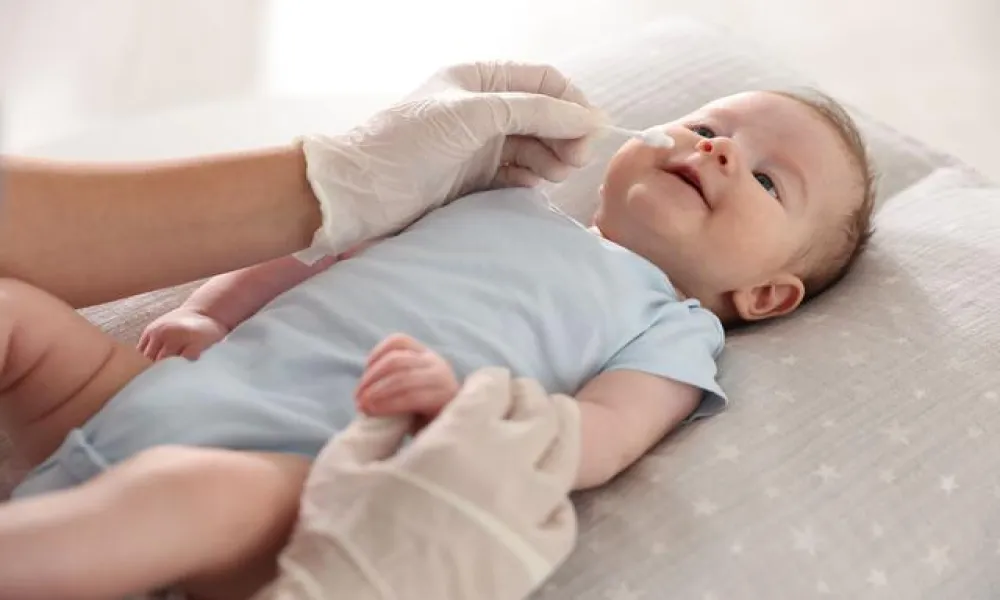
Newborn screening is typically carried out using a few drops of blood taken from the baby’s heel, which are analysed for biochemical markers, hormones and metabolic substances. It is a preventive test aimed at identifying diseases before symptoms appear, so that appropriate treatment or management can begin early.
Only two conditions
In the EPRS list of the number of diseases included in national newborn screening programmes, Cyprus appears with two conditions, at the same lowest level as Malta. By contrast, Italy lists 43 conditions and two more under addition or in pilot phase, Slovakia 36 and four more, Poland 30, Portugal 29, Austria 28 and the Netherlands 27.
Even countries with smaller panels than the leading ones are significantly ahead of Cyprus. Greece records 12 conditions, Lithuania also 12, Ireland 9 and Luxembourg 6. The European picture is therefore highly uneven: across the EU, 87 different rare diseases are covered by national or pilot programmes, yet only two are included in all national panels. These are exactly the two screened by Cyprus: congenital hypothyroidism and phenylketonuria.
Congenital hypothyroidism involves underactivity of the thyroid from birth and, if not detected and treated early, can seriously affect a child’s development. Phenylketonuria is a hereditary metabolic disorder in which the body cannot properly break down phenylalanine, posing a risk of severe neurological damage if not diagnosed early and managed through diet.
Delayed diagnosis carries a cost
According to the EPRS, the issue is not only numerical. Large discrepancies between member states raise concerns about equal access to healthcare and health outcomes for children. Newborn screening can reduce the risk of the so-called “diagnostic odyssey”, the years-long search for a diagnosis often experienced by patients with rare diseases and their families. Early detection can prevent irreversible disability, especially in conditions where immediate referral to specialised services is crucial. By contrast, when a condition is not included in screening programmes, diagnosis may only come after symptoms appear, at a point when for some children it may already be too late.
Thus, the question for Cyprus is not whether it has a newborn screening programme. It does. The question is whether a programme that remains limited to two conditions is sufficient, at a time when the European discussion is moving towards expansion, harmonisation and more equal access to early diagnosis.