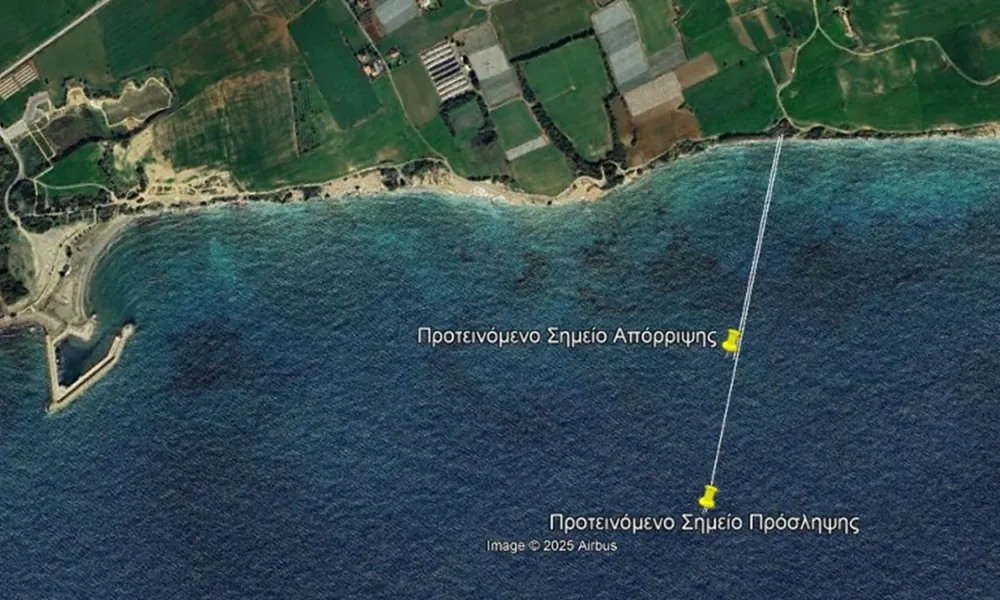

The government is moving quickly to build a mobile desalination unit at Mazotos with a capacity of 40,000 cubic metres per day, despite strong objections from surrounding communities. Local residents argue the project will cause environmental degradation and destroy underwater antiquities. The latest step is a €6.69 million tender for the marine section of the works.
Tender for marine works
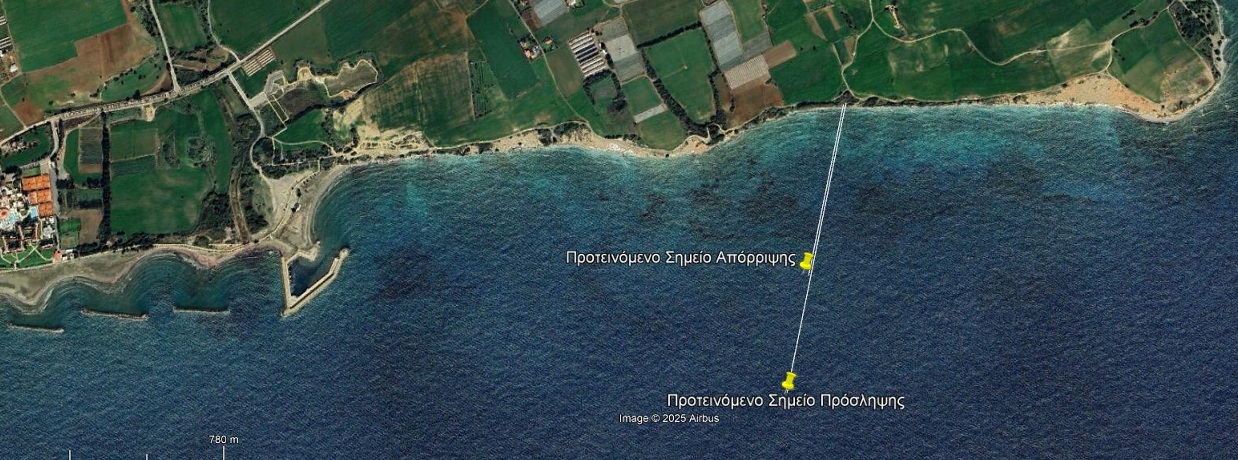
The Water Development Department has issued a tender, open until 17 November, for the construction of marine works. These cover the supply and installation of subsea pipelines, the construction of specialised coastal structures and earthworks.
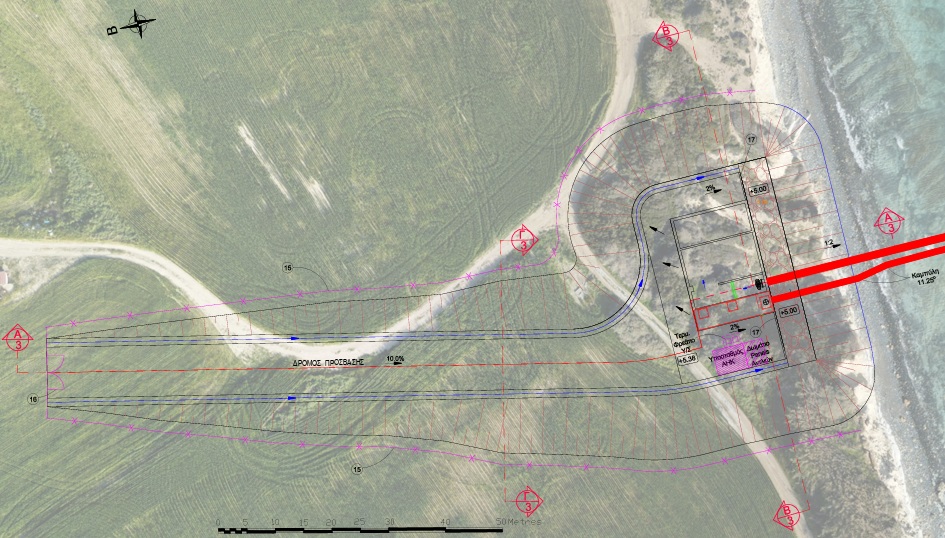
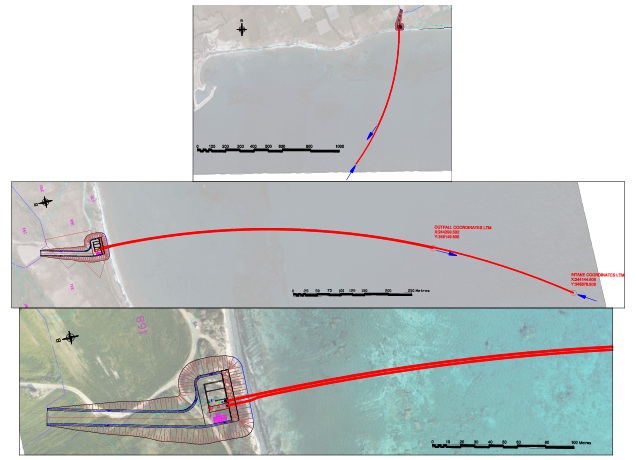
According to the tender documents, the works include two subsea pipelines, which will be buried along their entire length and protected from above. The estimated duration of the project is six months. Within the first three months, the contractor must deliver an access road seven metres wide, along with space for a substation and electrical installations.
What the marine works include
The tender documents set out the following elements:
- Construction of a seawater intake structure
- A subsea pipeline to draw in seawater
- A beachside structure with two compartments or tanks: one will receive seawater to be pumped to the desalination plant, the other will receive brine after the water has been processed
- A subsea pipeline to discharge brine into the open sea
- A brine discharge structure (diffuser) at the seaward end of the pipeline
- Shoreline protection using natural boulders
- An access road to the tanks and landscaping of the surrounding area
- Shaping of the excavation slopes
- Installation of a visual monitoring system for the project
Land works and timeline
The procedure for the land-based works, including the pipeline connecting the unit to the Water Development Department network, has been under way since June, at a cost of €1.5 million.
The government plans for construction to begin in early 2027, so that the unit can be operational by next summer. The plant will reinforce the Southern Conveyor network, with the aim of meeting water needs for the 2027 to 2029 period.
Community opposition
The project faces strong opposition from community councils in the area and from Mazotos residents, who have organised themselves into the Initiative Group for Saving the Mazotos Coast. The launch of the tendering process last Thursday prompted renewed objections from the community, with the group announcing forthcoming mobilisations.
Environmental terms and penalties
According to the tender documents, the terms set out in the relevant opinion issued by the Department of Environmentmust be applied throughout the construction and operation of the project.
The contractor is required to submit work methods ensuring that environmental impacts during construction are kept to a minimum and comply with all environmental terms.
If any non-compliance is observed, the contractor must stop the relevant works immediately, propose corrective measures, obtain the engineer’s approval and then implement the approved measures. Where the engineer finds the contractor responsible for a breach of environmental terms, €500 per day per breach will be deducted.
Safety measures for fishermen, visitors and bathers
On road, vessel and bather safety, the documents state explicitly that the contractor must take all necessary measures so that construction proceeds at a pace and in a manner that, where possible, avoids or minimises any nuisance.
This applies to users of the fishing shelter located west of the project, the nearby land and sea areas, and the movement of fishermen, police, tourists and visitors, both during working hours and at night.
Uneven seabed requires independent surveys
The seabed in the area is uneven, with sudden local changes. It contains loose material, isolated and solid hard rock, and vegetation, and it shifts according to environmental conditions.
Before work begins, the contractor must commission a seabed survey by an independent surveyor approved by the engineer, including a description of the seabed material, such as gravel, sand or rock. A second survey by an independent surveyor must be carried out once the works are complete.
Movement of material during the contract, for example as a result of rough seas, will not be taken into account and will be considered part of the uncertainty the contractor has priced into its unit rates. The contractor must also account for scattered local elevations across the wider project area and adapt its methodology accordingly.
Wave damage risk and insurance
The project is exposed to the open sea. According to a study, there is a very high probability of waves capable of damaging the works. The contractor must plan and carry out the project so as to minimise the likelihood of damage and, should damage occur, limit its extent to the environment, the works, equipment and elsewhere.
Adequate insurance cover against damage from natural phenomena must be in place.