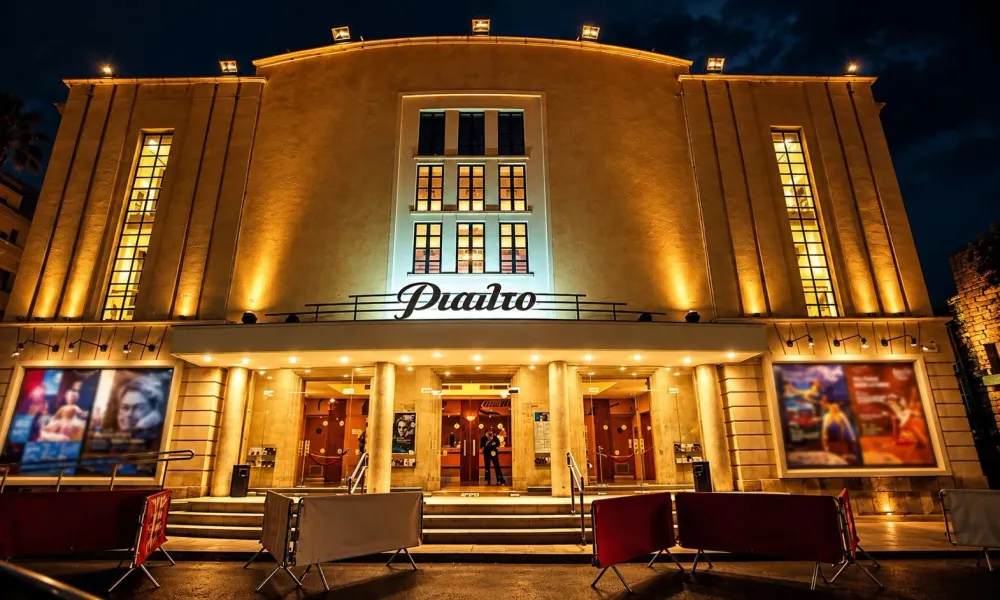

Abandoned in the mid-1980s and facing demolition to make way for a car park, the Rialto Theatre in Limassol was rescued in 1991 when the Limassol Cooperative Savings Bank bought the building following a campaign by local citizens. Thirty-five years later, the Cabinet has decided to grant the theatre to Limassol Municipality on a long-term basis. Nearly a century after it was built, this is a look back at the key milestones in the Rialto’s history, drawing on historical records and new information.
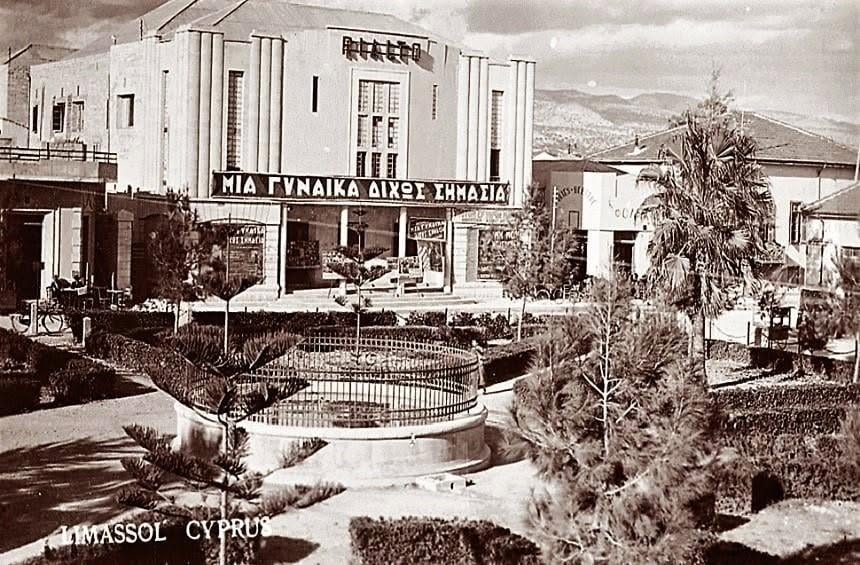
The cooperative movement’s “gift” to Limassol played a decisive role in transforming what was once the most notorious square in Cyprus.
A theatre that was nearly lost
There was a time when the historic Rialto, at the heart of Heroes’ Square, was at risk of disappearing from the map of Limassol for good. The once glamorous cinema-theatre, which for decades had been a meeting place and source of entertainment for thousands of Limassolians, had been abandoned, and its demolition seemed only a matter of time. In place of theatre performances, film screenings and concerts, there was a real possibility that it would become yet another car park.
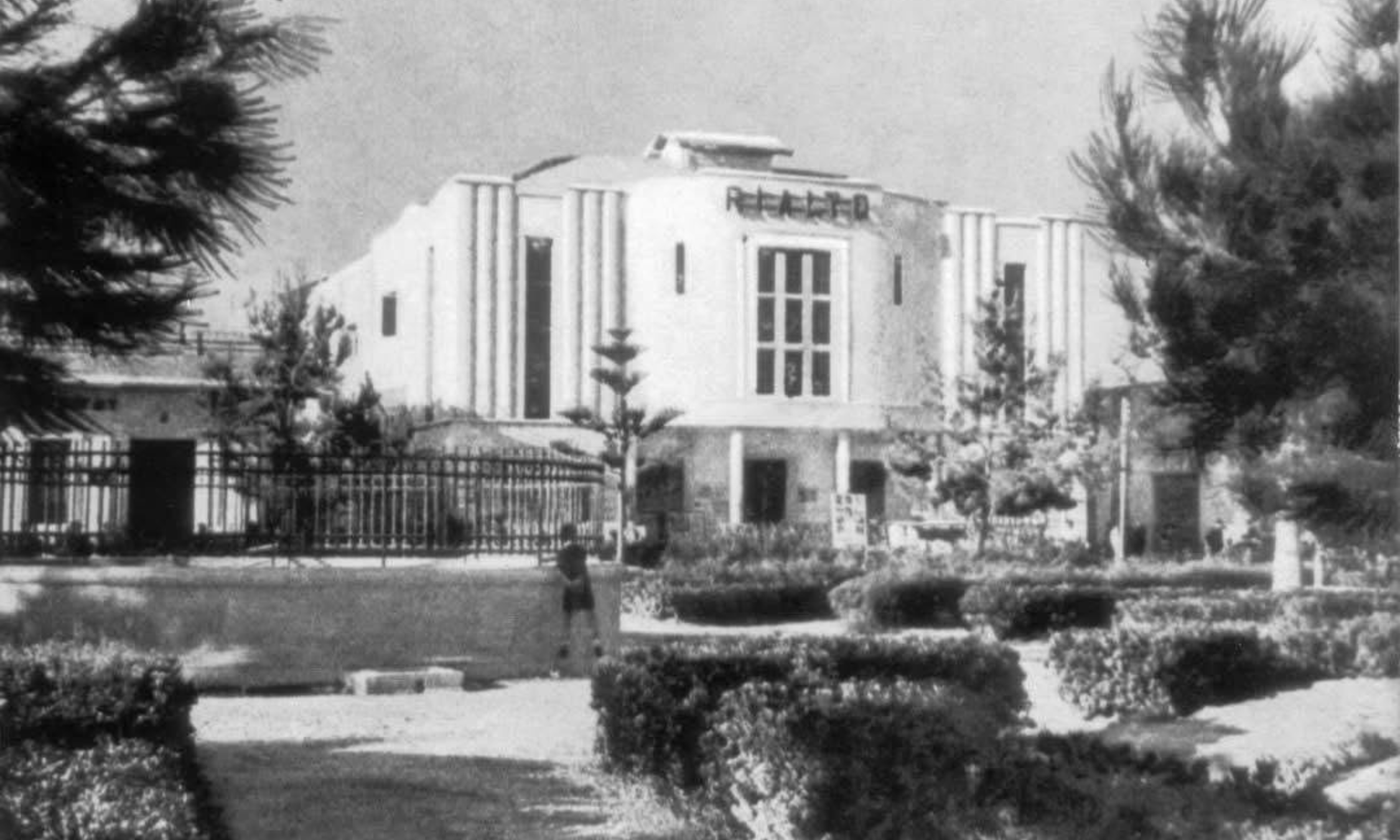
History, however, took a different turn. A group of active citizens refused to accept the loss of an important piece of the city’s history, and the decisive response of the Limassol Cooperative Savings Bank changed the building’s fate. In 1991, the bank acquired the abandoned Rialto, laying the foundations for one of the most significant rescue and reuse projects involving a historic cultural venue in Cyprus.
Thirty-five years later, the Rialto is uniting all of Limassol once again, as the city called for and pursued the handover of the theatre to where it belongs: to the people of Limassol. To understand the significance of this development, however, it is necessary to look back at the theatre’s history and, in particular, at the people who helped keep it alive.
From the Chrysochou brothers’ vision to a golden age
The Rialto’s story begins in the early 1930s, when Limassol was going through a period of social and cultural change. The Chrysochou brothers, who were already active in the entertainment sector through the Hadjipavlou Theatre, envisaged a new cinema-theatre that would not simply serve the city’s needs but would stand out for its facilities and architecture.
The building was designed by Benjamin Ginsberg, an architect and engineer of German-Jewish origin, who created a pioneering structure for its time. The new cinema-theatre had a large stage, stalls, a circle, balconies, dressing rooms and even an underground smoking room, a highly unusual feature in Cyprus at the time.
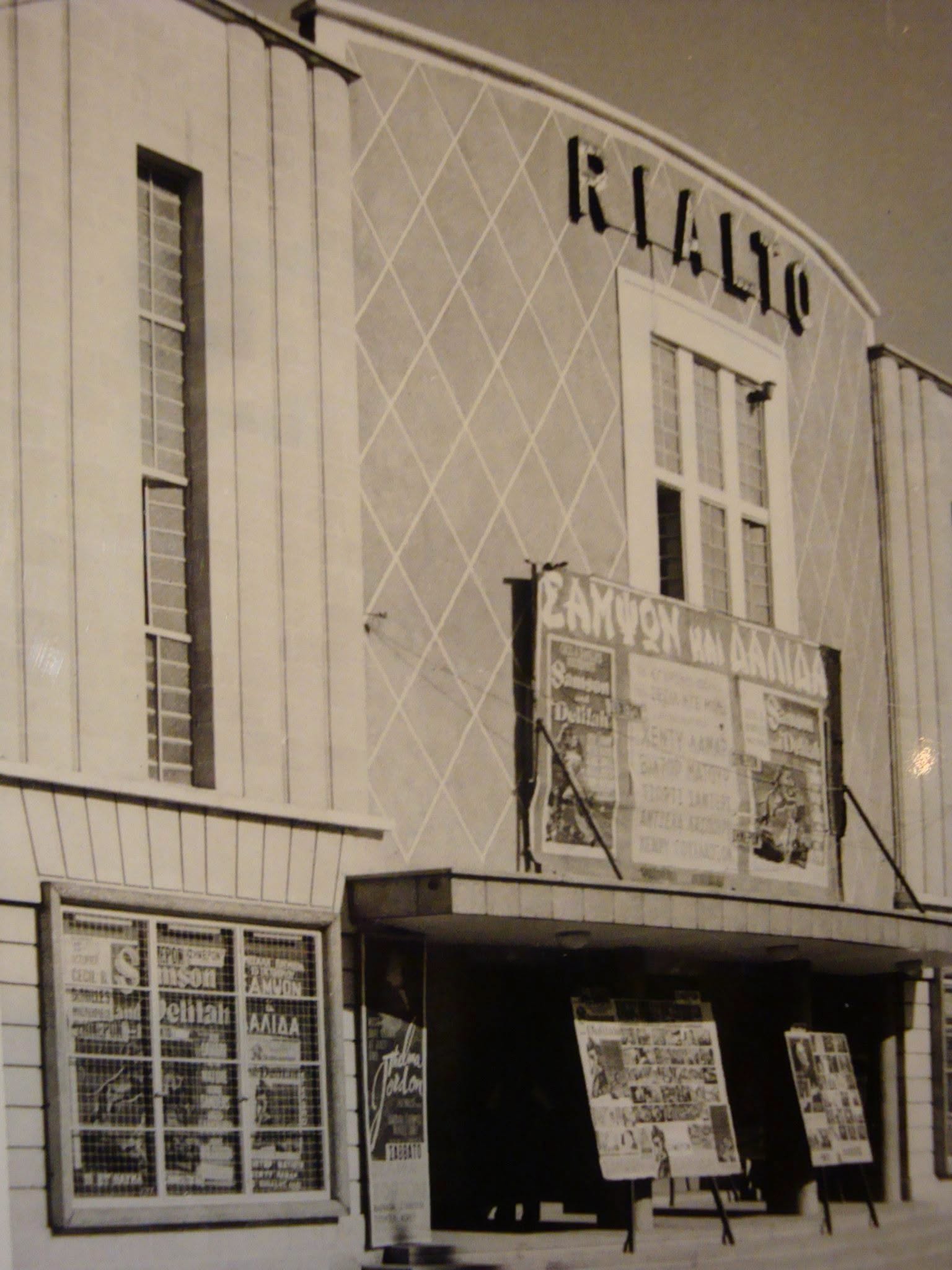
The theatre was inaugurated on 26 March 1933, marking the start of a new era for entertainment in Limassol. The Rialto was regarded as one of the most modern cinema venues on the island, and its operation strengthened the role of Heroes’ Square as a centre of social life.
For the decades that followed, the Rialto was more than a cinema. It was a place where different generations of Limassolians came together to watch films, theatre productions and musical events. At a time when options for organised entertainment were limited, venues of this kind played a decisive role in the daily life of the city.
Shortly before construction was completed, the Chrysochou brothers sold the Rialto to the N.P. Lanitis company. It was initially leased to Nikos Kyprianou, and its management was later taken over by Christoforos Malakasas, whose name became associated with the theatre for decades. Beyond film screenings, the Rialto hosted theatre and music performances, choirs, poetry evenings and other events, making the building a meeting point for the city.
Decline and the threat of demolition
The gradual spread of television and later video, together with the social and economic changes that followed the Turkish invasion of 1974, had a significant impact on cinema in Cyprus. The Rialto was no exception. Attendance fell and, in the mid-1980s, the historic cinema closed its doors.
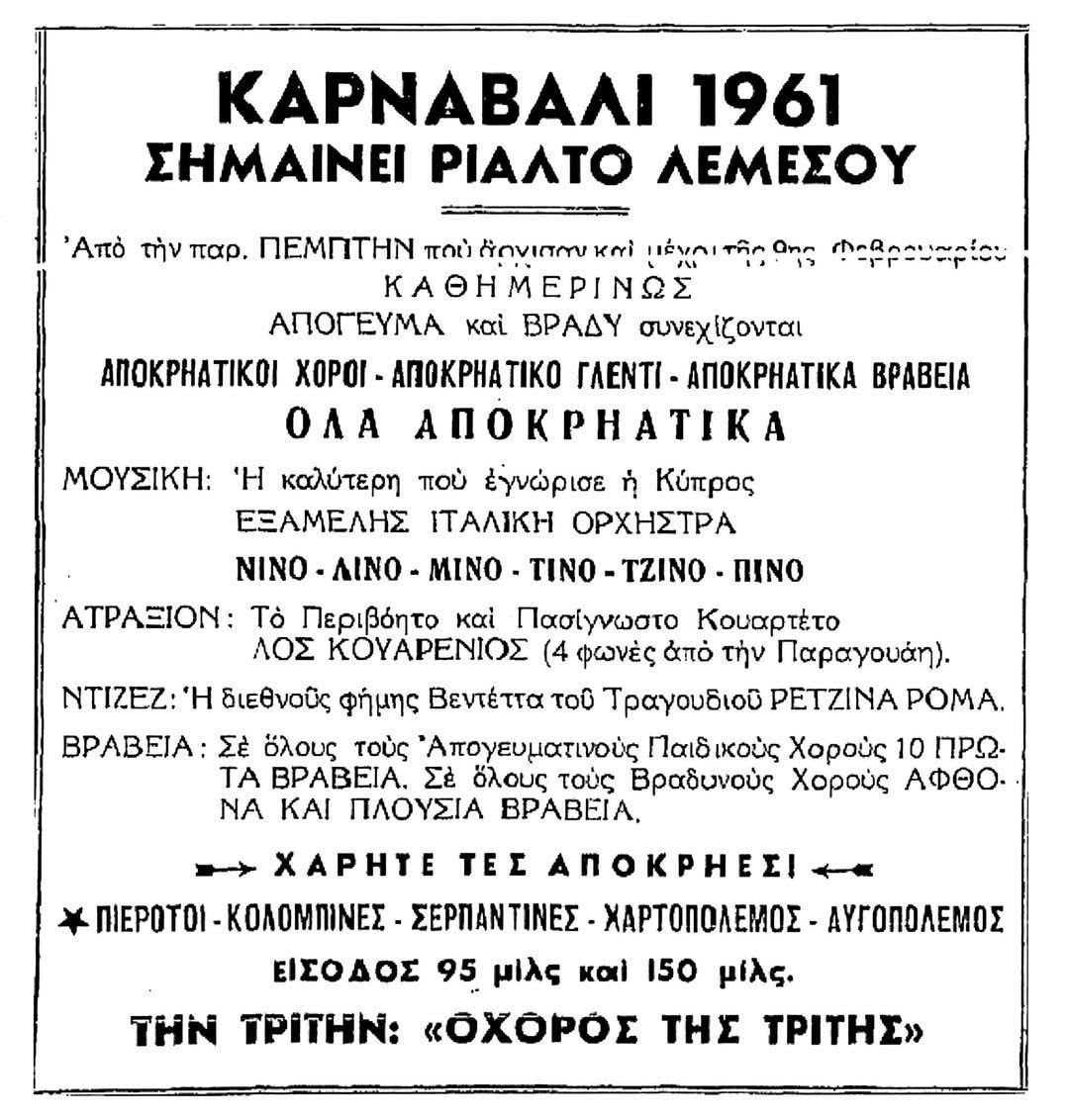
Its abandonment coincided with a period of rapid change in Limassol. Old buildings were being demolished to make way for new developments, and important elements of the city’s architectural heritage were being lost in a wave of reconstruction. The Rialto faced the same reality. Demolition and the use of the site as a car park had become a real possibility.
It was at this point that citizens of Limassol mobilised. They understood that losing the Rialto would not simply mean demolishing an old cinema, but erasing an important part of the city’s collective memory.
The campaign to save the Rialto became linked to the demand that Heroes’ Square itself be reclaimed by residents. According to historical material included in Limassol Municipality’s documents for the 2019 architectural competitionfor the redevelopment of Heroes’ Square, the then district Association of Civil Engineers and Architects was publicly calling for the area to be upgraded as early as December 1990. In the years that followed, the cultural group of the cooperative movement and other organisations held events in the square, preparing the ground for the public’s return.
Accounts of the historic 1991 decision
The rescue of the Rialto was not the result of a chance decision. It was preceded by an organised effort by people in Limassol who mobilised to prevent its demolition. Figures from the city’s social, political and cultural life took part.
One of the most important named accounts comes from former Limassol Mayor Andreas Christou. In a 2019 article in Phileleftheros, he described the deadlock the Initiative Committee had reached and the fear that the historic building would be demolished. According to his account, Hambis Genethliou proposed, as a practical way forward, that the Limassol Cooperative Savings Bank buy the building.
The proposal was put to the then chairman of the bank’s committee, Neophytos Ilia, who adopted it and tabled it for discussion. It was accepted by the board, with the support of the then director, Yiannakis Panayiotou. An earlier Politisfeature in 2019 lists the members of the board at the time as Neophytos Ilia, Stelios Steratzias, Menelaos Georgiou, Yiannakis Polycarpou and Giorgos Dimitriou, with Yiannakis Panayiotou as director.
Recording these names matters, as it shows that the acquisition of the building was the result of a specific collective decision, one that was far from obvious for a financial institution, despite its strong ties to the local community. A citizens’ proposal found a response from people who chose to treat cultural heritage as a matter for the local community, leaving behind a significant legacy.
The purchase, the figures and the account of Kikis Kazamias
In February 1991, the Limassol Cooperative Savings Bank bought the abandoned cinema-theatre, ending the immediate threat of demolition. According to the theatre’s official history, the purchase price was £170,000, while a further £30,000or so was spent on buying an adjacent plot of land so that the stage and dressing rooms could be extended.
Another valuable account is that of Kikis Kazamias, who later became general manager of the Cooperative Savings Bank. In a 2019 interview, he described the contribution of a small group of citizens to the initiative and referred to the approval of the major restoration expenditure by the bank’s General Assembly.
The Limassol Cooperative Savings Bank first decided, in 1991, to buy and save the theatre. Later, however, it took the equally historic and decisive decision to commit millions to its full restoration and reopening. This second choice required an even greater financial commitment and the backing of the bank’s governing bodies.
The intervention is all the more significant given that the Limassol Cooperative Savings Bank was not a cultural organisation but a financial institution with strong ties to the local community. It was founded in 1946, and its first headquarters were in Heroes’ Square itself. By acquiring the Rialto, it chose to invest in a cultural venue rather than treat the building as an ordinary property for commercial use.
Eight years to a rebirth
Buying the Rialto was only the beginning. It was followed by years of design, restoration and modernisation work that required substantial financial resources. An architectural competition was announced in 1994, the tendering process went ahead in 1996, and restoration work began in 1997. The architectural plans for the new theatre were drawn up by Themis Themistocleous.
The total cost of restoring and equipping the Rialto reached £2.5 million, a huge sum for the time. The investment came with a deliberate choice to use the Rialto as a cultural venue rather than as an asset generating profit for the cooperative.
Yiannakis Polycarpou, a member of the bank’s committee and a well-known figure in Limassol’s cultural life, was put in charge of the project. He played a leading role in the restoration and was the first chairman of the Rialto Theatre company. The management also made an important contribution, with Loris Lysiotis as committee chairman and Kikis Kazamias as general manager from 1997.
The project was not simply a renovation. The aim was to create a fully functional cultural venue, capable of hosting modern theatre, music and film productions, while respecting the building’s historic character. The bank’s involvement went further still: it granted an additional £70,000 to Limassol Municipality to improve the notorious Heroes’ Square, fully backing the demand that the square be returned to the people of Limassol.
15 May 1999: the curtain rises again
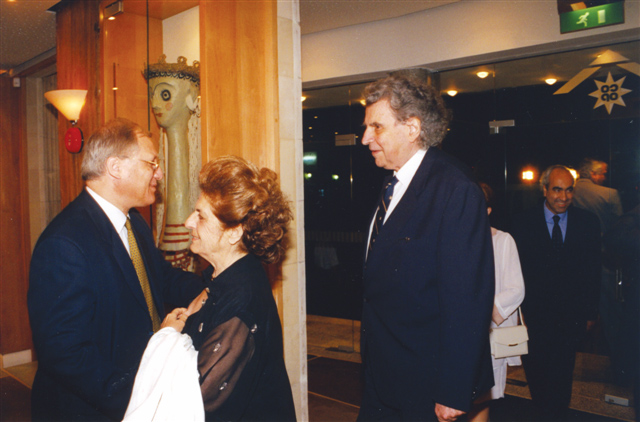
On 15 May 1999, eight years after it was bought by the Limassol Cooperative Savings Bank, the Rialto reopened its doors. Its reopening was one of the most important cultural events of the period. The opening night featured Mikis Theodorakis’ lyric work “Electra”, with the composer travelling to Limassol for the occasion. Among the guests was Cypriot director Michael Cacoyannis.
The presence of such prominent figures underlined the significance of the theatre’s reopening. The new Rialto retained its historic exterior but now had modern facilities and technical equipment. It had been transformed from an old cinema into a multipurpose cultural organisation, capable of hosting productions from Cyprus and abroad.
Its reopening also marked the return of the “sinful” Heroes’ Square to the city’s cultural map. The Rialto once again became a point of reference, this time not only for Limassolians but for audiences from across Cyprus.
The change was not confined to the theatre’s interior. A historical study by architect Christakis Sergides, included in Limassol Municipality’s 2019 architectural competition documents for Heroes’ Square, records that the Rialto’s reopening in 1999 was linked to the “return of Limassolians to the renewed Heroes’ Square”, as the press of the time put it. For years, the square had a poor reputation, with incidents of violence and delinquency, and many families avoided crossing it. The return of audiences, cultural events and interventions in public space contributed to a gradual change in its image. They did not make the problems disappear overnight, but they gave residents a reason to return to an area from which they had been pushed away.
From the cooperative movement to the state and the municipality
The Rialto’s course after 1999 confirmed the importance of the Limassol Cooperative Savings Bank’s decision. The theatre became established as one of the most important cultural organisations in Cyprus, hosting theatre performances, concerts, film screenings, dance productions and international festivals.
Developments within the cooperative movement, however, created a new situation. In 2013, as part of the sector’s restructuring, ownership of the Rialto passed to the Cooperative Central Bank. This raised concerns over whether the financial support previously provided by the Limassol Cooperative Savings Bank could continue.
In 2018, following the closure of the cooperative bank and the procedures that followed, the Rialto passed to the state. For the first time since its rescue in 1991, the historic cultural organisation found itself outside the cooperative framework that had restored and supported it.
The Cabinet’s decision in October 2026 to grant the Rialto to Limassol Municipality on a long-term basis marks a new period. The municipality takes on responsibility for its operation and maintenance, while the theatre’s history is a reminder that managing a venue of this kind is first and foremost a matter of safeguarding a cultural legacy. A fundamental condition and pressing need is that the Rialto’s cultural and artistic autonomy be preserved. The handover to Limassol Municipality was not an easy solution, and once again Limassol had to unite and claim the theatre as one, leaving the Cabinet no other option. The Cabinet, in turn, heeded the wishes of the Rialto itself and of the local community.
The fact that the decision coincides with the opening of the renovated Heroes’ Square may seem like a matter of timing, but it is another of fate’s strange twists. The Rialto’s new era sits perfectly with the square’s new era. The historic square was renovated with its relationship to the Rialto Theatre as one of the key criteria, now connecting the square directly to the theatre without intervening roads or other obstacles.
Had citizens not taken the initiative in 1991, and had the Limassol Cooperative Savings Bank not decided to acquire and restore the abandoned building, today’s discussion about the Rialto’s future might never have taken place. In place of the historic theatre, there could have been another building or a car park. Instead, nearly a century after its first inauguration, the Rialto remains a living part of Limassol and is heading towards its 100th anniversary more optimistically than ever.
That is perhaps the most important legacy left by the Limassol Cooperative Savings Bank: not simply a renovated building, but a cultural institution that continues to serve the city and its people, not only by hosting cultural events but by producing culture.
Rialto timeline
- 1933: Inauguration of the cinema-theatre on 26 March
- Mid-1980s: Closure and abandonment
- 1991: Purchase by the Limassol Cooperative Savings Bank
- 1994 to 1997: Architectural competition, tendering and start of restoration
- 1999: Reopening on 15 May with “Electra”
- 2013: Transfer to the Cooperative Central Bank
- 2018: Ownership passes to the state
- 2026: Decision to grant the theatre to Limassol Municipality