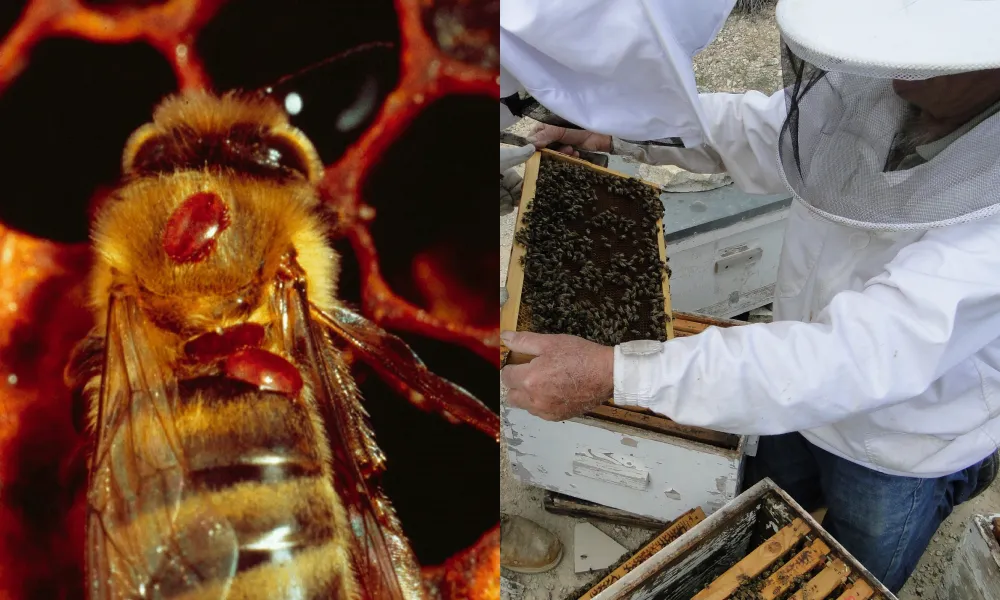

Cyprus’ beekeeping community has been urged to remain vigilant following reports that Tropilaelaps mercedesae, one of the most dangerous parasites affecting honey bees, may have spread from wild Asian bees to European honey bee colonies.
Scientists told Politis that the invasive mite is likely to reach Cyprus sooner or later, although it remains unclear when. They stressed that there is no need for panic, but that the beekeeping sector must be prepared.
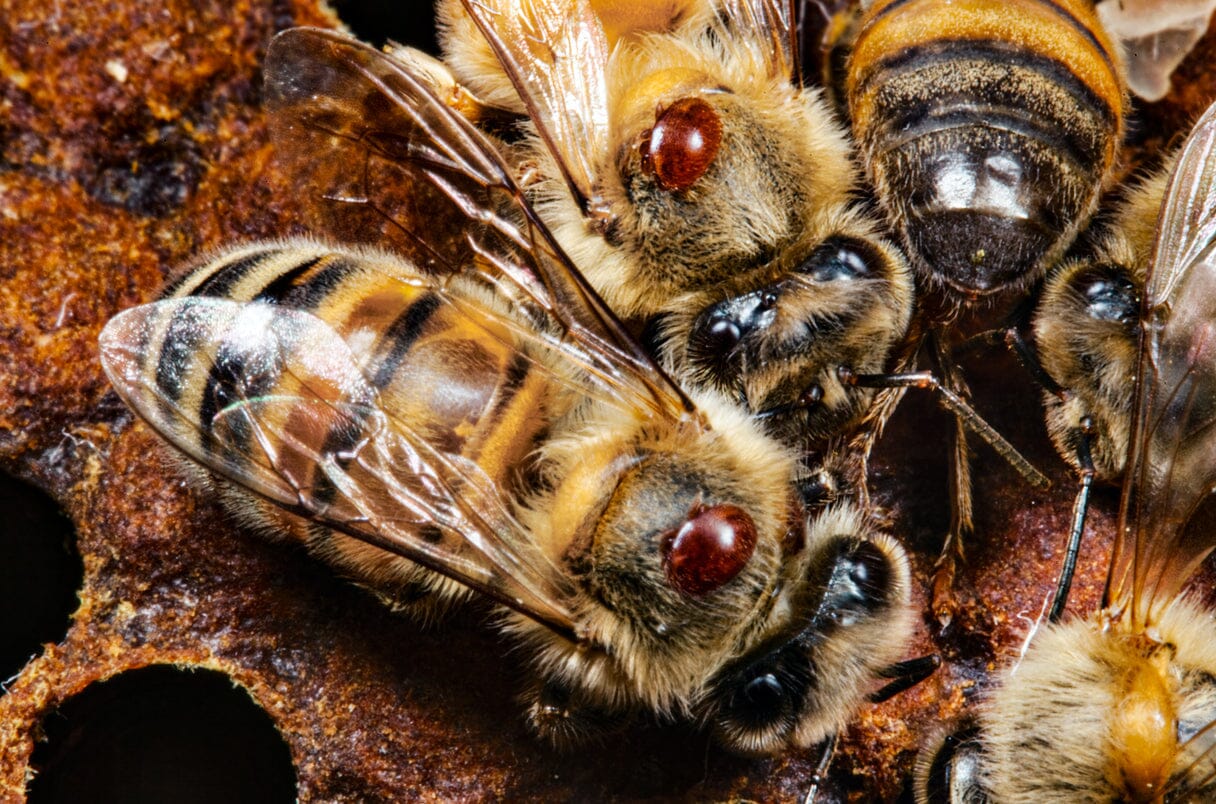
There is currently a suspected presence of the mite in an eastern Turkish province bordering Georgia. According to scientific studies, Tropilaelaps mercedesae reproduces twice as quickly as the better-known Varroa destructor mite, which has been present in Cyprus since the 1980s and is currently managed by beekeepers.
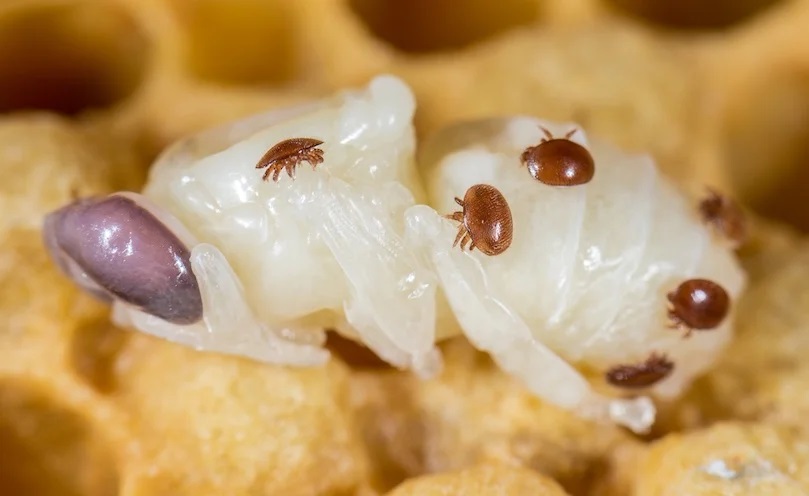
The mite moves rapidly across honeycomb and feeds aggressively on developing larvae and pupae. If left untreated, it can cause sudden brood mortality and lead entire colonies to abandon their hives.
Risks from Turkey and illegal queen bee imports
Scientists who have worked with Cypriot beekeepers for years are calling on the Veterinary Services and the Department of Agriculture to introduce preventive measures.
Their concerns follow suspected cases in Turkey and several European countries.
“Turkey should currently be treated as an area presenting a significant risk for the introduction of Tropilaelaps, but not as a country with a confirmed infestation,” Cypriot-born Andreas Thrasyvoulou, emeritus professor of agriculture at Aristotle University of Thessaloniki and a respected apiculture researcher, said in a recent social media post.
He said Greece was already at risk because of its proximity to Turkey. If the mite’s presence in Turkey is officially confirmed, the country should also be regarded as a potential route through which the parasite could reach Cyprus via bees imported from Turkey into the occupied areas.
Professor Thrasyvoulou described Turkey and the occupied areas as closely interconnected in terms of beekeeping. He noted that the Cypriot honey bee, Apis mellifera cypria, has already been crossbred with Apis mellifera anatoliaca, the bee subspecies native to Turkey.
Christina Christodoulou, a lecturer in organic farming and beekeeping at KES College in Nicosia, told Politis that the risks were not limited to the occupied areas.
She also raised concerns about illegal imports of queen bees by some beekeepers, mainly in the government-controlled areas, without inspection certificates from the Veterinary Services. She said these queens were primarily imported from countries including Greece, Bulgaria and Italy.
Cyprus authorities prepare preventive measures
The relevant departments of the Agriculture Ministry are aware of the situation and are planning steps to address the potential threat, according to information obtained by Politis.
As an initial measure, the Veterinary Services are expected to convene a meeting next week with all parties involved, including the Cyprus Beekeepers’ Association, to decide on the next steps.
A person involved in the discussions told Politis that the authorities may also consider raising the issue with the Turkish Cypriot community through a bicommunal technical committee.
The aim would be to coordinate preventive action, as was previously done in efforts to combat the Asian citrus psyllid, which produced positive results.
Scientists call for training and preparation
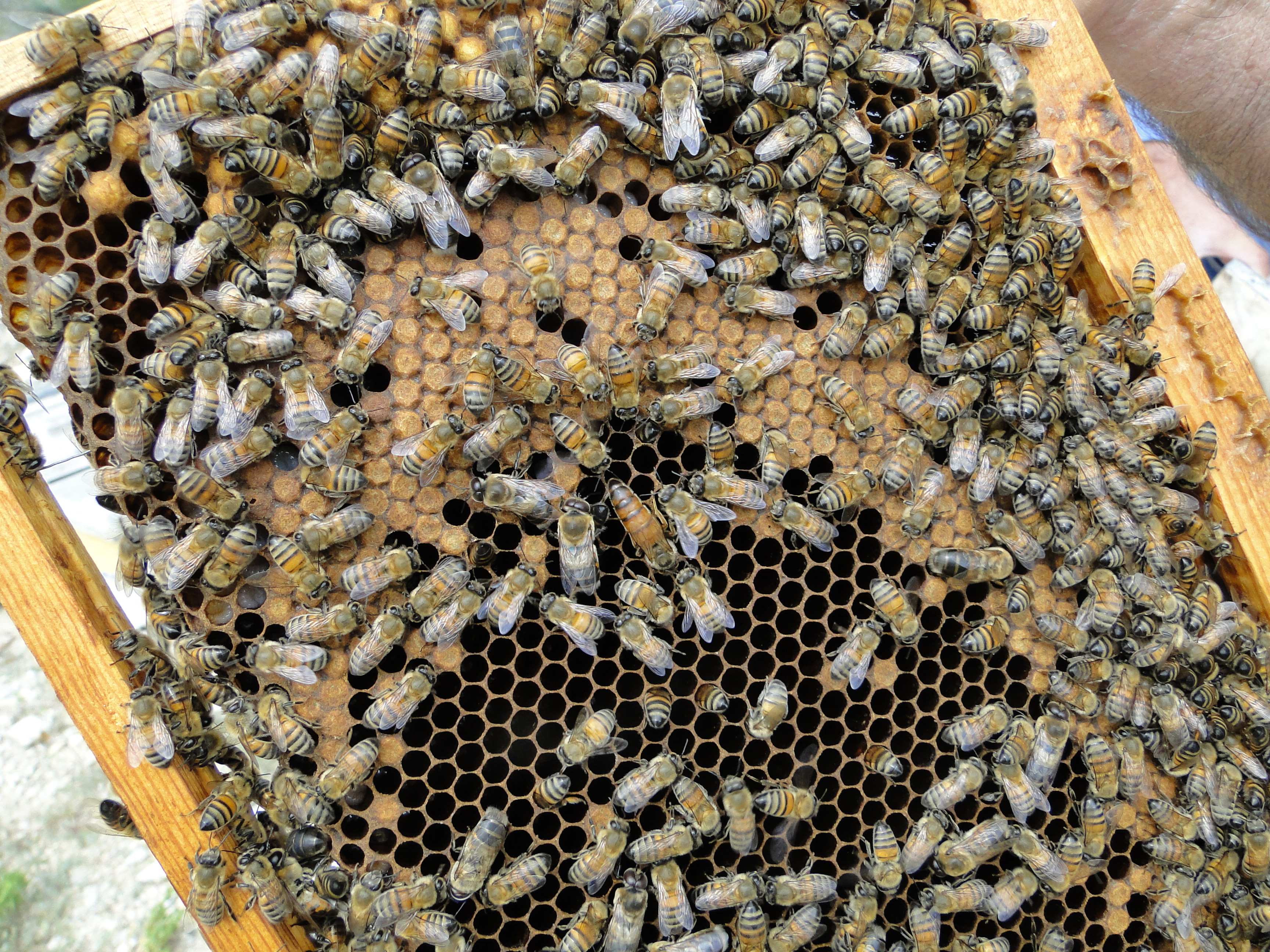
An assistant professor of applied beekeeping at the University of Thessaly’s Department of Animal Science and Christina Christodoulou outlined several steps that should be taken to address the threat.
First, they said Tropilaelaps mercedesae would eventually reach Cyprus, although it was impossible to predict when. The sector should prepare without creating panic.
Second, the authorities should provide compulsory training for all beekeepers. They stressed that Cyprus must avoid a repeat of the panic that followed the arrival of Varroa destructor in the 1980s.
Third, the new mite should be managed in a similar way to Varroa destructor.
Fourth, they said the destruction of infected bee colonies should not be considered under any circumstances. Such a measure has been discussed in other European countries following suspicions that the mite may be present.
Dependence on brood is both strength and weakness
In his social media post, which forms part of an article published in the latest issue of the specialist journal Beekeeping Review, Professor Thrasyvoulou described Tropilaelaps mercedesae as one of the most dangerous ectoparasites affecting Apis mellifera.
The parasite has a faster reproductive cycle and greater reproductive capacity than Varroa destructor.
“It has an advantage over varroa because it spends most of its life inside sealed brood cells, where it is protected from acaricides used in the hive,” he said.
“Without brood, however, it can survive for only a few days. In broodless colonies, it lives on adult bees for just one to three days.”
Professor Thrasyvoulou said this dependence on brood was both a major advantage and a significant weakness for the parasite.
“This is precisely what the entire control strategy is based on. Depriving it of food and breeding space, combined with appropriate treatment using formic acid, can provide solutions,” he said.
“Unlike varroa, eradicating Tropilaelaps is achievable, but it requires organisation, a systematic approach and guidance.”
He added that individual efforts could produce satisfactory results, but warned that these would only be temporary unless neighbouring apiaries cooperated and coordinated their response because of the mite’s particularly rapid reinfestation rate.