
After years of failures, flawed planning and costly decisions, Cyprus's waste management system has reached a critical juncture. The country still disposes of 60% to 65% of its waste through landfill, and under its European obligations must reduce that figure to 10% by 2035.
With major infrastructure requiring urgent upgrades and no final decision yet taken on the long-term model for managing municipal waste, the government is planning investments worth €162 million for the Pentakomo and Koshi Integrated Waste Management Facilities. The upgrades are intended as a transitional solution until a permanent system is determined.
The figures highlight the scale of the challenge. In Paphos, effectively 100% of waste is sent to landfill. At Pentakomo, around 80% of waste ends up buried, while 50% to 60% of waste processed at Koshi is still landfilled.
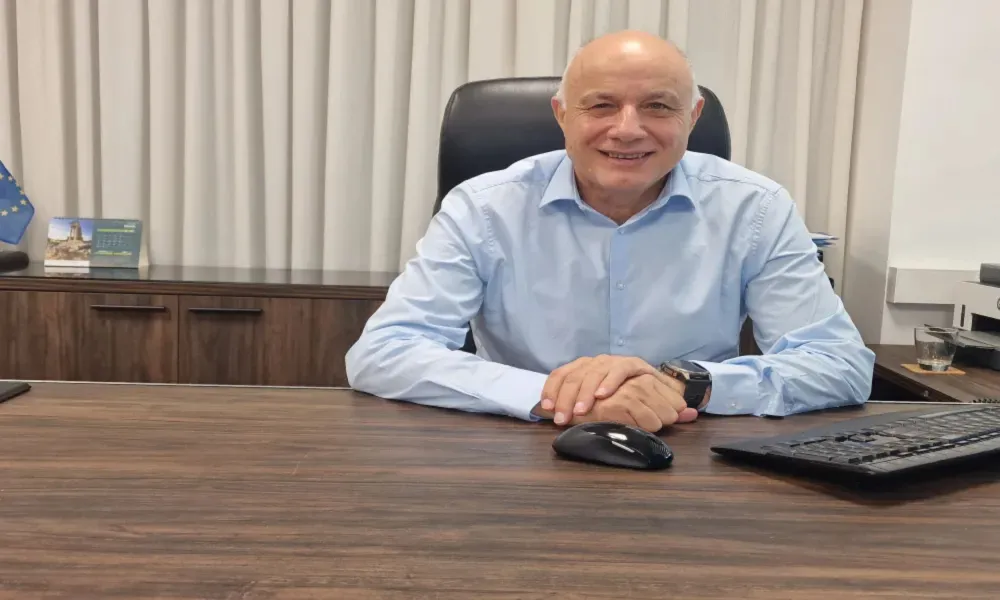
Dr Costas Constantinou, Director General of the Environment Directorate, outlined the next steps and timelines to Politis. The planned investments amount to €62 million for Pentakomo and €100 million for Koshi. However, these are considered transitional measures pending the outcome of a broader national review.
Twenty-year planning framework
According to Constantinou, a comprehensive study on municipal waste management in Cyprus will form the basis for policy decisions covering the next two decades and beyond.
The contract for the study will run for 18 months and is valued at nearly €1 million, with final results expected in early 2028.
"Its purpose is to examine waste issues in a comprehensive and holistic way. It will assess the facilities we currently have, available technologies, waste volumes and individual infrastructure needs," Constantinou said.
The study will develop a series of scenarios on which long-term nationwide planning will be based.
The tender process has already experienced delays. The first tender issued by the Department of Environment failed to attract bids, while procedural issues emerged during the second process and required clarification with the Treasury.
According to Constantinou, those issues have now been resolved and the necessary documentation is expected before a contract is signed.
Interim solutions cannot wait
Authorities say the waste management facilities at Pentakomo, Koshi and Paphos cannot wait until 2028 for decisions arising from the national study.
"We could not wait until 2028, when the study would be completed, in order to decide what to do, because these facilities, for different reasons, require immediate upgrading," Constantinou said.
For that reason, interim projects are being pursued in parallel with the long-term planning process.
A key condition is that any investments made now can be incorporated into whatever model is ultimately selected.
"Whatever we do now will be solutions or investments that will not affect the final choice," he said.
Pentakomo's troubled history
Pentakomo is viewed as the most difficult case.
The facility failed to operate as originally designed, with problems accumulating until the state assumed management of the site in 2023.
The original concept involved the utilisation of biogas, which was expected to help reduce operating costs. That objective was never achieved.
The private operator attributed the failure, among other factors, to the characteristics and moisture content of the waste stream. The state's position is that those conditions were already known when the facility was designed. The dispute is now before the courts.
Problems were evident from an early stage. The SRF/RDF fuel produced by the facility did not meet the specifications required for the intended use.
The high moisture content reduced its suitability as a secondary fuel, with significant quantities ultimately being disposed of through landfill. In the past, authorities also examined the possibility of building a waste-to-energy facility to utilise RDF, but no solution emerged through that option.
The result was the termination of the operator's contract and the transfer of responsibility to the state.
"The private operator failed. The state was forced to terminate the contract and take over the management of a functioning plant without the expertise and resources, and without the flexibility of the private sector," Constantinou said.
'A public health hazard'
In 2023, the state assumed responsibility for Pentakomo through the Water Development Department.
According to Constantinou, conditions at the facility were highly problematic.
"Pentakomo was a public health hazard because processing was almost non-existent," he said.
Leachate was reportedly escaping from landfill cells, fires burned for extended periods and nearby communities raised strong objections.
To restore functionality, the Water Development Department entered into more than 150 contracts.
Authorities addressed leachate management issues, improved landfill and mechanical sorting operations, extinguished long-running fires and processed waste that had remained at the site for months.
"The plant may not be a model of environmental performance, but it does not have a public health issue," Constantinou said.
He added that the first priority was restoring operations and addressing impacts affecting public health and neighbouring communities.
"That was achieved and it is now recognised that the situation has improved."
Despite those improvements, around 80% of waste arriving at Pentakomo continues to be landfilled.
How the €62m will be spent
The next phase involves an interim upgrade programme with an estimated cost of €62 million.
A new contract is planned for five years, with the option of two one-year extensions, giving a maximum duration of seven years.
The timeframe reflects the period likely to be required before a permanent solution can be implemented.
Even if the national study is completed in 2028, authorities expect additional time will be needed for policy decisions, project planning, financing and construction.
"If we have the data in 2028, decisions will still need to be taken, projects will need to mature based on the study scenarios, funding must be secured and projects of this scale require three to four years to build," Constantinou said.
Third landfill cell and sorting upgrades
Several major interventions are planned at Pentakomo.
The first landfill cell has already reached the end of its life and requires restoration.
The second cell is expected to become full during the period covered by the interim contract, leading to plans for a third landfill cell.
The first deliverable will be repairs to the biological leachate treatment plant, ensuring leachate can be treated properly regardless of other works at the facility.
This will be followed by upgrades to the mechanical sorting system.
Constantinou explained that while the conveyor lines remain operational, some optical sensors and other separation technologies no longer function effectively. As a result, the facility relies heavily on manual sorting and simpler systems such as magnets and density and air separation methods.
The fourth component of the upgrade concerns the stabilisation of the organic waste fraction. The goal is to ensure that waste destined for landfill has undergone treatment and is biologically stable, reducing active decomposition.
State to fund the investment
The estimated €62 million capital cost will be covered by the state.
The future contractor will be responsible for carrying out the upgrades and operating the facility.
"We will pay for the infrastructure. The capital expenditure will be covered by the state and the contractor will undertake management," Constantinou said.
Authorities aim to have a contractor in place by around July next year.
However, one key issue remains outside the scope of the interim solution: the long-term treatment of organic waste.
Whether Cyprus ultimately chooses energy recovery, transfer to another facility or another technology will be determined through the broader national planning process.
Paphos awaiting a decision
The situation in Paphos is considered more urgent.
There is currently no active waste treatment infrastructure in the district and virtually all waste generated there is landfilled.
Despite this, no decision has yet been taken on whether a new facility will be built in the district.
The government wants the matter assessed within the context of the country's overall waste strategy rather than as a standalone project.
"There are many views. Everyone has their own opinion. That is why we must examine things holistically. We cannot view issues in isolation," Constantinou said.
"For example, Paphos may not need its own facility. One could potentially be located elsewhere."
Because Paphos cannot wait until the broader strategy is completed in 2028, authorities have requested that recommendations for the district be delivered within the first three months of the study contract.
Koshi reaches its limits
The challenges facing Koshi are different from those at Pentakomo.
The facility, which was previously at the centre of a bribery scandal that resulted in prison sentences, continues to operate but has reached the limits of its capacity and lifespan.
"While Pentakomo failed, it did not reach the end of its lifespan," Constantinou said.
Koshi, by contrast, remains operational but its infrastructure and equipment are nearing their limits.
The site was originally designed to handle waste from Larnaca and Famagusta, but began receiving waste from Nicosia following the closure of the Kotsiatis landfill.
"When we closed Kotsiatis, Nicosia's waste was diverted to Koshi and the volume of waste going there almost doubled," Constantinou said.
As a result, the facility now operates beyond its original design capacity.
The mechanical equipment requires a comprehensive upgrade and plans include the addition of a third processing line.
Landfill capacity running out
The issue of landfill capacity at Koshi is considered particularly urgent.
According to estimates, the site's second landfill cell has only eight to ten months of remaining lifespan.
To avoid a capacity crisis, a third landfill cell will proceed as a standalone project rather than waiting for the wider upgrade programme.
The total investment at Koshi is preliminarily estimated at €100 million.
The approach will broadly mirror that being followed at Pentakomo, although implementation is expected to begin around six months later.
Until the interim solution is in place, operations will continue under short-term contracts with the existing operator.