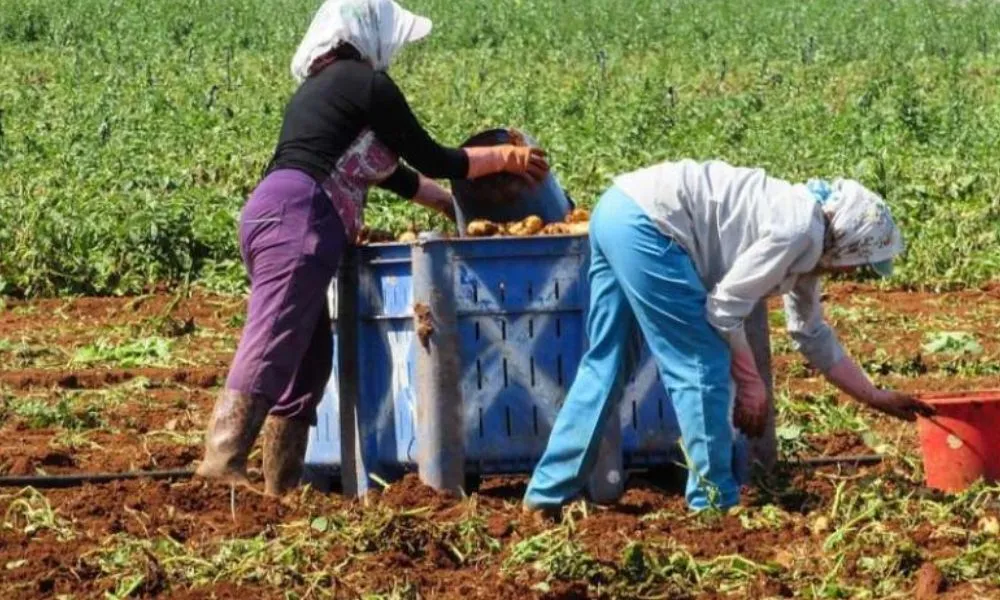

The exclusion of seasonal crops from this year's water allocation, at a time when four golf courses have reportedly received an extension until September to continue receiving water from reservoirs, and the slow pace of efforts to reduce losses in water distribution systems operated by the District Local Government Organisations (EOAs), are among the issues troubling members of the new House Agriculture Committee.
Following consultations with stakeholders in the primary sector, committee members compiled a list of concerns which they raised with Agriculture Minister Maria Panayiotou during their first meeting with her on Tuesday.
Panayiotou began by presenting the most significant reforms and interventions implemented since 2023, as well as the government's key priorities for the coming period.
On the water issue, she noted that despite improved inflows into reservoirs during 2026, the overall situation remains fragile. For that reason, irrigation policy for 2026 was designed in a way that would not undermine water reserves needed in future years.
“Priority was given to permanent plantations, greenhouse cultivation, livestock farming and industry through a three-year planning framework. Based on improved data, the total quantity allocated for irrigation increased from approximately 15.3 million to 18.7 million cubic metres,” she said.
“We expected a more detailed presentation from you regarding the water issue, because within three years there will be no primary sector left, especially for seasonal crops,” observed Committee Chairman and AKEL MP Yiannakis Gavriel.
He also took the opportunity to point out that, while farmers are bearing the burden of restrictions, four golf courses will continue drawing water from reservoirs until September, despite assurances given by the ministry during an earlier committee meeting that the practice would end in May.
The minister replied that the companies had requested and received a short extension to allow them to complete their own water infrastructure projects.
At the same time, she stressed that the golf courses receive only 1.5% of the water available in reservoirs and assured MPs that this percentage would not be exceeded.
As the minister acknowledged, irrigation has long been the “poor relative” of the country's water policy. She noted that farmers face water cuts almost every year and that since 2004 they have received their full requested allocations on only two occasions.
She added that “we are solving the drinking water problem by ensuring that, by 2027, 100% of water supply needs will be covered through desalination, allowing the water stored in reservoirs to be made continuously and uninterruptedly available to farmers.”
She further stated that Cyprus has secured €4.5 million from the European Commission in relation to drought conditions, enabling compensation to be paid to those whose production declines because of water shortages.
For his part, DIKO president Nikolas Papadopoulos called for clear timelines to resolve irrigation issues, particularly those affecting seasonal crops.
He also asked whether outstanding questions regarding responsibility for EOA infrastructure projects, including the replacement of ageing pipelines aimed at reducing losses, had been settled.
AKEL MP Valentinos Fakontis picked up on Papadopoulos' remarks to argue that the €10.5 million allocated by the ministry to EOAs for pipeline replacement and leak reduction was “a drop in the ocean.”
Responding to Fakontis, Panayiotou said EOAs received that amount because, up to 2027, which is the period covered by the allocation, the number of projects they are capable of implementing remains limited.
She explained that the funding was tied to projects that are properly costed, subject to timelines and realistically capable of being delivered.