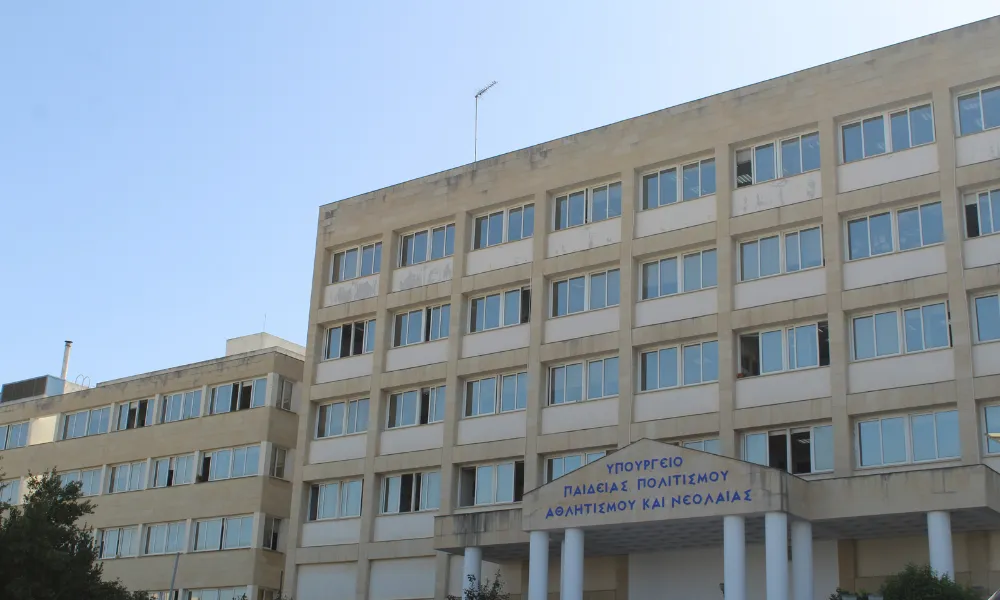

The Ministry of Education, Sport and Youth (YPAN) has reaffirmed that the implementation of formative teacher evaluation will begin in the 2026-27 school year, while extending the deadline for feedback from education unions until 28 August.
The ministry's position was outlined in a letter from Director-General Marios Panagides to the teaching unions POED, OELMEK and OLTEK, following objections raised by the organisations over the handling of discussions within the Monitoring Committee overseeing the reform.
The ministry said it remains committed to meaningful dialogue with stakeholders and noted that the Monitoring Committee was established in legislation as an advisory body tasked with making recommendations to the competent authority.
Ministry extends consultation deadline
According to Mr Panagides, a draft proposal outlining the implementation of formative evaluation was presented to committee members during the meeting so they would have time to review it before a final recommendation is submitted to the minister.
He said the original deadline of 14 August 2026 was set to ensure timely approval of the final framework ahead of the start of the new academic year.
However, acknowledging concerns raised by the unions regarding the available timeframe, the ministry agreed to extend the submission deadline to 28 August 2026.
Despite the extension, the ministry stressed that the introduction of formative evaluation from the 2026-27 school year is a legislative obligation.
"The manner and process of implementation remain open for discussion within the framework of the committee's work before being finalised by the competent authority," the ministry said.
Unions express dissatisfaction
In a joint letter dated 28 July, POED, OELMEK and OLTEK expressed what they described as strong dissatisfaction with the procedure followed during the committee meeting of 24 July.
The unions argued that ministry positions on significant issues relating to the evaluation regulations were presented during the meeting itself, leaving insufficient time for consultation and discussion.
They stated that documents should be circulated before meetings and that organisations should be given a reasonable period to formulate responses.
The unions also argued that dialogue involves more than the exchange of documents and letters, requiring substantive discussion and efforts to bridge differences.
Dispute over readiness for implementation
The three organisations reiterated their position that formative evaluation cannot be implemented during the 2026-27 school year, arguing that key prerequisites have not yet been met.
Among the issues cited were the absence of positions and structures they consider necessary for the new system, including Senior Education Officers and Inspector-Advisers.
According to the unions, during the meeting they presented a common position that implementation should be delayed. They said the ministry responded that the reform would proceed because it is required by law and requested written submissions by the original August deadline.
The organisations further claimed that the meeting effectively ended without sufficient discussion of their concerns.
Warning against unilateral decisions
POED, OELMEK and OLTEK said they regard the ministry's approach as inconsistent with the principles of dialogue and described it as an "offensive attitude" towards the organisations.
The unions informed the ministry that they could not submit their positions before 1 September 2026 and reiterated that responsibility for any difficulties arising from implementation would rest solely with YPAN.
They also argued that the legislation does not prescribe the method of implementation and maintained that all procedural aspects should be agreed jointly between the ministry and the educational organisations.
The unions concluded that unilateral decisions would not be accepted.
Source: CNA