
Cyprus is projected to rank among the strongest-performing tourism markets in Europe over the next decade, with international visitor overnight stays forecast to increase by 75% between 2026 and 2036, significantly outpacing the European average.
The findings come from Accor's report, The Changing Face of Europe's Tourism Map to 2036, based on forecasts by Tourism Economics, which examines how travel patterns, visitor demographics and destination preferences are expected to evolve across Europe over the next ten years.
Cyprus in Europe's top five growth markets
Among 15 small and medium-sized European tourism markets assessed in the study, Cyprus ranks fifth for projected growth in international overnight stays.
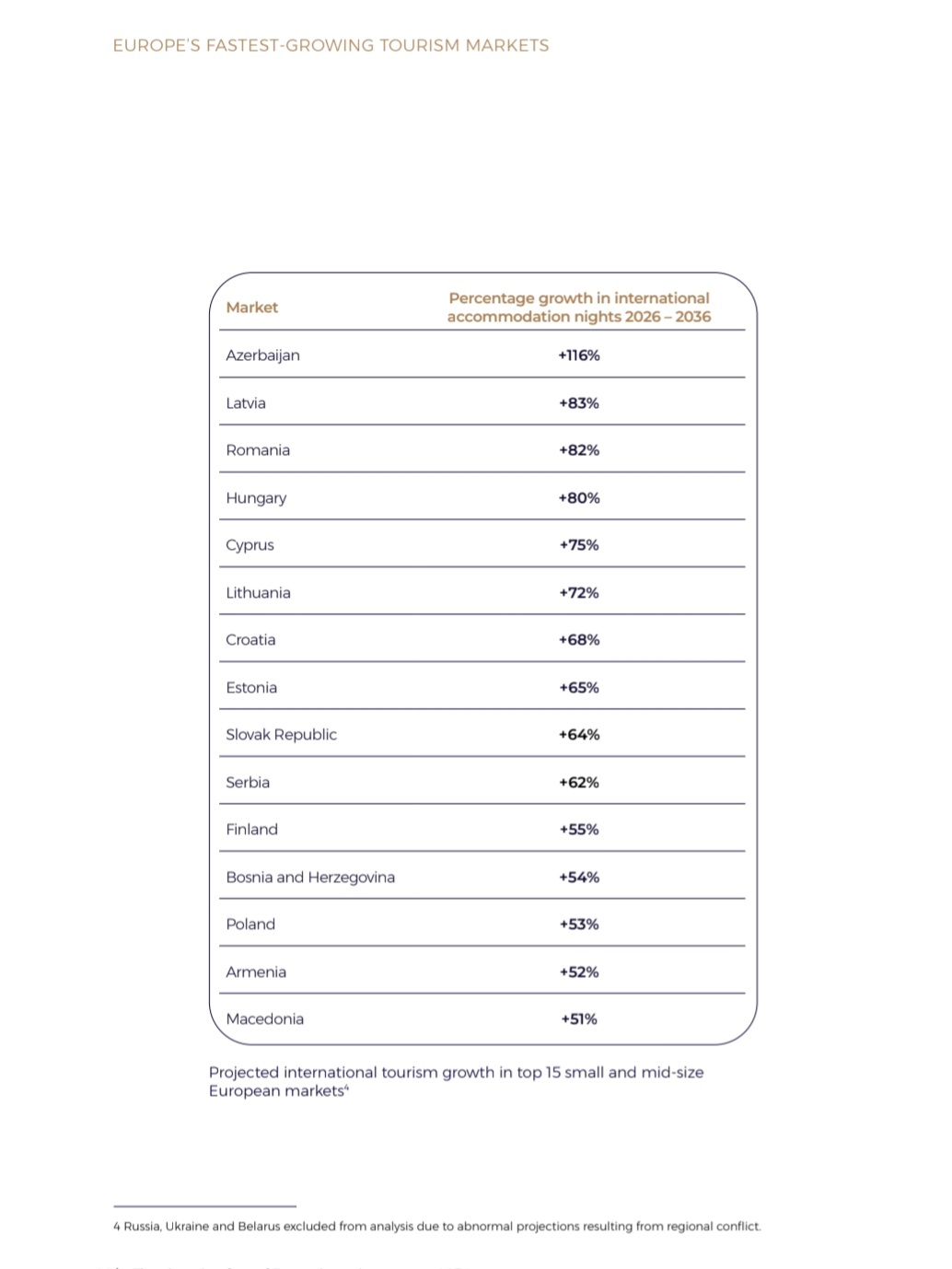
Only Azerbaijan (116%), Latvia (83%), Romania (82%) and Hungary (80%) are expected to record stronger growth. Cyprus is followed by Lithuania (72%), Croatia (68%), Estonia (65%) and Slovakia (64%).
The projected 75% increase compares with an expected 42% rise across Europe as a whole.
The report notes that this figure refers to the total number of overnight stays by foreign visitors rather than visitor arrivals alone, meaning growth could be driven by both larger visitor numbers and longer stays.
Accor specifically identifies Cyprus and Croatia as destinations that continue to benefit from their strong appeal in the leisure travel market.
Europe set for tourism surge
Across Europe, demand for tourist accommodation is forecast to grow by 32% over the next decade, adding more than 1.6 billion additional overnight stays annually.
International travel is expected to be the main driver of growth, with foreign visitor overnight stays projected to rise by 42%, compared with 24% growth in domestic tourism.
By 2036, Europe is still expected to rely heavily on intra-European travel, with European visitors accounting for approximately 77% of international arrivals.
Middle East and Asia gain importance
One of the report's key findings is the growing importance of long-haul travel.
Arrivals from the Middle East are projected to increase by 93% by 2036, while arrivals from the Asia-Pacific region are expected to rise by 88%.
Among individual markets, the strongest growth forecasts are:
- China: +138%
- South Korea: +121%
- Japan: +77%
- India: +68%
The trend is being driven by rising incomes, expanding middle classes and improving air connectivity.
For destinations such as Cyprus, the report highlights the importance of strengthening access to emerging tourism markets, although it does not provide country-specific forecasts for Asian or Middle Eastern arrivals to the island.
Emerging destinations challenge traditional leaders
While tourism heavyweights such as Spain, France, Italy and the United Kingdom are expected to maintain their dominant positions, some of the strongest growth rates are forecast in smaller markets.
Countries across Central and Eastern Europe, the Baltic region and the Balkans are projected to gain market share as transport infrastructure improves, airline networks expand and international visibility increases.
Competitive pricing is also expected to remain a key advantage for many of these destinations.
Visitor spending to exceed €1.3 trillion
The growth in tourism is also expected to translate into significantly higher visitor spending.
According to the report, inbound tourism expenditure across Europe is projected to rise from €825 billion in 2026 to more than €1.3 trillion by 2036, an increase of over 64%.
Spending is forecast to increase by:
- More than 72% on food and beverages.
- Nearly 70% on retail purchases.
- More than 66% on leisure, cultural and sporting activities.
Business travel is also expected to outperform leisure travel, with arrivals forecast to rise by 50%, compared with 39% growth in leisure tourism.
The report notes, however, that higher overnight stays do not automatically translate into proportionately higher revenues, as overall economic returns depend on visitor spending patterns, length of stay and the composition of tourist demand.
Sources: Accor, "The Changing Face of Europe's Tourism Map to 2036"; ANA-MPA