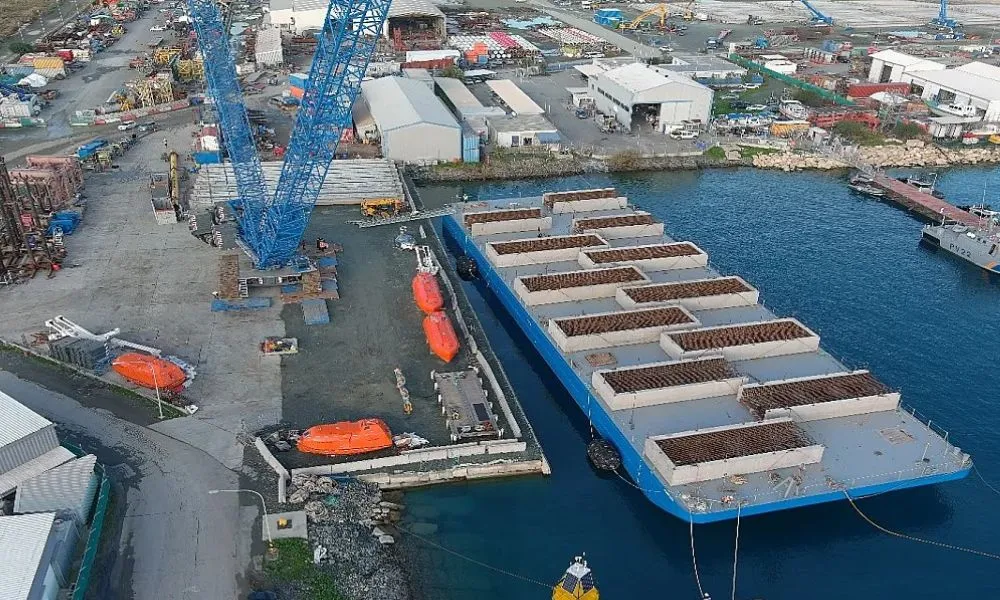

DEFA and its subsidiary Etyfa are entering the final stage of launching a tender process for the pre-selection of a contractor to complete the unfinished liquefied natural gas (LNG) terminal at Vasilikos.
The pre-qualification process aims to identify specialised companies capable of finishing the project. DEFA had hoped to launch the tender by the end of May, before the expiry of its board’s term on July 3, allowing the incoming board to focus on evaluating bids and selecting a contractor. That deadline, however, was missed.
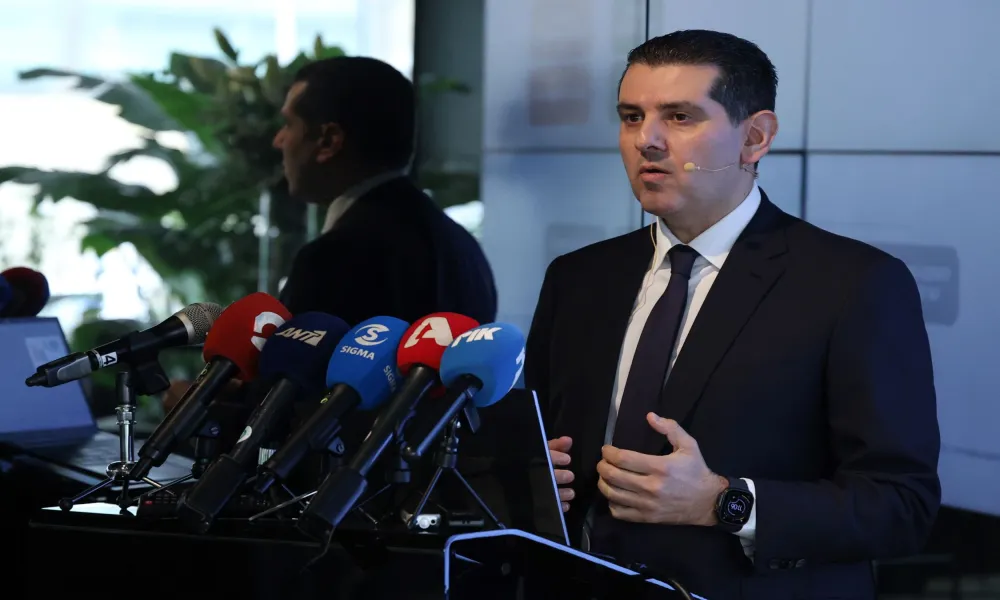
DEFA chairman Giorgos Ashikalis told Politis that delays were caused by issues raised by the Treasury that required clarification and agreement with the project's consultant and coordinator.
Timeline remains fluid
According to Ashikalis, the roadmap currently includes:
- Submission of expressions of interest by potential contractors.
- Evaluation, negotiations and pre-selection of companies with the necessary expertise and experience by September.
- Distribution of tender documents to shortlisted bidders.
- Award of the contract before the end of 2026.
- Start of construction works in 2027.
Gas needed before 2030
Should further delays arise and the process fail to advance before the end of this year, Cyprus faces a growing risk of an energy capacity gap before 2030.
The country is already preparing for the retirement of ageing power-generation units at Dhekelia and three steam turbines at Vasilikos. Concerns over future electricity supply were highlighted in Monday’s Politis front-page report and by Energy Minister George Papanastasiou.
Can a contractor be found?
The next challenge will be convincing reputable infrastructure companies, preferably European firms, to take over the project.
The task is considered difficult given that the project remains incomplete and parts of its original design still need to be finalised by the new contractor through an updated master plan.
There have also been concerns over whether sufficient market interest will emerge.
Assessing existing works
Infrastructure already completed by the former contractor, CPP, will also need to be assessed.
Studies carried out by Technip Energies, hired as consultant after the project collapsed, examined the jetty, onshore facilities, stored construction materials and the remaining steps required for completion. No evidence of defective materials or works outside specifications was identified.
“We checked whether there had been any displacement of the subsea infrastructure and found none,” Ashikalis said.
The new contractor will nevertheless be required to re-evaluate materials and replace anything found not to meet specifications.
He added that the contractor will also have to carry out risk-assessment studies.
“Such studies may not be considered necessary in some countries, such as China, but they are mandatory on European territory,” he said.
Another issue is the absence of safety data sheets and certification documents for some construction materials, which CPP is believed not to have provided.
Despite the delays, Ashikalis defended the current approach.
“If we had gone to tender a year ago, important parameters would have been missing and could have led to another failure,” he said. “At least now we are proceeding on the right path.”
Promitheas remains in Malaysia
One positive development concerns the floating storage and regasification unit (FSRU) Promitheas.
The vessel had remained stranded in Shanghai after relations between the Republic and CPP collapsed in 2024. Following lengthy negotiations, ownership was secured and the ship was transferred to a shipyard in Malaysia for upgrades.
According to Assiikalis, the vessel remains in Malaysia awaiting completion of the terminal.
Current plans envisage the ship sailing to Cyprus carrying an LNG cargo, enabling final certification shortly before the terminal becomes operational.
The issue will be reassessed after the tender process begins.
Proposals to lease the vessel were rejected because interested parties sought long-term agreements of at least 10 years, while the goal remains its deployment at the Vasilikos terminal.
Meanwhile, annual maintenance costs have been reduced to between €2 million and €2.5 million.
“If it were moored in Cyprus, the cost would be double,” Ashikalis said.
Gas procurement still on hold
Natural gas procurement remains frozen.
“We already have a list of interested suppliers, which has been updated,” Ashikalis said.
“When we know when the FSRU will be completed, the process will restart. The groundwork has been done and we are ready for the next step.”
Costs expected to triple
The original budget for the project launched in 2020 was €300 million for construction, plus another €200 million covering 20 years of operation.
To date, approximately €200 million has already been paid to CPP for the floating terminal Promitheas, while another €50 million went towards construction of around half of the onshore infrastructure.
With only €50 million remaining under the original contract, estimates now suggest that the cost of completing the project could be at least three times higher than originally envisaged.