The crisis triggered by the war in the Middle East, combined with reduced hotel occupancy levels, is pushing some businesses to lower prices in an effort to boost interest. However, there is no widespread trend due to persistently high costs.
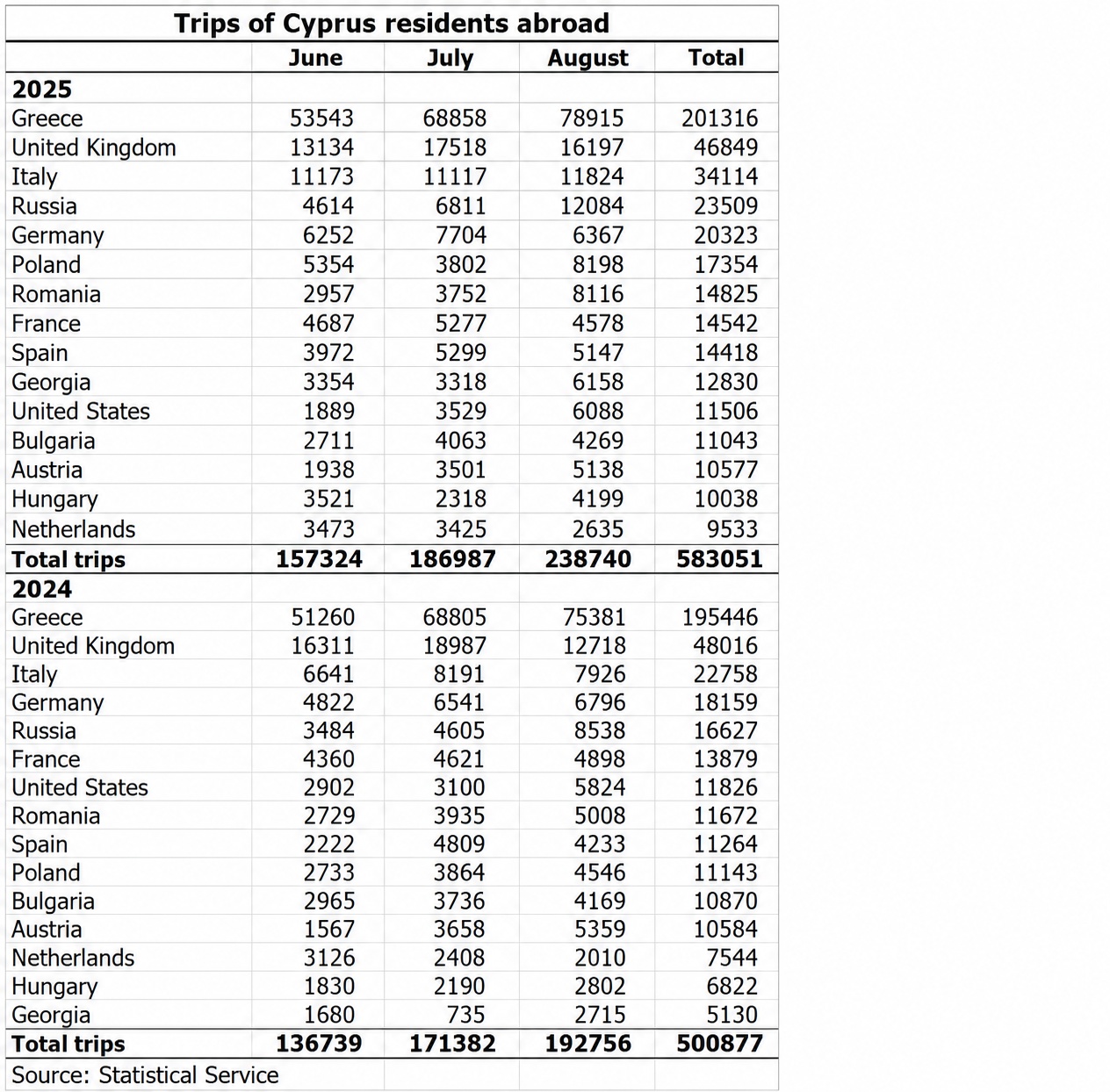
Cyprus hotels are moving forward with targeted promotional actions aimed at domestic tourism during the current summer season, in an effort to increase occupancy rates and tap into the outbound tourism market. Last summer, trips by Cyprus residents reached 583,051, marking an annual increase of 16.4% compared with 2024.
The crisis triggered by the war in the Middle East, which has reduced hotel occupancy, is leading some businesses to cut prices in order to stimulate demand and keep Cypriots travelling within Cyprus. However, this is not a generalised trend, as rising operating costs – particularly energy costs for hotels – place limits on pricing strategies.
The director general of the Cyprus Hotel Association (PASYXE), Christos Angelides, told Politis that amid challenges and reduced bookings, there are also opportunities for Cypriots through offers and better prices.
“People should check hotel websites, call hotels directly and follow their social media,” he said.
He added that the quality of Cypriot hotels is competitive with similar properties in any category, anywhere.
Angelides said there is interest among Cypriots for local holidays. Some are already booking, while others are still exploring options, with hopes for additional last-minute bookings.
“Each business follows its own commercial policy, depending on demand, occupancy levels and the market it targets. What we are seeing is targeted promotional actions for domestic tourism, not horizontal price reductions across the entire sector,” said Chrysaimili Psilogenni, director general of the Cyprus Tourism Enterprises Association (STEK).
At the same time, she stressed that “operating costs for hotel businesses have increased significantly in recent years due to rising energy costs, wages, raw materials and overall operating expenses.”
Despite this, she noted, hotel prices have not risen to the same extent, as businesses have absorbed a significant share of these increases in order to maintain the competitiveness of Cyprus’s tourism product.
According to Psilogenni, interest among Cypriots in domestic tourism remains at similar levels to previous years, with no significant change in their preferences.
Improvement amid uncertainty
Regarding bookings, PASYXE president Thanos Michaelides said hotel activity in Cyprus in June shows improvement compared to previous months. However, he noted that the tourism market remains below the usual levels for this time of year.
He expressed optimism that developments in the Iran crisis could lead to further improvement in demand and bookings. So far, however, there are no concrete indications confirming this outlook.
“2026 is a difficult year for the hotel sector,” he stressed.
Efforts are focused on maintaining interest in Cyprus and mitigating the impact of adverse conditions, with the aim of salvaging as much of the tourism season as possible by the end of the year.
“The data for May shows a clear improvement compared with previous months, as the decline in arrivals was limited to 4.9%, compared with significant losses recorded in March and April. Despite this positive development, the first five months of the year still show a decrease of 13.3%, confirming that the effects of the geopolitical crisis in the region have not yet been overcome,” Psilogenni noted.
At the same time, she added that arrivals alone do not always reflect the full picture of the tourism industry.
“What matters more are occupancy rates, length of stay and tourist spending, which vary significantly depending on the market and region.”
“The current picture is mixed, with some businesses performing better and others still facing challenges. However, we remain on alert, as we continue to operate in an environment of increased uncertainty due to geopolitical developments in the wider region, closely monitoring both last-minute booking flows and international developments that may affect tourism demand,” she said.
She also pointed to the need for an effective crisis management mechanism for the tourism sector, allowing timely coordination among stakeholders during periods of extraordinary challenges.
Where Cypriots travel abroad
The figures show that Cyprus residents represent a significant travel market.
According to data from the Statistical Service processed by Politis, during the summer months of June, July and August 2025, trips by Cyprus residents to Greece reached 201,316, compared with 195,446 during the same period in 2024. Travel to Greece peaks in August.
Trips to the United Kingdom declined last summer to 46,849 from 48,016 in 2024. It is noted that the category “residents of Cyprus” includes foreign nationals living in Cyprus, who may travel to their home countries.
Travel to Italy showed a significant increase, reaching 34,114 compared with 22,758 in 2024.
Increases were also recorded for trips to Russia and Germany, while there was notable growth in travel to Poland, Romania, Spain, France, Bulgaria, Hungary, the Netherlands and Georgia.