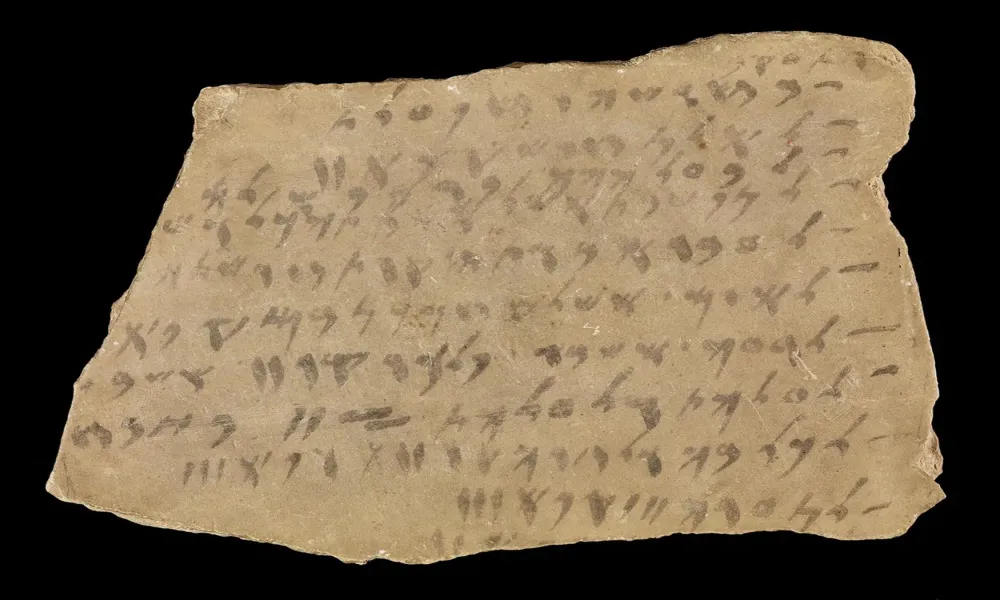

A new study of an ancient Phoenician inscription discovered in Kition, present-day Larnaca, is offering fresh insight into a mysterious ritual that involved a group of young girls more than 2,300 years ago.
The research focuses on the so-called Kition Tariff, an inscription dating to the fifth or fourth century BC. One section of the text refers to young girls and the number 22 in connection with a sacrifice, although researchers say the exact number of participants remains uncertain.
Earlier interpretations linked the girls to the cult of the goddess Astarte and suggested they may have been involved in sacred prostitution because the inscription also mentions repairs to her temple.
Researcher Beatrice Pestarino disputes that theory, arguing that the text is more likely a financial record managed by Kition's royal administration rather than a document dealing exclusively with temple activities.
Symbolic sacrifice rather than sacred prostitution
The inscription does not identify the girls as priestesses or ritual officials, while other participants in religious ceremonies are specifically described by title.
Pestarino suggests the girls may have taken part in a ceremonial rite or even been the intended subjects of a symbolic sacrifice.
Archaeological evidence from sites in Cyprus indicates that young girls participated in rituals associated with the transition to adulthood. Although ancient Greek and Roman writers referred to human sacrifice on the island, there is little archaeological evidence that such practices occurred during the period in question.
The study therefore explores the possibility that the ritual was symbolic rather than fatal, drawing comparisons with myths such as the story of Iphigenia, who was spared and replaced by an animal sacrifice.
Were 22 young girls sacrificed in ancient Cyprus? A fresh analysis of a 2,300-year-old Phoenician inscription challenges earlier beliefs, suggesting the girls may have taken part in a symbolic ritual rather than being killed. https://t.co/JR81vxg5El
— Tom Marvolo Riddle (@tom_riddle2025) November 18, 2026
Ritual may have served political purpose
According to the research, the ceremony may also have strengthened royal authority at a time when Kition's rulers were facing internal political challenges and territorial expansion.
State-sponsored religious ceremonies could have reinforced social cohesion and legitimised the monarchy, highlighting the close relationship between religion and political power in ancient Cyprus.
While the inscription does not reveal what ultimately happened to the girls, the study offers a new interpretation of their possible role and sheds light on the intersection of religion, politics and the lives of women in ancient Cyprus.