
The PSI Foundation has concluded its first project in Nicosia after a month-long exhibition that transformed the historic centre into an open-air contemporary art trail.
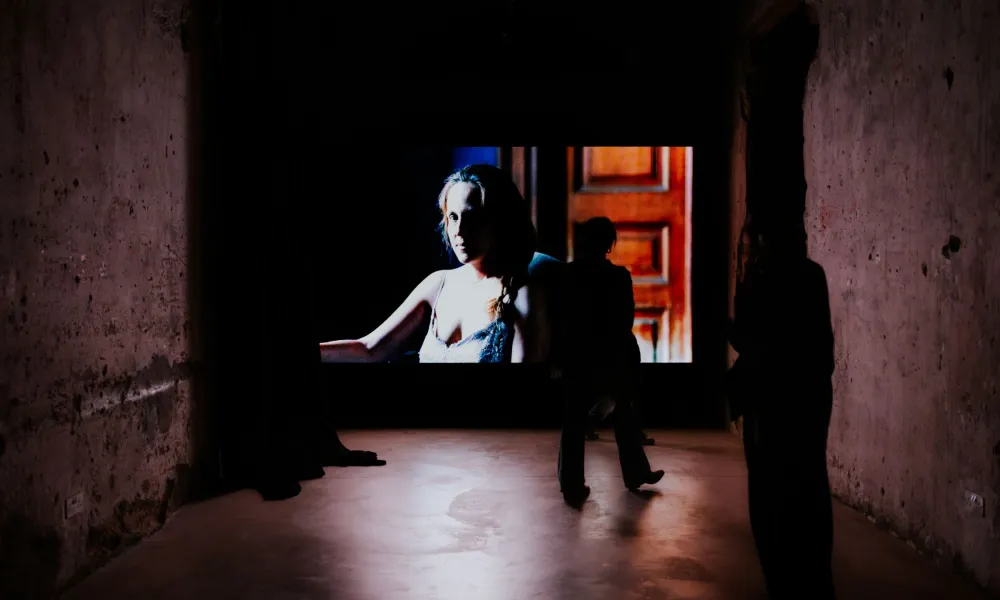
Titled "Objects in the Mirror May Be Closer Than They Appear" and curated by Evagoria Dapola, the exhibition ran from October 2 to November 2, 2026, presenting video artworks across nine locations within the Venetian walls of the capital.
Rather than confining the works to a traditional gallery setting, the project integrated contemporary art into everyday urban spaces, including shop windows, workshops, creative venues and other locations woven into the daily life of old Nicosia.
Strong public response
The exhibition closed with a curatorial walkthrough led by Dapola, followed by a final gathering at The Gym Bar, where the project had originally begun.
According to organisers, public interest remained strong throughout the exhibition's run. Attendance was particularly high at key venues, including the MERES multi-space, while accompanying publications and exhibition maps proved highly popular.
Visitors also engaged with the project through repeat visits, discussions and questions about the artworks and their themes.
Social media reaches new audiences
The exhibition gained significant visibility beyond traditional arts audiences through social media.
One notable example involved a visitor who encountered one of the works by chance, documented the experience in a TikTok video and then decided to follow the entire exhibition route. The post attracted more than one million views, reflecting one of the project's central aims: encouraging unexpected encounters with art and inspiring people to explore the city differently.
By placing works throughout the urban environment, the organisers also reached audiences who had not planned to attend an exhibition. Passers-by regularly stopped to view the installations, while the free and accessible format broadened participation beyond regular gallery-goers.
Art beyond gallery walls
The exhibition was conceived as a parallel project to "Bill Viola. Unspoken", presented by the PSI Foundation in Limassol.
In Nicosia, however, the moving image was removed from the controlled setting of a gallery and embedded within the city's everyday rhythm.
Works by Maria Anastasiou, Nadim Choufi, Danae Io, Stelios Kallinikou, Kakia Katselli, Aristotelis Nikolas Mochloulis, Alexandros Pissourios, Janis Rafa and Constantinos Taliotis were displayed across nine different locations, creating an exhibition route without a fixed beginning or end.
Nicosia as part of the exhibition
Organisers emphasised that the city itself formed part of the curatorial concept.
The history of old Nicosia, its communities, collective memories and ongoing transformation were all incorporated into the project's thinking.
At a time when the historic centre is experiencing regeneration, commercial development and changing uses, the exhibition invited visitors to reflect not only on physical spaces but also on the social, historical and emotional relationships connected to them.
Accessibility at the heart of the project
Dapola said one of the exhibition's most significant achievements was making contemporary art accessible to a wider audience.
"For me, one of the most important things was seeing the exhibition achieve one of its main goals: to make the experience of encountering contemporary art more democratic, and to challenge the idea that the audience for art is decided in advance," she said.
She argued that accessibility involves more than offering free admission.
"It is also about where art happens, how people come across it and what kind of relationships it can build with them," she said, adding that the positive response demonstrated a demand for cultural activities that remain connected to the daily life of the city.
Dapola said the first edition had established a strong foundation for future interventions, collaborations and engagement with Nicosia's communities.
Building cultural connections
The PSI Foundation said the project also created new links between artists, audiences and cultural practitioners.
Participating artists benefited from direct engagement with local communities, while curators, artists and cultural organisations showed strong interest in the exhibition.
The project further highlighted video art and moving-image practices, bringing together works and artists that are rarely presented on such a scale in Cyprus.
Following what organisers described as a highly successful debut in the capital, the PSI Foundation said the exhibition marks the beginning of a broader presence in Nicosia, with further projects and collaborations expected in the future.