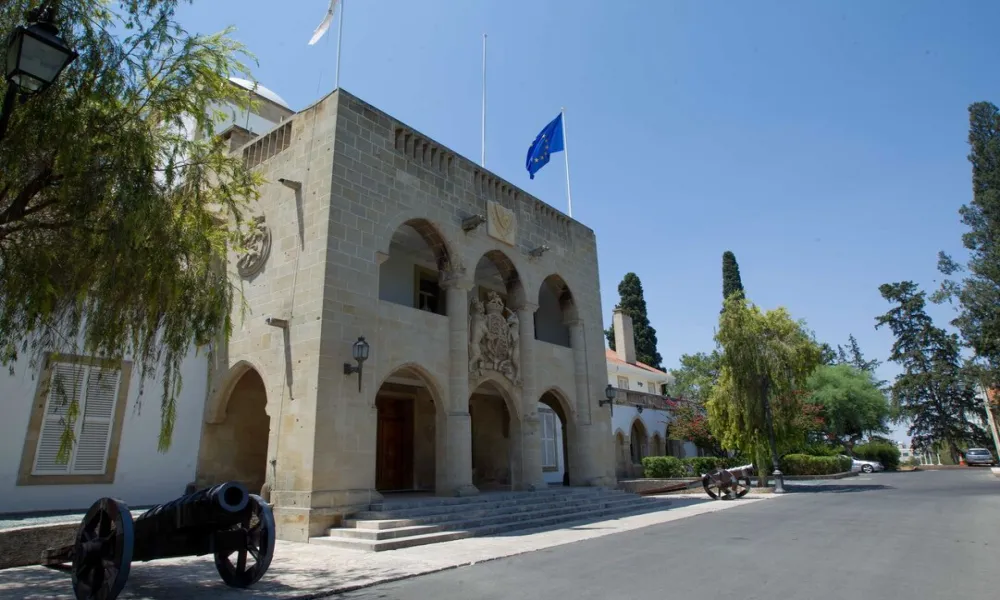
The findings of the Stavros Malas report on the restructuring of Cyprus' livestock sector are being opened to public discussion as stakeholders gather at the Presidential Palace on Friday for a detailed briefing on the recommendations.
The presentation follows the report's submission to President Nikos Christodoulides and relevant ministers on 27 August and marks the start of consultations with livestock organisations, farming groups, business associations, government departments and other interested parties.
Recovery and long-term reform
The scientific committee's recommendations focus on rebuilding the livestock sector after the foot-and-mouth disease outbreak, with particular emphasis on:
- Strengthening biosecurity.
- Reducing overcrowding in livestock zones.
- Increasing productivity.
- Creating a more modern and sustainable production model.
According to the Presidency, the consultation process is intended to allow feedback before the report reaches its final form and moves to the implementation stage.
Major costs and difficult decisions
The proposals envisage significant structural reforms and investment running into hundreds of millions of euros.
The estimated cost would exceed the total public support provided to the sector between 2014 and 2025, when livestock farmers received approximately €91.5 million in assistance.
Questions remain over whether the government will adopt all of the recommendations.
Malas has previously indicated that funding opportunities could emerge through the next Common Agricultural Policy (CAP) programme beginning in 2028 and has suggested Cyprus may seek additional support from the European Commission because of the unique challenges stemming from the island's division.
Focus on livestock zones
One of the most sensitive issues concerns the future of the 121 livestock units affected by the outbreak and which of them will be permitted to resume operations.
The report proposes a minimum separation distance of 300 metres between independent livestock holdings to reduce the risk of rapid disease transmission.
Researchers found that 84 of the 121 infected units were located in densely concentrated livestock areas where farms operated side by side, a factor believed to have worsened the spread of the disease.
Implementing the recommendation may require voluntary relocation schemes, compensation packages and politically difficult decisions.
New sites identified
According to the report, authorities have already identified:
- 360 potential locations on state-owned land within agricultural areas.
- 130 potential sites for larger units within existing livestock zones.
The proposals are intended to support a gradual restructuring of the sector while improving biosecurity standards.
Gradual return to production
Members of the scientific team have indicated that, if no new foot-and-mouth disease cases emerge, some farmers could resume operations between November and December following disinfection and approval by veterinary authorities.
Priority is expected to be given to producers whose facilities meet the proposed location and biosecurity requirements.
Others may face longer delays before returning to production.
Smaller units may be encouraged to merge
The report also points to the need for consolidation in overcrowded livestock areas.
According to experts involved in the process, some smaller operations may need to merge with neighbouring farms to meet future requirements and improve efficiency.
At the same time, new regulations being prepared by the Department of Agriculture are expected to tighten oversight of state land allocated for livestock use and address longstanding weaknesses in the system.
Not all farmers expected to return
Experts involved in the recovery effort believe that not all affected farmers will seek to restart their operations.
Some producers, particularly older farmers and those involved in livestock farming on a limited basis, may decide not to re-enter the sector following the compulsory culling of their animals during the outbreak.
The consultation process beginning on Friday is expected to test support for the recommendations and gauge the sector's willingness to embrace what would be the most significant restructuring of Cypriot livestock farming in decades.