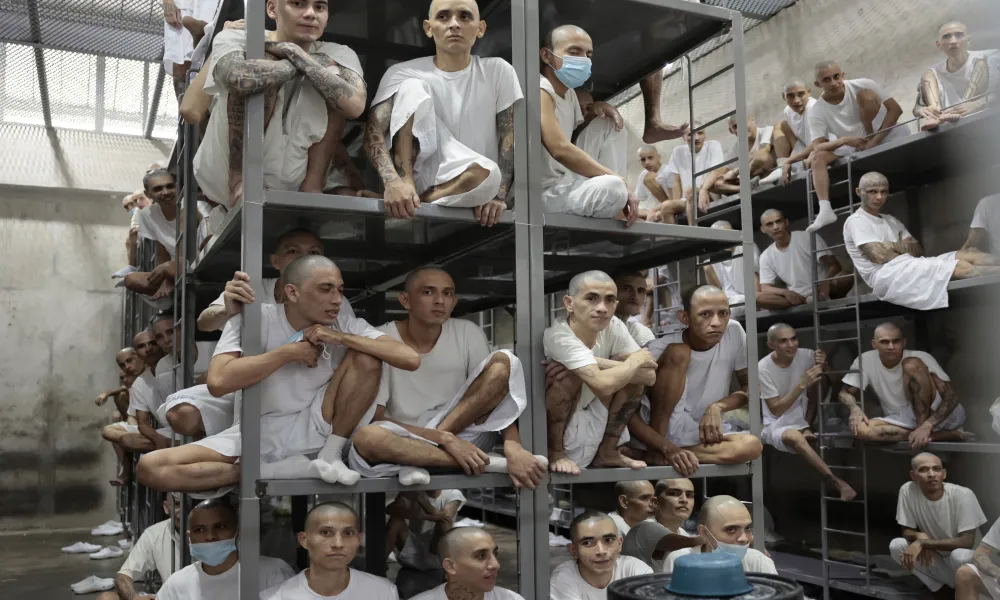

Human rights organisations on Monday accused the government of El Salvador of responsibility for the deaths of hundreds of detainees since President Nayib Bukele imposed a state of emergency, during a hearing before the Inter-American Commission on Human Rights (IACHR) in Panama.
In force for more than four years, the state of emergency has become the cornerstone of Bukele's war on gangs. The president credits the policy with reducing crime to the lowest levels in the country's history.
Since its introduction, 93,000 people have been arrested and imprisoned without warrants. According to El Salvador's prosecutor's office, around 90% remain in detention without having been tried.
At least 454 confirmed deaths
During the hearing, David Morales, a lawyer for the human rights organisation Cristosal, said at least 454 deaths of people held in pre-trial detention had been confirmed during the state of emergency.
According to figures compiled by NGOs, 78% of those who died in prison had no links to gangs, while there is evidence suggesting at least 87 deaths were violent.
Morales said the cases raised concerns about possible extrajudicial executions.
The Salvadoran state was not represented at the hearing.
"The presence of state officials would have allowed us to hear their explanations directly, obtain official data and enrich the dialogue," said IACHR president Stuardo Ralón.
Rights groups estimate higher death toll
Ingrid Escobar, director of the NGO Socorro Jurídico Humanitario, put the number of deaths in prison since the emergency measures began even higher, estimating the toll at 582.
She claimed that in prisons specifically built for people authorities believe are linked to organised crime, "the first thing that happens is that they are welcomed with a beating."
Escobar also alleged:
- Physical beatings.
- Sexual violence.
- Denial of medical care.
- Deprivation of food and water.
She further alleged that her own brother died in custody after being arrested on a misdemeanour charge.
Concerns over prisoner release plan
Bukele recently unveiled a plan that could see the release of around 5,000 people described as occasional collaborators with gangs.
According to the president, eligibility would depend on the degree and seriousness of their involvement in criminal activity.
However, Riyad Insanally, the IACHR's special rapporteur for El Salvador, warned that innocent people might falsely admit guilt in order to benefit from the programme.
He cautioned that the initiative could create pressure on detainees to confess to crimes they did not commit in hopes of securing their release.
Source: ANA-MPA