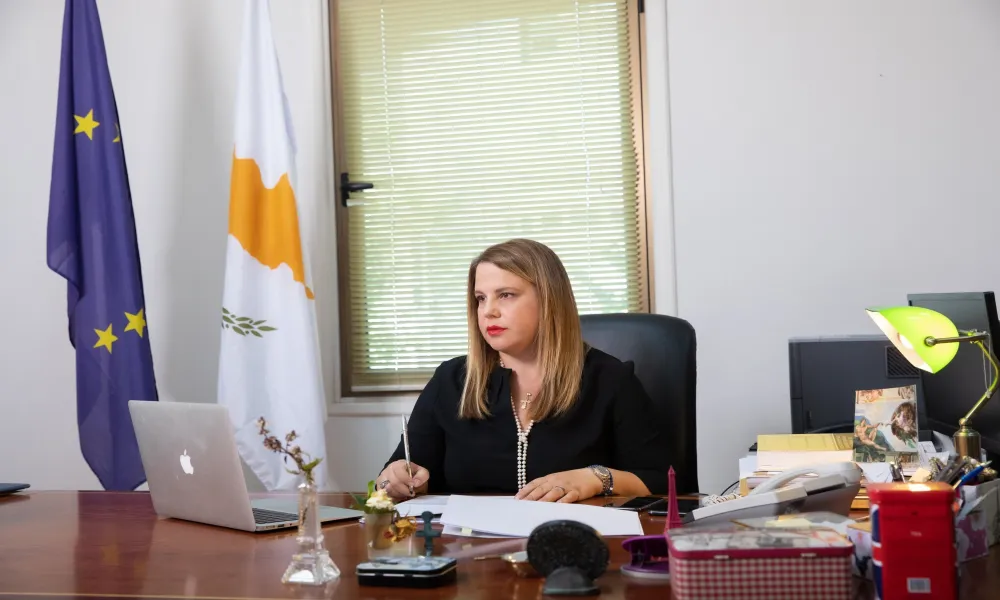

Cyprus’ Ombudswoman and Commissioner for Administration and Human Rights, MariaStylianou-Lottides, has called for the strict implementation of legislation on inclusiveeducation, urging the Education Ministry to take all necessary measures to ensure students with disabilities and/or special educational needs receive appropriate support.
Her recommendations follow an investigation into two complaints concerning the provision of differentiated educational material and accessible examination papers tostudents with disabilities or special educational needs.
The Commissioner called on the Ministry to step up training and professional development for teaching staff at all levels on inclusive education practices. She alsorecommended considering making participation in a number of relevant training seminars compulsory.
She further called for effective cooperation and coordination between the EducationMinistry, the relevant directorates and individual schools to be formally established andsubject to evaluation and monitoring, potentially through a dedicated protocol.
Accessible examination paper found inadequate
One of the complaints was submitted by the mother of a student at a secondary school in Limassol who had been diagnosed with autism spectrum disorder (ASD). The student is non-verbal and follows an individualised education programme, using the Spelling to Communicate (S2C) method for communication and educational participation.
The complaint concerned a biology examination paper provided during the final examinations for the second year of lower secondary school.
According to the mother, the classroom teacher had prepared the examination paperbased on her own assessment of what would be accessible, without priorcommunication, cooperation or assistance from the student’s support teacher.
As a result, a number of exercises were deemed by the support teacher and thestudent’s scribe to be unsuitable and incompatible with his learning profile.
A request was subsequently made for the exercises to be excluded from the marking. The request was not accepted, however, and the student received a low grade.
The Education Ministry told the Commissioner that its Special Education Office forSecondary Education had sent a letter to the school with instructions to provide adifferentiated examination paper for the student.
The Ministry said it understood the mother’s concerns but noted that differentiatedexamination papers were the responsibility of teaching staff, in cooperation with support teachers and on the basis of decisions by the relevant special education committee, within the policy framework issued by the Ministry.
It added that teachers at the school had prepared a differentiated examination paper which, in their professional judgement, met the student’s educational needs.
The Ministry said further instructions would be issued to the school management and all teachers involved to ensure the decisions of the special education committee and the framework for adapting educational and examination material were fully implemented.
Ministry backs school-level preparation
On 29 October 2025, the Commissioner asked the competent authority whether itconsidered it appropriate to establish a central coordinating body that could eitherprepare differentiated examination papers and educational material, or check whether material prepared by individual schools adequately met the needs of students with disabilities and/or special educational needs.
In its response of 10 February 2026, the Education Ministry argued in favour of preparing differentiated examination papers at school level.
It nevertheless acknowledged the need to improve the quality and consistency ofadaptations and said it was considering ways to further strengthen training, guidance and professional support for teachers involved.
Second complaint raised questions over support
The second complaint was submitted by parents who raised concerns about the support provided to their daughter, who had been diagnosed with ASD, while studying physics ata secondary school in Nicosia.
The parents alleged that the physics teacher had provided educational material that was not accessible to their daughter, used teaching methods that did not meet her individual educational needs, and displayed a general lack of interest and appreciation for herlearning progress.
They said this had left the student unable to follow and understand the material beingtaught, with a negative impact on her emotional and psychological wellbeing.
The Education Ministry said it had 51 pages of material specifically adapted to the child’s needs, prepared by the teacher and included in her exercise book.
It also referred to a differentiated examination paper based on the student’s needs and abilities, as well as a revision worksheet on forces that the teacher had prepared for the student’s mother to use in providing assistance at home.
The Ministry argued that, since the student received support in physics for one lesson per week and had two physics lessons per week in total, the material provided wasconsidered sufficient.
Ombudswoman identifies common shortcomings
The Commissioner’s report identifies a common feature in both complaints: difficultiesfaced by the two students during their secondary education, centred on insufficientsupport from teaching staff and a lack of accessibility in educational and examination material.
“In the first case, this resulted in the student being unable to complete all the exercises in the examination paper, consequently receiving a low grade, while in the second case, the student was unable to understand the material being taught and meet therequirements of the subject,” the report says.
In the Limassol case, the Commissioner stressed that the issue was not a refusal to provide a differentiated examination paper, but the inadequate fulfilment of that obligation.
She said the shortcomings appeared to stem, on the one hand, from a failure or lack ofcommunication and cooperation between the classroom teacher and support staff and, on the other, from insufficient knowledge of the specific parameters and criteria that needed to be taken into account to make the examination paper accessible to the student.
The Commissioner also found that the examination paper was not adequately adaptedto the student’s individual needs. This conclusion was reached by both the support teacher and the scribe and, she noted, did not appear to be disputed by the EducationMinistry.
Questions remain over adequacy of support
Regarding the Nicosia student, the Commissioner said questions remained because the positions of the parents and the Education Ministry were contradictory.
Although the Ministry maintained that the support provided had been adequate, based on the volume of supporting material supplied to the student and her mother, the Commissioner said the parents’ initial letter to the relevant services raised serious concerns about the suitability and adequacy of the overall support provided in thesubject.
The parents had also strongly objected to the possibility of the same teacher continuingto teach their daughter in the following school year.
The Commissioner said she could not reach a firm conclusion on whether the support provided to the student had been sufficient.
She added that she could not disregard or minimise the parents’ concerns, particularly as they had otherwise spoken positively about the support and acceptance their daughter received from other teachers at the school.
Training and coordination key to inclusion
In her conclusions, the Commissioner stressed the importance of differentiated teaching, adapted teaching methods and accessible examination papers.
She welcomed measures already being put in motion by the authorities, including the activation of an internal monitoring mechanism and the training of teaching staff.
Such initiatives, she said, were “clearly not only moving in the right direction” but were also an essential prerequisite for implementing reasonable adjustments as part of inclusive education, ensuring quality education and preventing discrimination.
Source: CNA