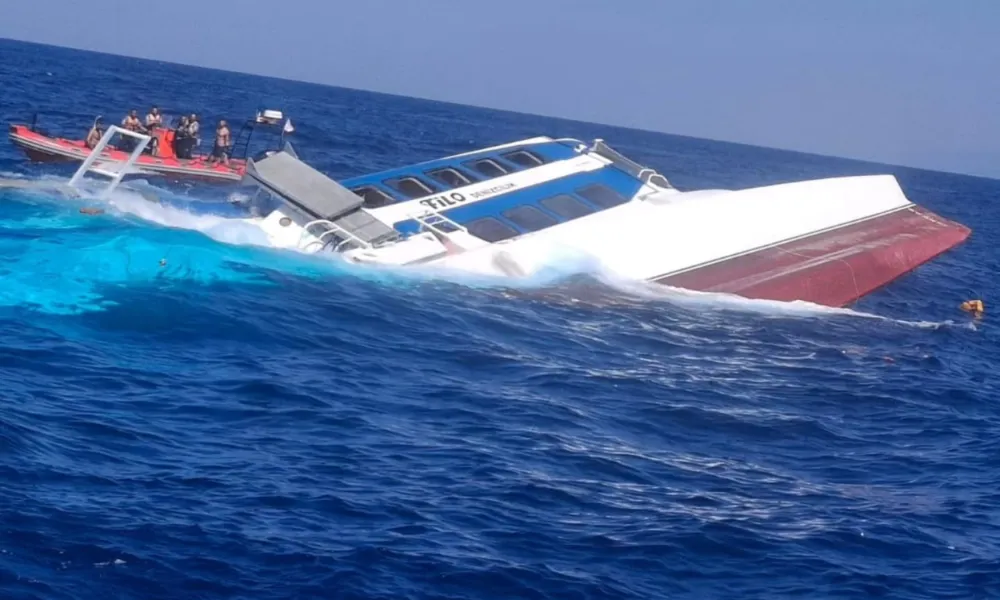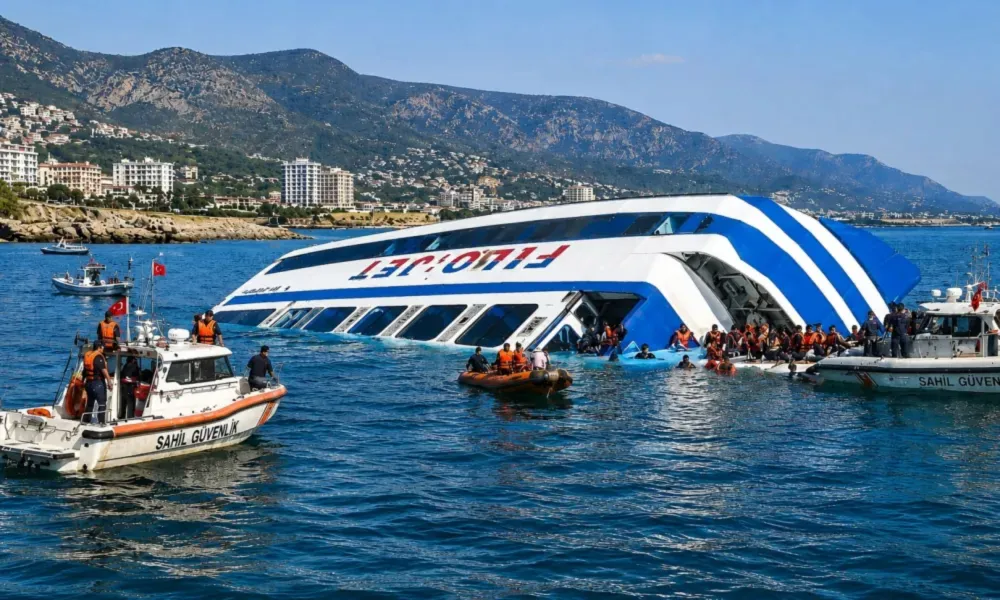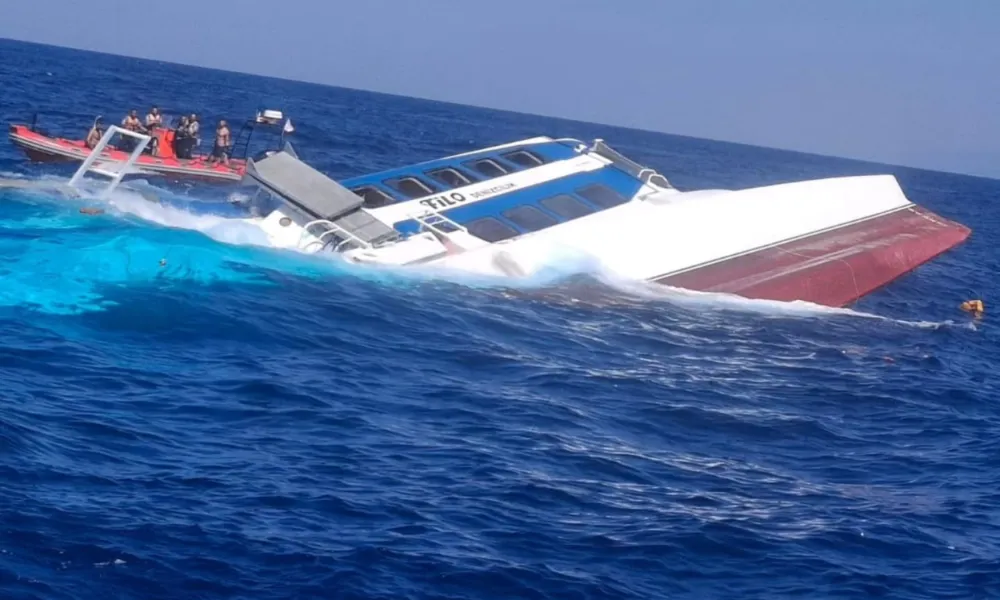

The investigation into the FİLO JET disaster off the coast of Kyrenia is entering a crucial new phase, with attention now turning to the wreck itself, which lies at a depth of approximately 514 metres.
Specialised underwater survey systems are being deployed to examine the catamaran on the seabed, as authorities intensify efforts to determine the causes of the tragedy and locate critical evidence.
According to statements by Turkish Cypriot leader Tufan Erhürman, reported by Turkish Cypriot media, two specialised vessels from Türkiye were expected to join the operation, as the depth of the wreck makes direct diver access impossible.
One of the vessels is equipped with robotic technology capable of conducting underwater imaging at depths of up to 1,000 metres, while also allowing for the recovery of objects identified on the seabed.
TCG IŞIN joins operation
The Turkish Navy's specialised rescue and towing vessel TCG IŞIN (A-583) has also been deployed to the area.
According to Kıbrıs Postası, the vessel is equipped with advanced underwater survey systems and can conduct operations at depths of up to 3,000 metres.
Its equipment includes:
- A remotely operated vehicle (ROV).
- An atmospheric diving system (ADS).
These capabilities allow operations at depths significantly greater than the location of the FİLO JET wreck.
The use of these systems is expected to provide investigators with the first detailed images of the catamaran on the seabed and could yield evidence considered vital to the technical investigation.
Search for the "black box" continues
One of the most important targets of the operation remains the vessel's data recorder, commonly referred to as the "black box".
So-called transport minister Erhan Arıklı has stated that the recorder has not yet been located and that investigators are even examining the possibility that it became detached from the vessel during the sinking.
For that reason, the search is not confined to the wreck itself but also includes debris recovered from the sea.
Erhürman also confirmed that the recorder had not yet been found, stressing that efforts continue both to locate the missing and to gather information that may help establish the causes of the sinking.
Focus on hull failure
The underwater examination is also considered critical in addressing another key question: what caused the reported structural failure in the front left section of the catamaran that preceded the flooding.
During court proceedings, a police investigator reportedly stated that the FİLO JET had travelled about four nautical miles from Kyrenia harbour when the end section of the vessel's left float/hull fractured.
According to that account, water subsequently entered the vessel before it capsized.
The precise cause of the structural failure remains under investigation.
Investigators hope that footage and data gathered by the ROV at a depth of 514 metres will become one of the most important elements of the technical inquiry into the disaster.
Source: Kıbrıs Postası and Kıbrıs Gerçek.