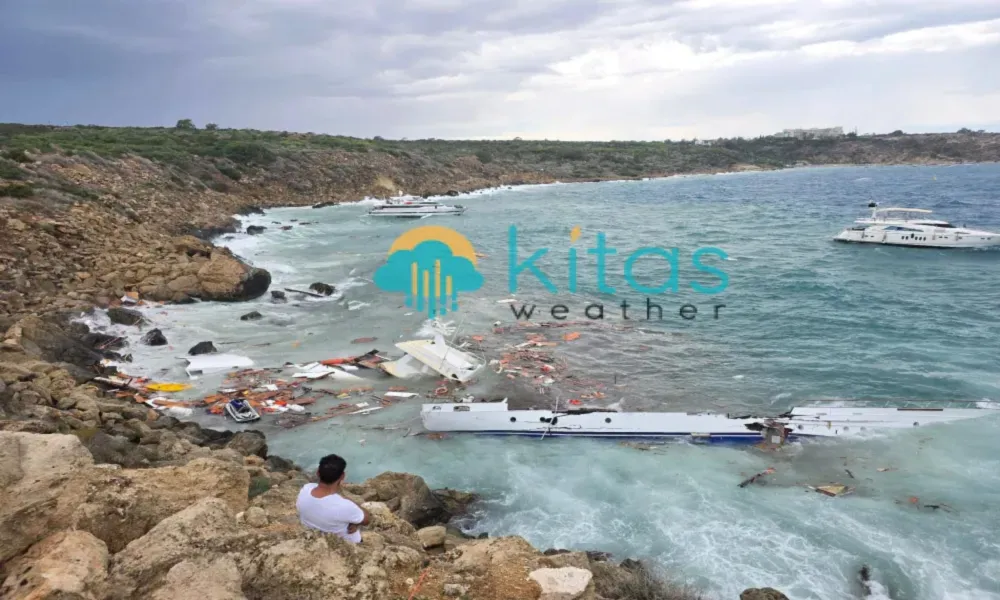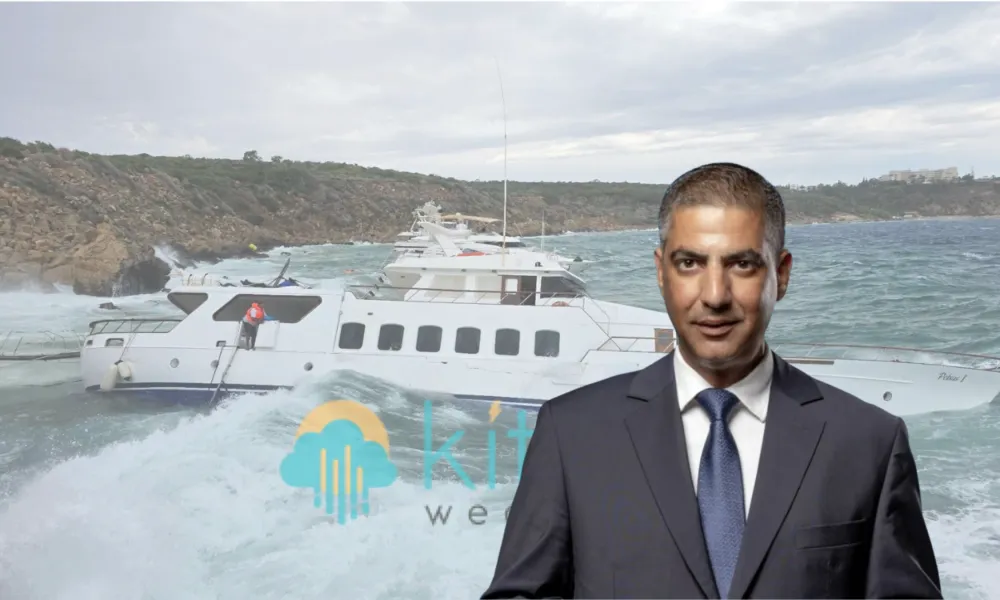

The recent tragedy at Cape Greco exposed significant shortcomings in the legal and institutional framework governing navigation and the issuance of sailing prohibitions, according to Dr Antonis Stylianou, a law professor and specialist in maritime law.
Speaking on Politis Radio, Stylianou said the concept of a departure ban exists in Cypriot law, but the current legislation primarily applies to commercial shipping rather than smaller vessels.
"There is no system like the one in Greece"
Stylianou explained that Cyprus does not operate a sailing-ban system equivalent to that used in Greece.
"It does not exist in the form that applies in Greece, where sailing bans are issued on the basis of Beaufort scale readings, wind gusts or sea conditions."
However, he stressed that the concept itself is not foreign to Cypriot law.
"There is relevant legislation concerning the Shipping Deputy Ministry and the Cyprus Ports Authority. The problem is that the existing legal framework mainly covers commercial shipping and not smaller vessels."
According to Stylianou, the current provisions apply primarily to vessels exceeding 300 tonnes or 45 metres in length.
"This is a very serious gap"
Referring to smaller vessels, Stylianou argued that they effectively remain outside the framework.
"Exactly. And this is a very serious gap."
He said he had recently examined the relevant legislation and concluded that the system is exceptionally complex.
"For the issuance and implementation of a sailing ban alone, four ministries, six services and several additional committees and bodies are involved."
Four ministries and six services
According to Stylianou, the current system involves:
- The Shipping Deputy Ministry.
- The Ministry of Transport.
- The Ministry of Justice.
- The Ministry of Interior.
It also involves:
- The Cyprus Ports Authority.
- The Department of Fisheries.
- The Department of Meteorology.
- The Port and Marine Police.
- The Department of Environment.
- Other related agencies.
He additionally referred to beach committees, district administrations and municipalities.
"A huge fragmentation"
Asked about the fragmented allocation of responsibilities, Stylianou was unequivocal.
"Exactly. And this is the problem in many issues across Cyprus."
He argued that the Cape Greco tragedy once again exposed weaknesses that have been known for years.
"The accident at Cape Greco highlighted these gaps once more. We should not have to wait for tragedies to discover shortcomings that we already know exist."
According to Stylianou, Cyprus already has the expertise required.
"The knowledge, the technocrats and the expertise exist."
What is needed, he said, is:
"Political will and better coordination."
Proposal for a four-tier warning system
Stylianou said there are practical ways to improve the existing framework.
"I have previously proposed the creation of a four-level warning system in relation to departures."
According to him, elements of that proposal were implemented during his tenure at the Cyprus Ports Authority, although not all issues were resolved.
"There are many matters that remain open, especially regarding vessels operating outside port areas."
The EDRO III example
As an example, he cited the EDRO III shipwreck at Chloraka.
"The EDRO III wreck at Chloraka lies outside a port area. We often see people going there, climbing onto the wreck or diving around it."
According to Stylianou, such cases raise questions about responsibility and how safety regulations are enforced.
Personal responsibility of vessel operators
Stylianou stressed that responsibility does not rest solely with the authorities.
When asked whether vessel operators bear personal responsibility, he replied:
"Of course."
He added:
"It is not possible to have a police officer standing over every citizen or every vessel operator."
According to Stylianou:
"There is personal responsibility on the part of the vessel's master, just as there can be criminal responsibility when navigational safety or the safety of swimmers is placed at risk."
Need for an effective framework
Concluding, Stylianou reiterated that individual responsibility alone is not sufficient.
According to him, Cyprus also needs:
"An effective institutional framework."