
The Department of Civil Aviation has issued clarifications in response to reports concerning the presence of unauthorised aircraft and Turkish air force aircraft in Cypriot airspace, and to reports of timely intervention to avert an accident, stating that the level of aviation safety in Cypriot airspace remains particularly high.
'Not an unprecedented phenomenon'
According to the department, the presence and activity of Turkish aircraft within the airspace controlled by the Republic of Cyprus, namely the Nicosia FIR, constitutes a longstanding and recurring operational reality that air traffic control is required to manage on an almost daily basis.
The department stressed that this is therefore not an unprecedented or unforeseeable operational phenomenon, and that a distinction should be drawn between the existence of a recurring operational condition and the actual state of aviation safety.
According to the statement, the problems caused by Turkey in Cypriot airspace, whether through the illegal operation of Tymbou airport and interference with flights or through military aircraft flights, are well known and are subject to continuous management.
The department noted that these situations require heightened vigilance in order to maintain flight safety standards, and that the timely identification and effective management of such situations by staff is itself an indication of the effectiveness of the air traffic control system.
Controllers 'identified the risk in time'
Regarding the specific incident referred to in recent reports, the department underlined that continuous monitoring and the operational vigilance of staff allowed for the timely identification of a possible convergence in flight paths and the taking of the necessary measures.
Safety, according to the statement, remains the absolute priority of the relevant services, while operational staff have the necessary training, experience and procedures to safely manage even particularly demanding situations.
The incident involving the Turkish aircraft
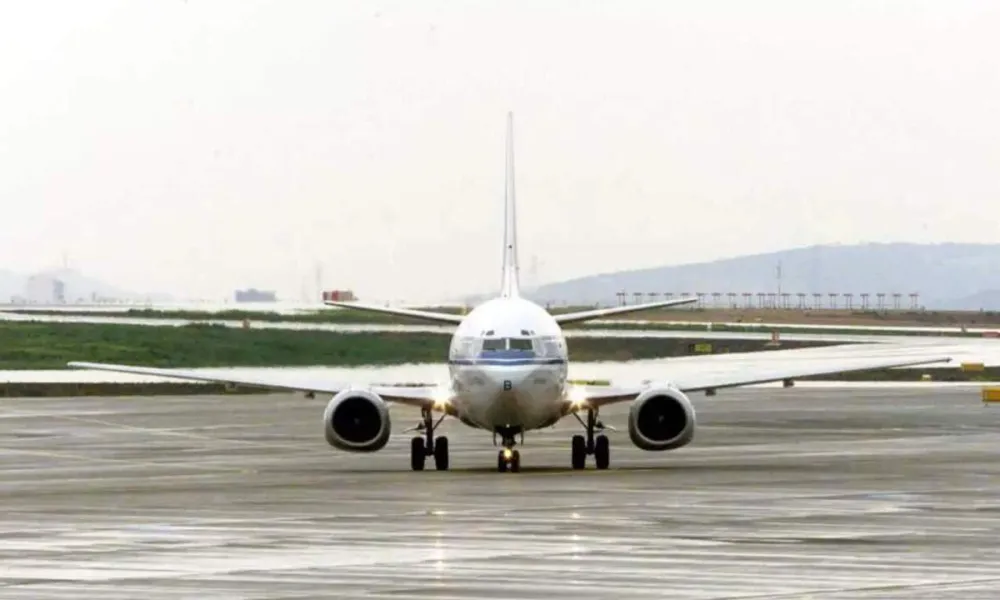
As reported by Politis yesterday evening, the Cyprus Air Traffic Controllers Union (Paseek) raised concerns over an incident involving an aircraft carrying the code TUAF770. According to Paseek, the aircraft failed to respond to repeated calls from the Nicosia Area Control Centre and deviated from its flight plan, before climbing towards flight level FL360, approximately 36,000 feet. At the same time, flight TOM56T, a Boeing 737-800, was descending towards FL350, approximately 35,000 feet. Paseek said controllers identified the conflicting flight paths in time and ordered the Boeing to halt its descent.