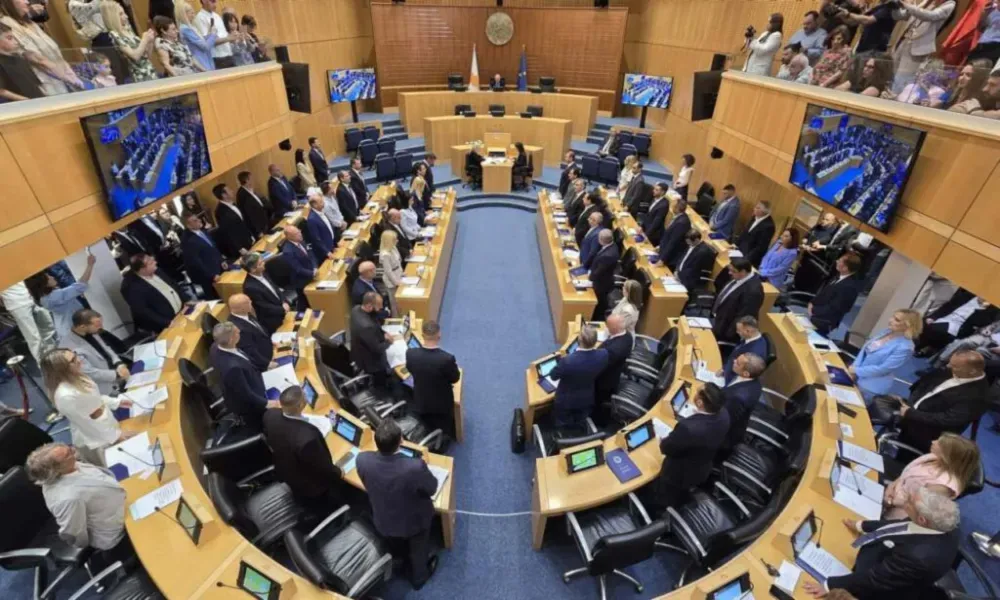

The House Interior Committee is pushing ahead with legislation to curb the uncontrolled sale of Cypriot land to large foreign private interests, aiming to complete the process within the coming months. Committee chair Aristos Damianou has also described allegations of pressure and intimidation against property owners by foreign businessmen seeking to buy large plots. According to statistics he cited, six in ten property sales in coastal towns involve foreign buyers.
What the proposals provide for
The law proposals provide for:
- Limits on the size of land that foreign nationals can acquire
- Bans on purchases near critical infrastructure
- Stricter checks on the beneficial owners of companies buying property in Cyprus
Legislative timeline
Speaking on Politis 107.6 & 97.6, on the programme “Second Look at the Events” with Andri Daniel, Damianou, an AKEL MP, said the proposals are at an advanced stage. The government has been given 15 days to submit supplementary proposals.
He explained that the proposals had been ready for a vote since April. However, the process was restarted on 3 September to take additional government positions into account.
Following the latest lengthy session with the Ministry of Interior and the Law Office, an article-by-article examination of the legislative texts is expected. They will then be forwarded to the plenary.
Homes and businesses not affected
Damianou clarified that the aim is not to deprive foreign nationals settling in Cyprus of the right to acquire a home, shop, office or building plot.
He did, however, raise concerns about the purchase of entire mountains, beaches and plots of 10,000 square metres, arguing that specific limits must be set.
Allegations of intimidation in Larnaca
During the discussion, Damianou referred to allegations of pressure and intimidation against property owners by foreign businessmen seeking to acquire large, continuous areas of land.
According to Damianou, the information came from two families in the Larnaca area, near the old GSZ stadium.
He explained that when plots belonging to other owners lie between properties the businessmen want to buy, those owners are approached with offers of large sums of money. In several cases, he said, this takes advantage of their financial need.
“When you pay more than double the value of the property, that too is a way of exerting pressure,” he said.
He also alleged that “there were also cases where people in suits, but with heavies beside them, were knocking on doors, promising money and closing sale agreements.”
Damianou acknowledged that owners may ultimately agree to sell without filing complaints. However, he argued that financial need can lead them to accept deals they would not accept under different circumstances. He described the incidents as extreme, noting that he rarely makes such allegations.
Scale of foreign purchases
Damianou said that, according to the statistics he cited, six in ten property sales in coastal towns involve foreign buyers.
He added that some sale agreements are not deposited with the Land Registry, meaning the total number of transactions is not known.
He also expressed concern about the acquisition of large areas of land near military camps, ports, airports, the ceasefire line and other critical infrastructure.
Difficulties in checking European companies
Damianou made particular reference to checks on the beneficial owners of companies acquiring Cypriot land. He noted that the proposals involve the Land Registry and the Registrar of Companies.
He acknowledged, however, significant legal difficulties regarding European companies, even when third-country nationals are behind them. He attributed this to the fact that no relevant exemptions were requested during Cyprus’s EU accession negotiations.
Damianou said there has been near agreement on natural persons since April. However, he stressed the need for the rules to also cover companies and investment funds. He expressed hope that the parties will support the initiative, so that the legislative process can be completed within the coming months.