
The British government has called on millions of households to keep enough supplies to cope with 72 hours of disruption to power, water, phones and the internet. The guidance launches “Be Ready”, a three-year campaign led by the Cabinet Office, and was published on 22 October 2026. It comes as government research shows only 13% of peoplefeel prepared for a serious disruption to essential services.
A three-year campaign
The published advice is the first stage of a campaign that will build gradually over time, according to the UK government. A dedicated website, beready.campaign.gov.uk, replaces the previous “Prepare” site and includes a downloadable checklist.
More than 500 organisations, including charities and businesses, have signed up to share the campaign’s material. Social media and radio advertising over the coming weeks and months will target families with young children and older people.
Much of the advice is unchanged from the resilience guidance the UK first published in May 2024. Scotland and Northern Ireland have their own versions, UK Defence Journal reported.
What the 72-hour kit should include
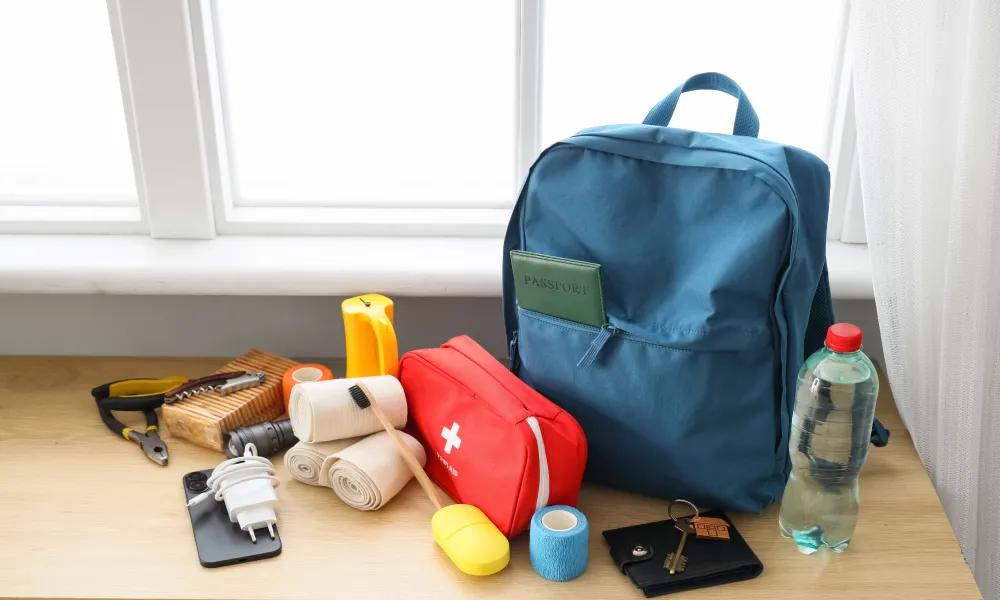
Under the updated Cabinet Office guidance, households should be able to manage even if electricity, water, shops or banking services are temporarily unavailable. The recommended items include:
- Drinking water: at least three litres per person per day, or nine litres each for three days, with more needed for cooking and washing
- Food: non-perishable, long-life items that need no refrigeration or cooking, such as tinned meat, fish or vegetables, dried fruit and nuts
- Power and light: a torch with spare batteries, a battery or wind-up FM radio and a charged power bank
- Health: a first aid kit and sufficient supplies of essential medication
- Cash: a small amount in coins and notes, as cards and cash machines may not work during a serious technical fault or cyberattack
- Documents: printed copies of ID and important phone numbers, including details of regular medication and doses
- Other essentials: hygiene products, blankets and warm clothing, ready-to-feed baby formula, nappies and pet food
Households are advised to build the kit gradually during regular shopping trips to spread the cost, and to check expiry dates every six months. The government also encourages vulnerable people to join the free Priority Services Register, which helps utility companies identify customers who need extra support during an outage.
Concerns over critical infrastructure
The guidance comes at a time of heightened concern over the security of critical infrastructure in Britain, Politis reported.
According to the same report, recent software security problems led to the precautionary suspension of some government digital services, highlighting how much the public depends on online systems. There is no indication that the campaign is directly linked to that incident.
The government cited severe weather as one reason for the campaign, referring to last winter’s storms and this summer’s wildfires.
The British government has stressed that the guidance is not a warning of an imminent threat. Its stated aim is to build a culture of prevention and self-reliance.
Only 13% feel prepared
Government research shows that the vast majority of Britons do not feel adequately prepared for a serious disruption to essential services. Only 13% of respondents believe they are ready to deal with such a situation.
Security Minister Dan Jarvis said that even simple preparation can prove decisive in a crisis. He explained that when households can cover their basic needs temporarily, pressure on emergency services is reduced, allowing them to focus on people who need urgent help.
“Those who can follow this advice should follow this advice,” Jarvis said.
Laura Scott, British Red Cross Director for UK Resilience, said everyone can take simple steps to prepare, adding that clear and trusted advice could reduce the impact of crises and save lives.
Similar guidance across Europe
The 72-hour standard brings the UK into line with France, Ireland and the Netherlands, which have issued similar advice to strengthen resilience against natural disasters, energy outages and other emergencies.
In March 2025, the European Commission also urged citizens across the EU, including Cyprus, to be able to sustain themselves for at least 72 hours in a crisis, as part of its Preparedness Union Strategy.
The government’s central message is that preparing for the first 72 hours of a crisis can significantly ease the difficulties people face until services are restored or the authorities can provide help.