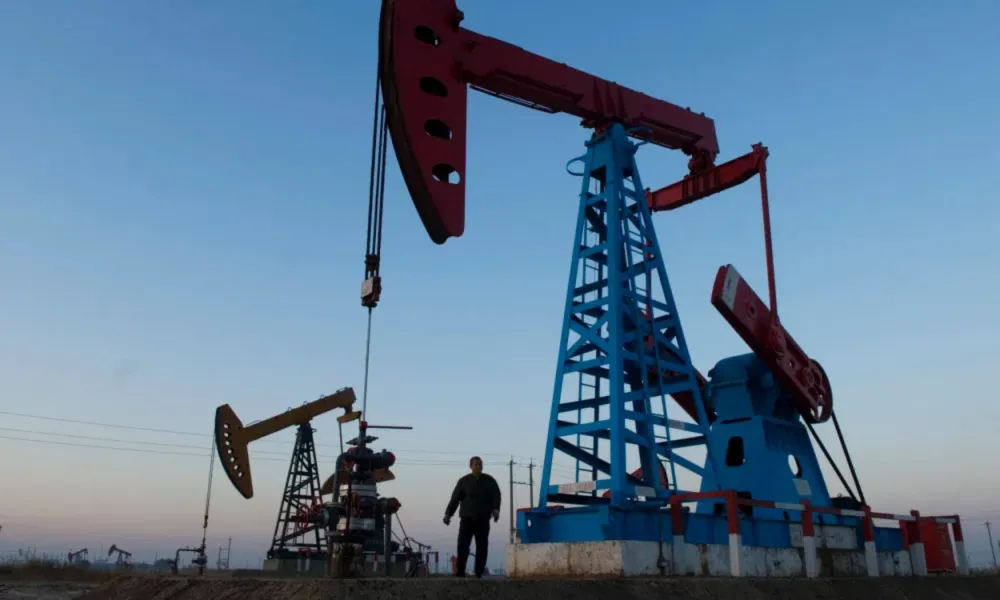



Brent crude climbed back above $105 per barrel on Thursday, as diplomatic efforts at the UN General Assembly failed to produce progress towards ending the war in the Middle East. The rise came as Iran and the United States continued to exchange threats, with a senior Iranian figure warning the conflict could spread to the Indian Ocean.
Brent and WTI prices
At around 09:30 GMT (12:30 Cyprus time), North Sea Brent crude for November delivery was up 2.21% at $105.36.
At the same time, US West Texas Intermediate (WTI) crude for November delivery was up 1.73% at $93.75.
Strait of Hormuz and regional supply
The blockade of the Strait of Hormuz, together with the conflict between Yemen's Houthis and Saudi Arabia, continues to restrict the export capacity of Gulf countries and raise the cost of maritime transport in the region.
Iranian warnings
Mojtaba Khamenei, an adviser to Iran's supreme leader, warned on Thursday that the war could expand into the Indian Ocean in the event of a new US attack on Iran.
On Wednesday, speaking at the UN General Assembly, Iranian President Masoud Pezeshkian responded to US President Donald Trump's threat to annihilate Iran, saying that "the resistance of the Iranian people will be strengthened in the face of sanctions, increasing pressure and intimidation".
Fuel prices and the US midterm elections
According to CNA, the prospect of higher oil prices ahead of the US midterm elections has become an important means of pressure for Tehran, as fuel prices are a key issue for American voters.
Diesel prices at US filling stations have reached record highs, to the extent that Mr Trump said he was "open" to a ban on exports.
Reported plan for a diesel export ban
Politico reported on Wednesday that the Trump administration was preparing a plan to ban diesel exports for 90 days. The White House rejected the report.
Potential impact on Europe
Such a ban could lead to a short-term fall in diesel prices in the United States, but would push prices higher for diesel importers, mainly Europe, which has increased its dependence on the US for refined products.
Source: CNA