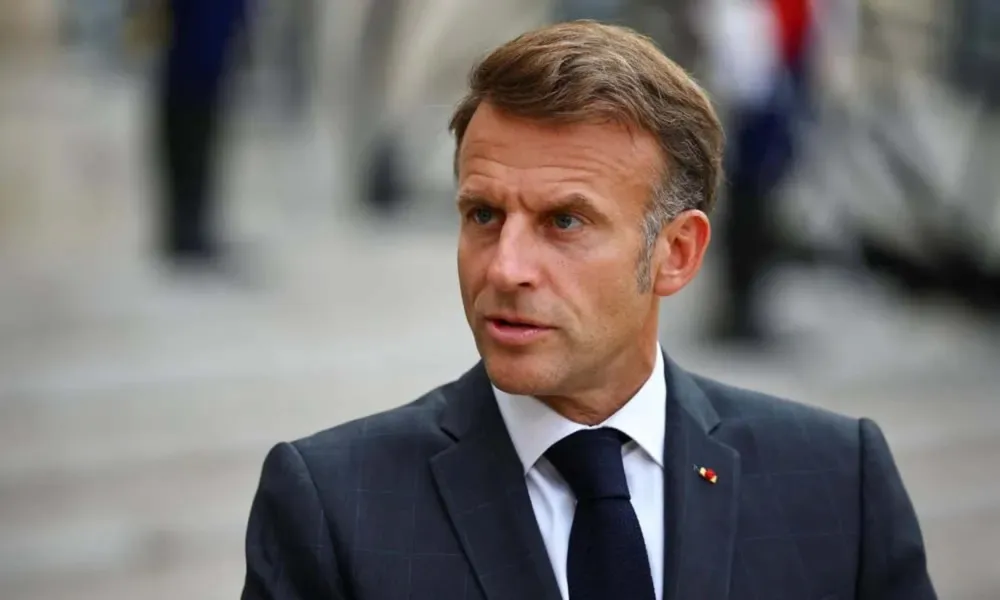

French President Emmanuel Macron has called an emergency G7 meeting amid growing global instability, with soaring energy prices at the centre of the agenda. "The situation we are facing is serious," Macron said.
A G7 summit dedicated to energy
"In the coming weeks we will hold a G7 summit dedicated to energy issues, in order to strengthen cooperation and avoid unnecessary tensions between G7 countries and our key partners," Macron told journalists during a press conference.
A rare crisis meeting at the Élysée
Macron's remarks followed a rare crisis meeting at the Élysée Palace, during which the heads of France's intelligence services briefed political leaders and candidates for next year's presidential election on threats stemming from Russia's war in Ukraine and the conflict in the Middle East, both of which are pushing fuel prices in France to new highs.
"The situation we are facing is serious. It is serious because of the international situation and the consequences of the wars we are experiencing," Macron said. "In this context, we must remain united."
Budget constraints limit subsidy options
France's difficult fiscal outlook, which has pushed the government to cut €54 billion from next year's budget, will limit the state's ability to subsidise increasingly expensive energy bills on a large scale. Macron told journalists, however, that the government is working on proposals for targeted assistance.
Securing energy supplies abroad
Macron also said he is working to secure the country's access to oil and gas supplies, citing recent meetings with leaders from Saudi Arabia, Iraq, Qatar and the United Arab Emirates.
Protecting critical infrastructure
Finally, Macron said France is stepping up efforts to protect critical infrastructure and defence production facilities amid a rise in cyberattacks and what he described as intensifying "hybrid attacks" from Russia, pointing to recent attacks on a passenger train in Ukraine and on the airport in Leipzig, Germany.
With information from Politico