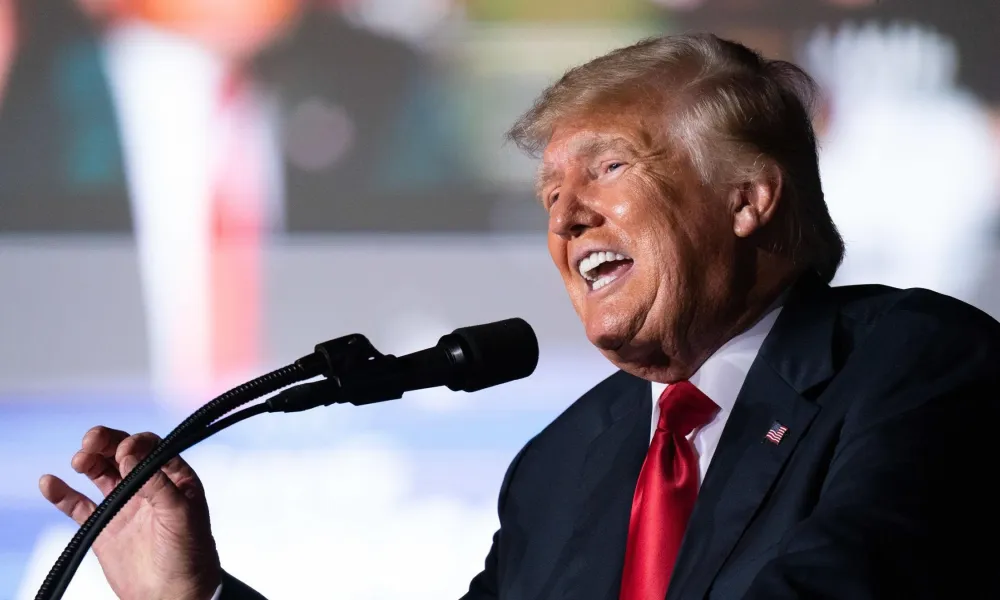

Democrats won control of both chambers of the US Congress in Tuesday's midterm elections, handing President Donald Trump the heaviest political defeat of his second term.
In the House of Representatives, Democrats had secured at least 228 seats by Wednesday afternoon, above the 218 needed for a majority, while projections by NBC gave them a total of 258 seats, a level of representation the party has not achieved since 1993.
In the Senate, Democrats reached 54 seats, while races in Alaska and Mississippi remained undecided with extremely narrow margins.
The scale of the victory was evident in states long considered Republican strongholds. In Texas, James Talarico became the first Democrat to win a Senate seat from the state since 1988, defeating Ken Paxton with 55% of the vote against 43%, despite hundreds of millions of dollars spent by Elon Musk in support of his opponent.
Kansas elected its first Democratic senator since the era of the Great Depression, while in Mississippi, where Democrats have not won since 1982, the contest remained separated by only a few dozen votes.
Democrats also captured five governorships, including Texas and Ohio, giving the party a majority of governorships for the first time in 16 years.
From "Mr Veto" to compromise
Trump shifted from threats to conciliation within a matter of hours.
On election day, he told CBS News that he possessed "absolute power", namely the veto, and that he was prepared to become "Mr Veto" in order to force his political opponents into negotiations.
Later that evening, as he watched results emerge from the White House, he told the New York Times that he was fully prepared to accept the outcome and looked forward to working with Democrats.
He did not, however, accept responsibility for the defeat.
On Truth Social, Trump argued that if his own name had been on the ballot Republicans would have won "by a landslide". In an interview with Fox News, he said he was somewhat surprised by the result but did not view it as a personal setback.
Speaking to the Wall Street Journal, Trump acknowledged that the war with Iran had played a role in the outcome but defended his decision, saying he had done the right thing and would make the same choice again.
The White House limited its reaction to a brief message reminding the public that Trump remains president.
The New York Times noted that Trump had asked voters 47 times during the campaign to imagine his name on the ballot, intentionally turning the elections into a referendum on himself.
According to Reuters, voter frustration over the war, concerns about the rising cost of living and dissatisfaction with Trump's governance all contributed to the shift.
In south Texas, where Latino voters had moved toward Trump in 2024, Talarico secured more than 70% of the vote in several communities, according to political scientist Brandon Rottinghaus.
Turmoil among Republicans
The defeat has already triggered questions about leadership within the Republican Party.
House Speaker Mike Johnson informed his team that he will not seek to become minority leader in the next Congress. While Trump praised Johnson, he stopped short of endorsing him.
According to Axios, Republican lawmakers openly turned on party leadership, while the defeat of Richard Hudson, who had been tasked with preserving the party's majority, illustrated the scale of the losses.
A senior Republican strategist told CBS that responsibility for the defeat rested entirely with Trump.
Senate Republican leader John Thune, who is set to lose his position in January, said Republicans remain grateful to have Trump in the White House and warned that the party would not sit idle if Democrats attempt to undo their achievements.
Meanwhile, Ron DeSantis, governor of Florida, predicted Democrats could maintain control of Congress for a lengthy period.
The next day
The new Congress will be sworn in at the beginning of January.
Hakeem Jeffries is expected to become Speaker of the House, making him the first African American to hold the position.
Jeffries said Democrats won the election on the issue of the cost of living and intended to govern accordingly. He also called on Trump to end the war with Iran before the new Congress even convenes.
He pledged investigations into corruption allegations but stopped short of signalling a third attempt to impeach the president.
Senate Democratic leader Chuck Schumer summed up the party's priorities with the phrase:
"Cost, cost, cost."
Control of both chambers gives Democrats subpoena powers, oversight of government spending and the ability to block appointments.
The presidential veto, however, remains in Trump's hands, and overturning it would require a two-thirds majority.
Trump is also relying on the recent US Supreme Court ruling in the Slaughter case, which strengthens presidential control over federal agencies. White House officials are already discussing new executive actions on immigration and trade.
Markets and international reaction
Financial markets welcomed the outcome.
The Dow Jones Industrial Average gained more than 1,000 points, as investors concluded that divided government would reduce the risk of sudden policy changes.
Abroad, Iran's chief negotiator, Mohammad Bagher Ghalibaf, declared that Americans had voted "no" to war.
In Israel, opponents of Prime Minister Benjamin Netanyahu used the result to argue that he had lost bipartisan support in Washington.
Greek Americans in the new Congress
The new Congress will include seven Greek Americans.
Democrat Chris Pappas won New Hampshire's Senate seat with 56.2% of the vote, defeating Republican John Sununu, who secured 41.9%.
Pappas becomes the first Greek American senator since Olympia Snowe retired in 2013. He is also the first openly gay man elected to the Senate.
As co-chair of the Congressional Hellenic Caucus, Pappas has supported legislation designed to strengthen defence cooperation between the United States and Greece.
In the House, all six Greek American incumbents seeking re-election retained their seats.
Republicans Gus Bilirakis, Mike Haridopolos and Jimmy Patronis were re-elected in Florida, while Nicole Malliotakis secured a fourth term in New York.
Among Democrats, Dina Titus won re-election in Nevada and Maggie Goodlander retained her seat in New Hampshire.
The four Republican Greek American representatives will now serve in the minority.