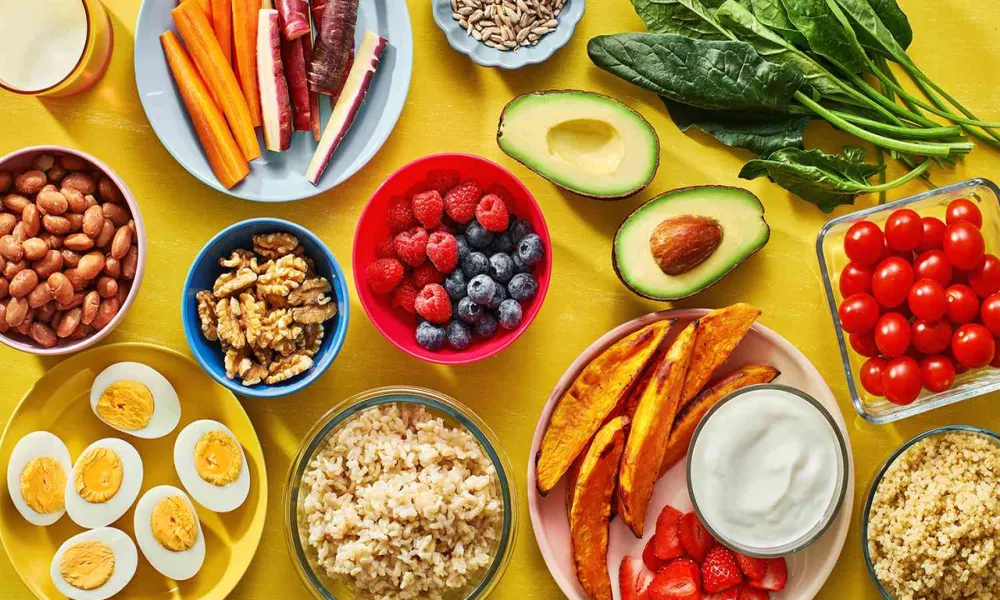



Many people eat the same meal or meals every day, a habit often called "food monotony." According to nutrition experts cited by The New York Times, the practice can simplify a daily routine, help manage weight and cut down on the "decision fatigue" that comes with planning menus, shopping and cooking.
There can also be a downside. The New York Times reported that nutrition experts warn of a risk of nutritional deficiencies when daily meals lean heavily on ultraprocessed foods or salty, sugary and high-fat snacks rather than wholesome alternatives. Marion Nestle, professor emerita of nutrition, food studies and public health at New York University, told the paper she sees little wrong with repetition as long as meals stay balanced and healthy.
What "balanced" actually means
Nutrition experts define a balanced meal as one that includes a protein, a carbohydrate and a healthy fat, making it nutrient dense, Julia Zumpano, a registered dietitian at the Cleveland Clinic, told The New York Times. She said that balance matters "even if you are adamant about eating the same foods every day."
The New York Times reported that Dr Donald Hensrud, associate professor of nutrition and preventive medicine at the Mayo Clinic College of Medicine, contrasted a daily breakfast of yoghurt or oatmeal with fresh fruit against one of bacon, eggs and hash browns, favouring the former. He similarly recommended a lunchtime salad with olive oil and vinegar over a ham sandwich on white bread, noting that processed meats carry a higher risk of heart disease, stroke and certain cancers, while white bread offers little fibre. For dinner, he suggested grilled chicken or fish with vegetables and brown rice over a burger and fries, pointing to diets such as the Mediterranean or DASH as useful models to draw from.
Why people repeat meals
According to the report, some people eat the same foods daily simply because they prefer them. Others use repetition as a weight-management tool. The New York Times cited a recent Drexel University study that found adults who ate the same meals every day lost more weight over 12 weeks than those who followed a more varied diet.
Repetitive eating also removes the need to count calories, since greater variety, such as eating at a buffet, tends to increase overall food intake, Hensrud said. Decision fatigue is a further factor behind the habit, Zumpano told the paper, saying it is especially real for anyone planning meals for other people too.
Adding variety without losing the habit
The New York Times reported that some experts recommend small variations within a repeated meal, such as swapping blueberries for strawberries or a banana in yoghurt, or alternating spinach and carrots at dinner. Zumpano suggested building on a routine, such as swapping a peanut butter and jelly sandwich for grilled cheese or turkey on alternate days, while cautioning against eating too much of any single food, which can raise exposure to substances such as mercury in fish or to excess salt and saturated fat. Hensrud said that "healthy always beats variety" when the two are in tension.
Not every meal should repeat
Zumpano told the paper that repeating all three meals every day may not be advisable, since eating one or two different meals daily helps avoid nutrient and vitamin deficiencies, adding that the gut microbiome benefits from diversity.
The New York Times cited a 2022 study suggesting breakfast is the meal people are most likely to repeat, since the first meal of the day tends to be more functional than social. Carey Morewedge, a professor of marketing at Boston University and one of the study's authors, said breakfast is often "a box to check, a means to an end," unlike lunch and dinner. He told the paper his own breakfast, a smoothie of vanilla protein powder, banana, spinach and avocado, had stayed the same for several years without him tiring of it. Nestle said she also eats the same breakfast daily, a bowl of shredded wheat with a teaspoon of sugar and skimmed milk, topped with home-grown blueberries or strawberries, while varying her lunches and dinners.
Source: The New York Times