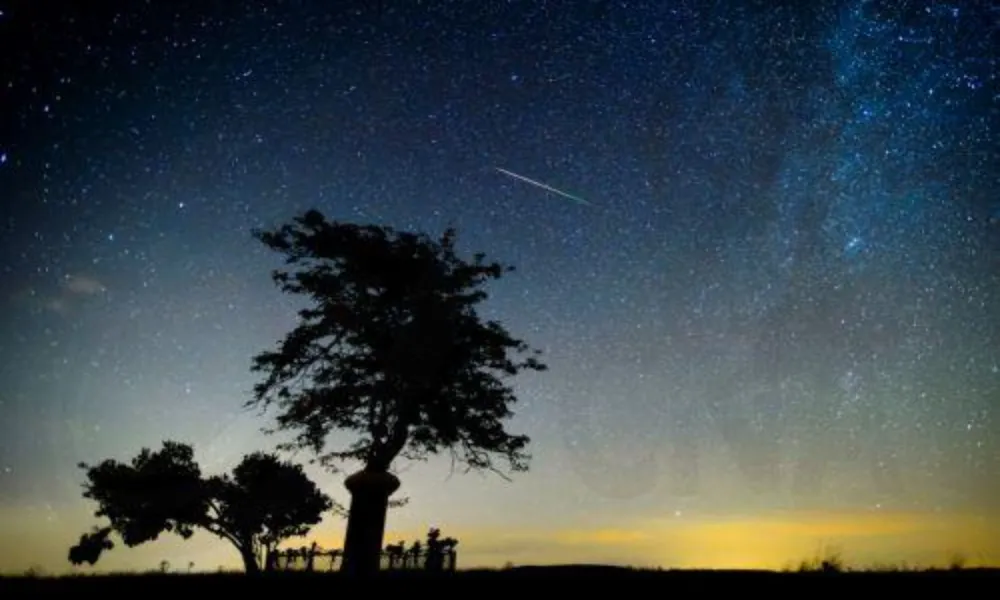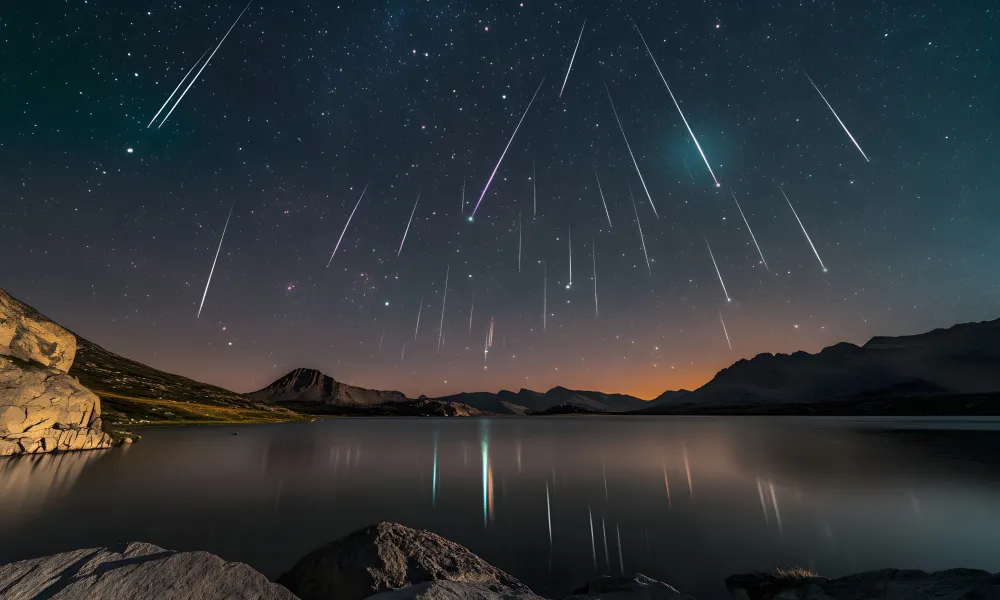

The Perseid meteor shower, one of the most popular annual meteor displays, is reaching its peak, with as many as 100 meteors an hour expected to streak across the sky at speeds of up to 60 kilometres per second.
Several events are taking place across Cyprus tonight for people hoping to observe the phenomenon.
Perseid event
The AstroVerce Astronomy Club and the Cyprus Planetarium will hold a Perseid observation event at the Amiantos Astrophark at 7pm. The Troodos Observatory will also host an event at the Geopark Visitor Centre in Amiantos from 8pm.
On Thursday, 13 August, the Kition Planetarium will hold its annual Perseid event for the 19th consecutive year at the KiteMed Kitesurfing Club on Softades beach, starting at 7.30pm.
However, the Cyprus Astronomical Society has announced the cancellation of tonight’s scheduled Perseid observation evening in Kyperounta following the death of the community’s priest, Father Ioannis.
Although the Perseid meteor shower began on 17 July, the meteors will be visible with greater frequency tonight and tomorrow as the phenomenon reaches its peak. The Perseids will remain visible until 24 August 2026.
Right direction
The best way to observe the shower is to look towards the north-east with the naked eye from an open, dark location away from city lights. Beaches and mountainous areas can provide suitable viewing conditions.
The spectacular phenomenon occurs because Earth is currently passing through the orbital path of Comet Swift-Tuttle, which is filled with debris left behind by the comet as it travels around the Sun. The comet releases this material each time it reaches perihelion, the point in its orbit closest to the Sun.
The Perseids have been observed for around 2,000 years and are associated with Swift-Tuttle, which orbits the Sun once every 133 years.
The comet’s most recent close approach to Earth was in 1992, while its next is expected in 2126.
Annual event
Every August, Earth passes through a cloud of dust and ice along the comet’s orbital path. The particles, which are typically around the size of a grain of rice and weigh less than a gramme, burn up in Earth’s atmosphere, creating one of the most spectacular meteor showers visible from Earth.
They are commonly known as “shooting stars” because they appear to fall from the sky. The shower is called the Perseids because the meteors appear to originate from the direction of the constellation Perseus.
Comet Swift-Tuttle was discovered in 1862 by Lewis Swift and Horace Tuttle. It is a large comet with a nucleus measuring around 26 kilometres across — almost twice the size of the object believed to have caused the extinction of the dinosaurs.
Comets orbit the Sun and form part of our Solar System.
They originate from the Oort Cloud, a distant region surrounding the Solar System. Scientists believe the bodies in the Oort Cloud formed alongside the planets and other objects in the Solar System around 4.6 billion years ago.
The Oort Cloud is estimated to extend for around one light-year, or approximately 9.461 trillion kilometres.
Source: CNA