In Cyprus, people talk. They talk loudly, quickly, generously. They talk over one another, around one another, sometimes instead of one another. But for all this verbal abundance, I have often been struck by a parallel language that rarely gets acknowledged, one that does not rely on sentences at all.
The body.
Not long ago, I was standing near the Ledra Street checkpoint, watching people move through the familiar choreography of passports, questions and brief exchanges. Most crossed without incident. Some chatted as they waited. Others checked their phones. Yet every so often, the body seemed to tell a different story. Shoulders tightened. Arms folded. Conversations paused. Nothing dramatic happened. No words were spoken about history, politics or loss. Yet something was being communicated all the same.
As a therapist living and working in Cyprus, I spend much of my time listening. But listening does not always happen through words. Over the years, I have become increasingly interested in what emerges alongside speech: the hesitation before an answer, the hand that tightens around itself, the breath that subtly changes pace. Often, these details tell a different story from the one being narrated aloud.
Phenomenologists such as Maurice Merleau-Ponty argued that the body is not merely a tool we use to communicate. It is the very medium through which we experience and understand the world. We do not simply inhabit our bodies; we know the world through them. In Cyprus, this feels less like philosophical theory and more like observation.
You see it everywhere. A pause before crossing a checkpoint. A stiffening when "the past" comes up. A looseness in the hips during a wedding dance that seems inherited rather than learned. These gestures are not decorative. They are cultural translations, embodied footnotes to stories people rarely tell aloud.
When words fall short
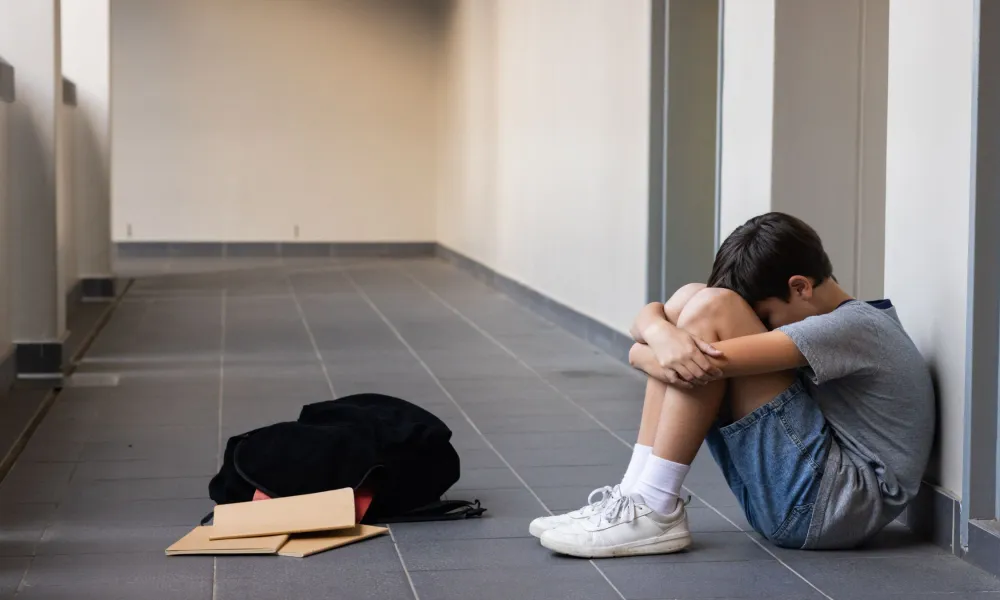
In the therapy room, and often far beyond it, I hear familiar phrases whenever difficult experiences surface: "It was fine." "We managed." "We got through it." The language is tidy; the body is not. Shoulders may rise, feet retreat, hands fidget with invisible threads and a smile arrives half a second too late.
These are not diagnostic signs, nor am I suggesting that every gesture carries hidden meaning. Human beings are far too complex for that. Yet it is equally difficult to ignore how often the body seems to register something before language catches up. In a society that prizes resilience and social harmony, movement can become a discreet outlet, a way of expressing discomfort, ambivalence or resistance without disrupting the social script.
Movement as cultural evidence
The relationship between bodies and culture is rarely abstract. It reveals itself in the choreography of everyday life.
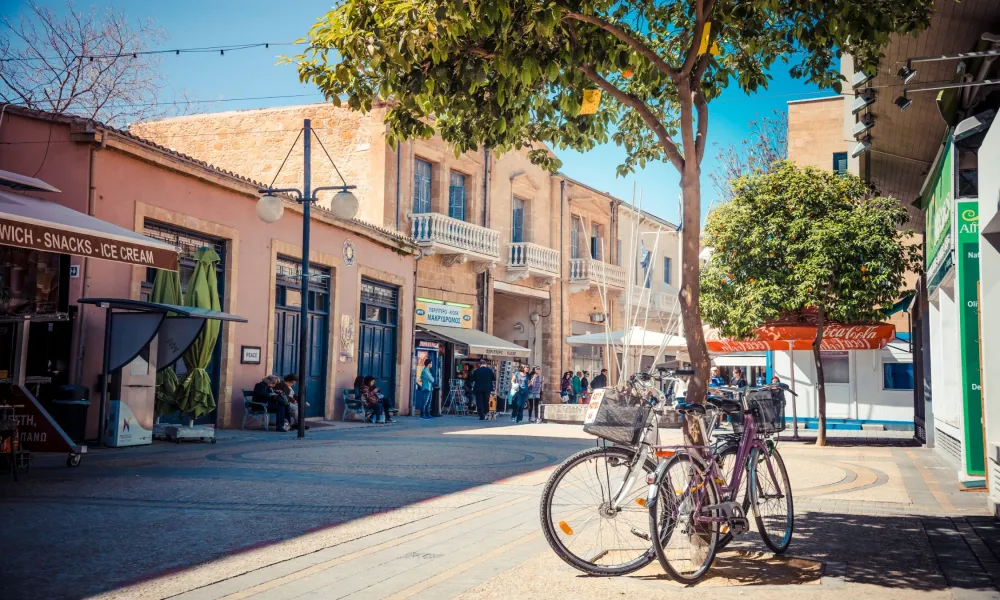
Crossing from one side of the island to the other is, on paper, a straightforward physical act. In reality, it can carry layers of memory, curiosity, grief, familiarity or uncertainty. The body often seems aware of these layers before words arrive to explain them. The same can be said for the way people occupy cafés. Tables are pulled together, conversations overlap, chairs migrate. There is an intimacy to the use of space, but also an unspoken grammar about belonging, hierarchy and familiarity.
Even public demonstrations have a distinctive rhythm. At times they resemble rituals as much as protests, expressions not only of political positions but of collective identity. These movements are not neutral. They are cultural texts, read instinctively even by those who may struggle to explain what they are reading.
The Mediterranean body
There is a recognisable Mediterranean tension to all of this. People embrace warmly yet maintain emotional boundaries. They gesture expansively yet avoid certain topics. They dance with abandon yet speak cautiously about pain.
This is not contradiction but negotiation: openness balanced against protection, intimacy against self-preservation. As a therapist, I find this tension endlessly fascinating because it appears in so many different contexts. People long to be understood and to remain protected. They seek belonging while preserving autonomy. Perhaps that is not uniquely Cypriot. But Cyprus offers a particularly vivid stage on which these negotiations play out.
A society in transition
What feels different today is that younger generations appear increasingly willing to name what earlier generations often carried silently. They are more comfortable discussing anxiety, trauma and emotional wellbeing, more familiar with the language of psychology and often more curious about the body's role in shaping experience.
Yet older cultural codes remain very much alive. They persist at family tables, in workplaces, in public life and within relationships. What emerges is an interesting coexistence between two ways of knowing: one that values endurance and restraint, and another that places greater emphasis on emotional articulation. For a therapist, this is a particularly revealing moment to observe, not because one approach is superior to the other, but because both continue to shape how people move through the world.
Toward a new literacy
The body is not merely a metaphor. It is a narrator, carrying stories about what a society remembers, what it avoids and what it is still trying to understand. It holds traces of personal histories and collective ones alike, recording experiences that language cannot always contain.
Cyprus has never lacked words. The island produces stories, arguments and conversations in abundance. Yet some of its most revealing exchanges take place elsewhere. They unfold in pauses held slightly too long, in shoulders that tense before a difficult sentence, in the familiar choreography of crossings, embraces, celebrations and farewells.
To understand how a society remembers, adapts and changes, it may be worth paying attention not only to what people say, but also to how they move while saying it.