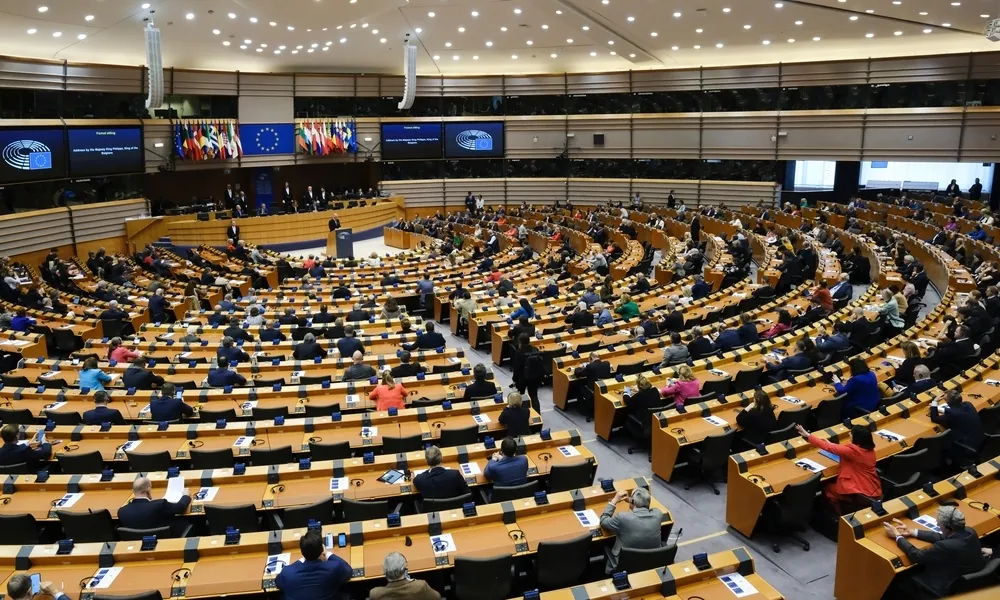
The European Parliament will discuss Turkey’s progress report on Tuesday, including a call on EU foreign policy chief Kaja Kallas to impose targeted sanctions on Turkey’s Justice Minister Akın Gürlek over alleged human rights violations and the politicization of the judiciary.
The final version of the draft report – including references to Turkey’s obligations towards Cyprus and the peace process – will be put to the vote in Strasbourg on Wednesday.
The sanctions proposal forms part of a broader European Parliament (EP) resolution responding to the European Commission’s 2025 assessment of Turkey as an EU candidate country.
Asset freeze
Paragraph 21 calls on Kallas, "in view of the severe democratic backsliding" described in the draft report, "to consider restrictive measures under the EU Global Human Rights Sanctions Regime, including the freezing of assets in the EU, against Turkish officials responsible for serious and deliberate violations of human rights and fundamental freedoms".
It adds that this includes "those officials assuming the role of trustee and those appointing them, or those who are key actors in the state’s repressive machinery, such as former Istanbul Chief Public Prosecutor Akın Gürlek."
The draft report goes on to say the European Parliament "is appalled by his recent promotion to Minister of Justice, which indicates that throughout his career he has always been a political actor following a political agenda".
According to Turkish Minute, Slovenian Member of European Parliament (MEP) Vladimir Prebilič, a shadow rapporteur involved in drafting the text, said Gürlek was singled out because many lawmakers view him as a key figure in what they describe as politically motivated prosecutions in Turkey, including those against opposition-run municipalities.
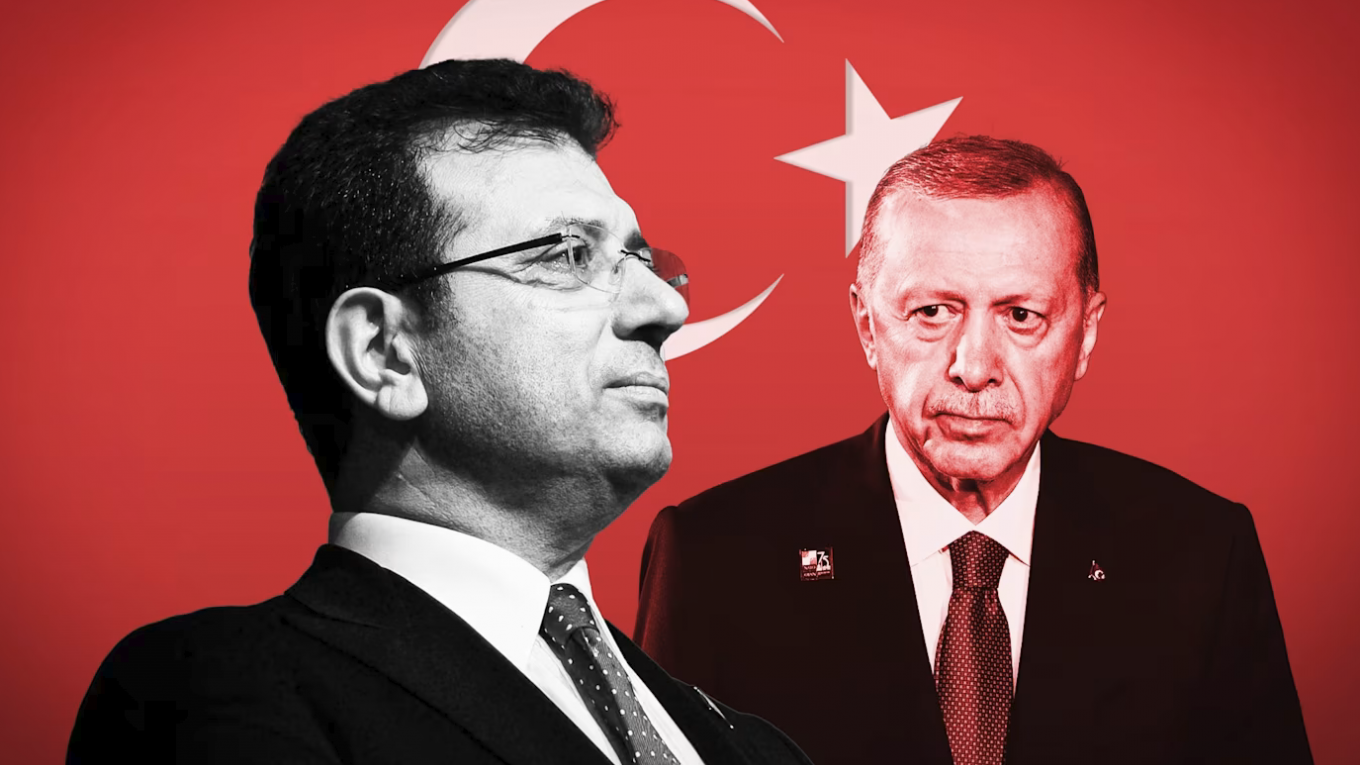
Gürlek was appointed justice minister in February 2026 by President Recep Tayyip Erdoğan. Prior to that he was Istanbul’s chief public prosecutor. According to Turkish Minute, his office led high-profile investigations such as the one targeting opposition figure Istanbul Mayor Ekrem İmamoğlu and members of the Republican People’s Party (CHP).
The resolution is nonbinding, meaning it would not automatically trigger sanctions. Final decisions rest with the EU member states, acting through the Council of the European Union.
The report also reflects broader tensions in EU-Turkey relations, particularly over concerns about judicial independence, the use of secret witnesses and recent court rulings affecting the opposition.
While some cooperation continues – especially on migration and security – Prebilič said talks on visa liberalization and an upgrade of the EU-Turkey customs union depended on improvements in democratic standards and the rule of law, reports Turkish Minute.
Gürlek rejects allegations
Gürlek slammed the draft report, dismissing it as ideological bias. Hurriyet Daily News quoted the Turkish justice minister saying:
“Distorting ongoing judicial proceedings, conducting political campaigns based on cases that are still under prosecution and making unfounded accusations against the Turkish judiciary and myself can only be explained by ideological bias,” Gürlek said.
He added: “No one should entertain the illusion that they can place the Turkish judiciary under pressure or tutelage.”
AKP irritated
According to Daily Sabah, ruling Justice and Development Party (AKP) spokesperson Ömer Çelik said in a social media post that it was a “political shame” for Prebilič to speak “like a colonial commissioner.”
Çelik said the European Parliament should first mend its image on basic humanitarian issues, “such as failing to be on the right side of history on Gaza” before engaging in biased political lobbying.
‘Turkey taking big steps backwards’
Turkey rapporteur and main author of the EP report, Spanish MEP Nacho Sánchez Amor, discussed Turkey's lack of progress towards EU accession and potential EU-Turkey cooperation with Greek media outlet Open last week.
“There is a complete lack of political will to conduct reforms, despite that narrative of the government saying, ‘our path is towards Europe’. Nothing real happened. And the only thing that happened is a continuous backsliding in every aspect of the democratic standards,” he said in the televised interview.
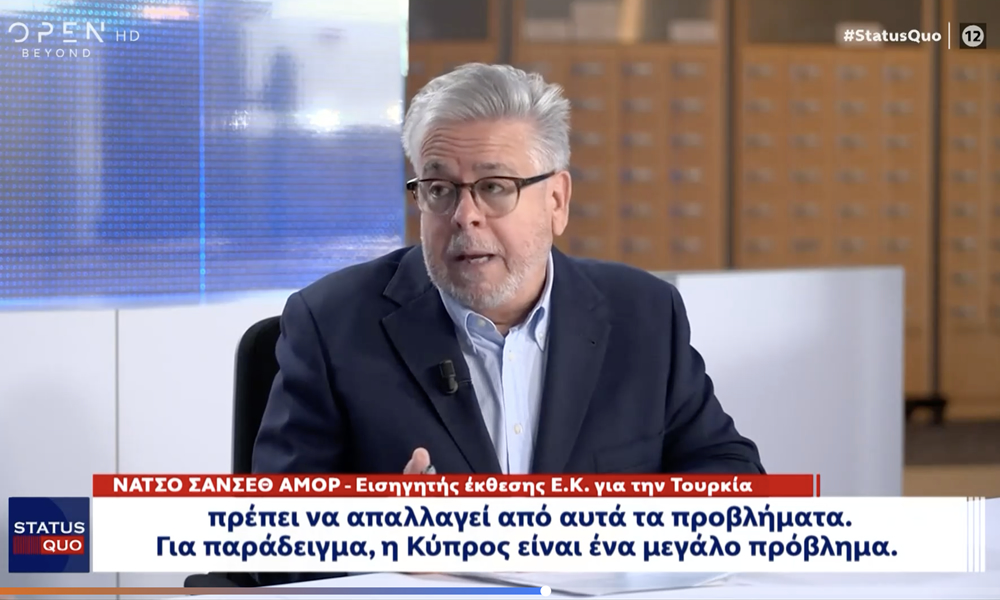
“It’s true that what happened with İmamoğlu, and what happened lately with the CHP, as the main opposition party, is a big, big step backwards in democratic standards,” added Amor.
Not so good neighbourly relations
The Spanish MEP argued that candidate countries need to enjoy good neighbourly relations and align their values and principles, as well as their foreign policy with the EU.
“It didn’t happen. No progress in the accession process,” he said.
Amor noted that the report criticises Turkey on several actions that diverge from the notion of good neighbourly relations, including its Memorandum of Understanding with Libya, violations of the sovereign rights of Cyprus and Greece, the draft law on its Blue Homeland doctrine, overflights, and extensions of marine parks.
Failure to progress towards accession does not mean the EU cannot explore closer cooperation with Turkey within the framework of security and defence, argued the Spanish MEP.
Cyprus a ‘big problem’
For Turkey to have a greater role in European security and defence, however, it needs to achieve good neighbourly relations but also “get rid of the Russian missiles” and align its foreign policy with the EU, said Amor.
He added: “Cyprus is a big, big problem for us, and to regain trust, you have to get rid of the S-400, and you have to approach our foreign policy. This is the normal conditions that we demand from the United Kingdom, from Norway, from other countries that want to be part of our defence programmes.”
Along with the Turkey report, the European Parliament will also vote on the reports of other candidate countries on Wednesday – Albania, Bosnia and Herzegovina, Georgia, Kosovo, North Macedonia, and Montenegro.