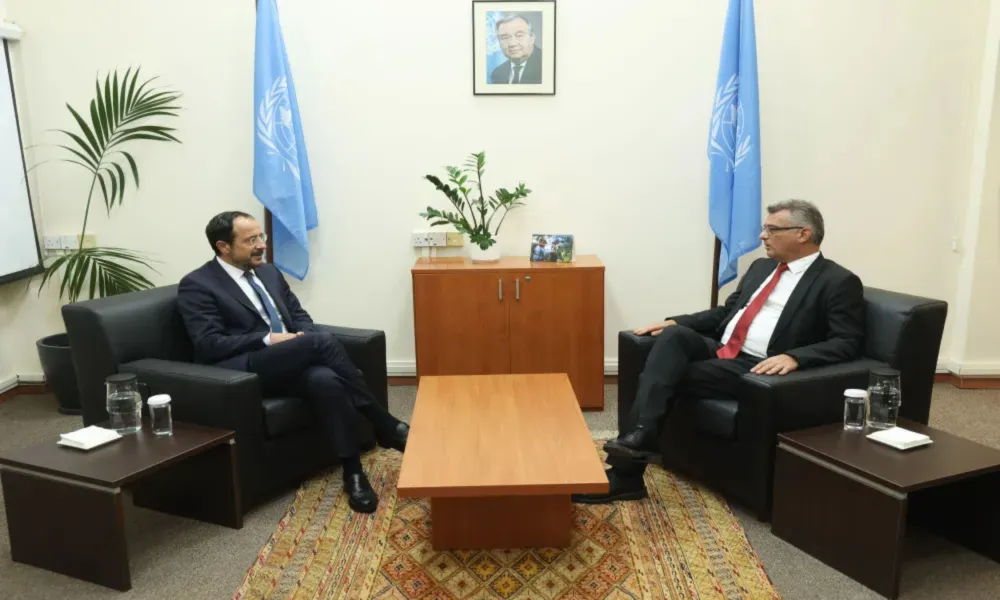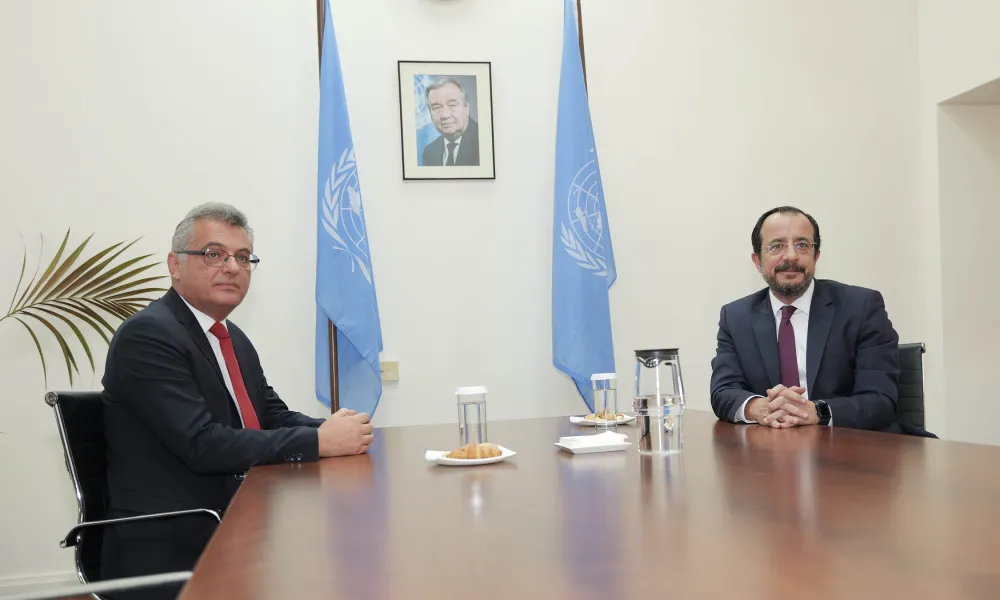



The two leaders met for just over an hour at the UN-controlled Nicosia airport on Wednesday, agreeing to meet again next Thursday at 11am.
Their post-meeting comments reflected a glass half full approach from President Nikos Christodoulides while Turkish Cypriot leader Tufan Erhürman said the trust between the sides has been eroded by recent developments.
Next week’s bilateral will likely be their last before the two leaders head off to New York where they will meet separately with UN Secretary-General António Guterres on the sidelines of the UN General Assembly.
Meanwhile, UN Personal Envoy María Ángela Holguín cancelled her visit to New York due to illness and will instead brief Guterres via phone on the latest.
The negotiators will meet again before the two leaders reconvene next Thursday.
‘Some progress’
Speaking on his return from the meeting, Christodoulides said the leaders had a substantive discussion on methodology and issues of substance, and to a lesser extent confidence-building measures (CBMs).
He noted progress on some issues where the two reached a common understanding, for example, on the question of past convergences, though disagreements and different approaches continue to exist on other issues.
Christodoulides reiterated that he is ready to resume negotiations from the point they were interrupted at which point, all may be judged on their political will to move towards a solution.
“All of us, I repeat, will be judged on the substance, at the negotiating table,” he said.
Convergences
Asked about the UN’s effort to compile the negotiating acquis into a single document, Christodoulides said this exercise was at the “very final stage” and would be completed in a matter of days. “We will see how the UN handles it,” he added.
The Greek Cypriot side wants the UN to deliver the document to all sides and use it at the next 5+1 as the basis to launch the resumption of talks.
The Turkish Cypriot side believes the UN should keep the document to itself as sharing it would be counterproductive. While convergences should be agreed in principle, there is a sense that nine years after the collapse at Crans-Montana, not all things remain the same.
Trilateral between who?
Speaking to reporters, Christodoulides raised the possibility of a trilateral meeting taking place in New York later this month, though details were thin on the format. He suggested Guterres or Holguín could attend a joint meeting of leaders or negotiators.
Greek Cypriot sources said the idea of a possible trilateral came from New York while Turkish Cypriot sources said they had not received such information.
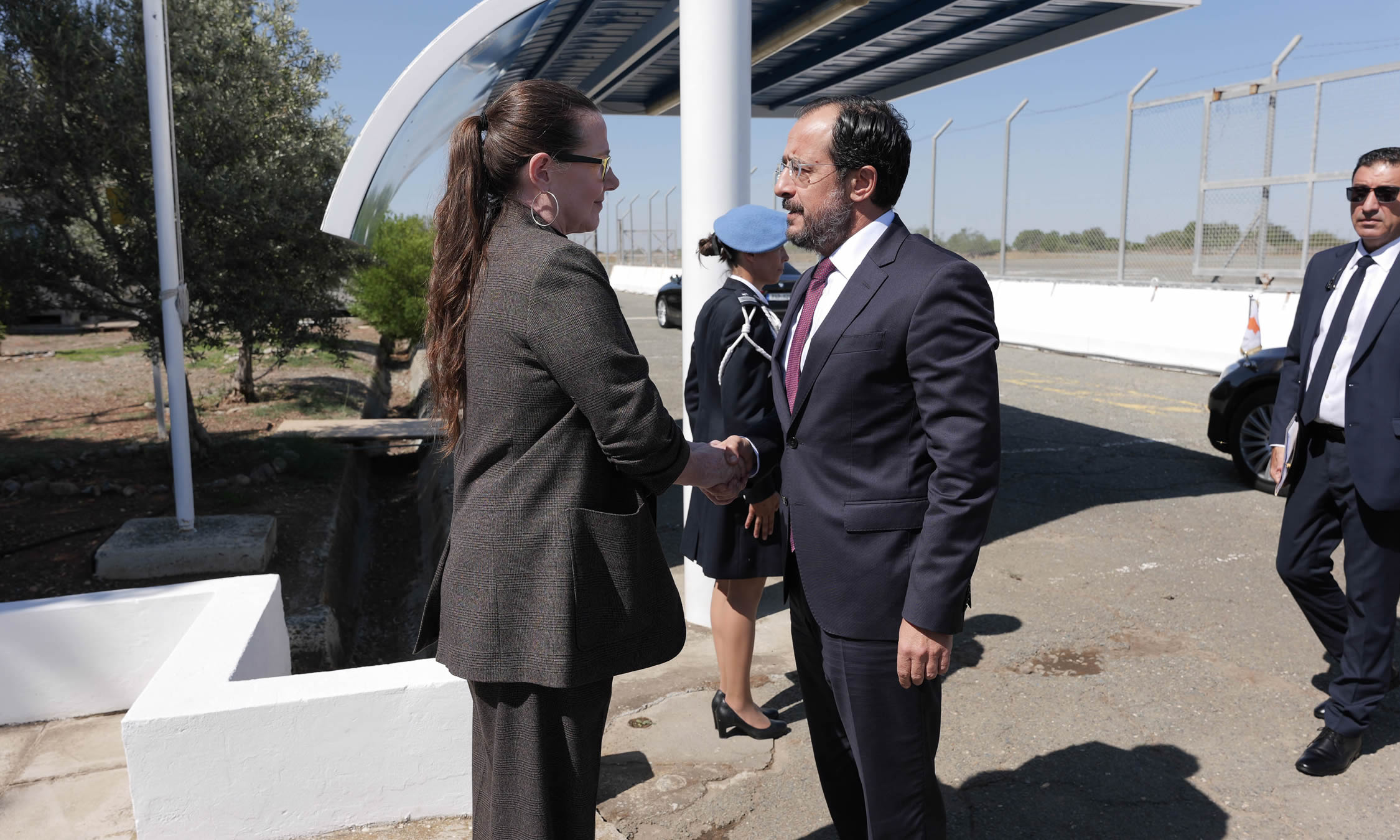
Erosion of trust
In a social media post, Turkish Cypriot leader Tufan Erhürman said the one-hour meeting mainly focused on CBMs and methodology. The two leaders were unable to agree on new CBMs, he said, noting they spent a significant amount of time discussing “both external and internal initiatives that are eroding even the existing level of trust”.
To move the process forward, it is important to create the “conducive climate” referred to by Guterres, argued the Turkish Cypriot leader.
“To achieve this, it is necessary to both implement new CBMs and avoid initiatives that undermine trust,” said Erhürman.
In an earlier social media post before the meeting, Erhürman was more direct in his criticism. He argued that Cyprus’ agreements with Greece and Israel were ignoring Turkish Cypriots and putting lasting peace and stability on the island and region at risk.
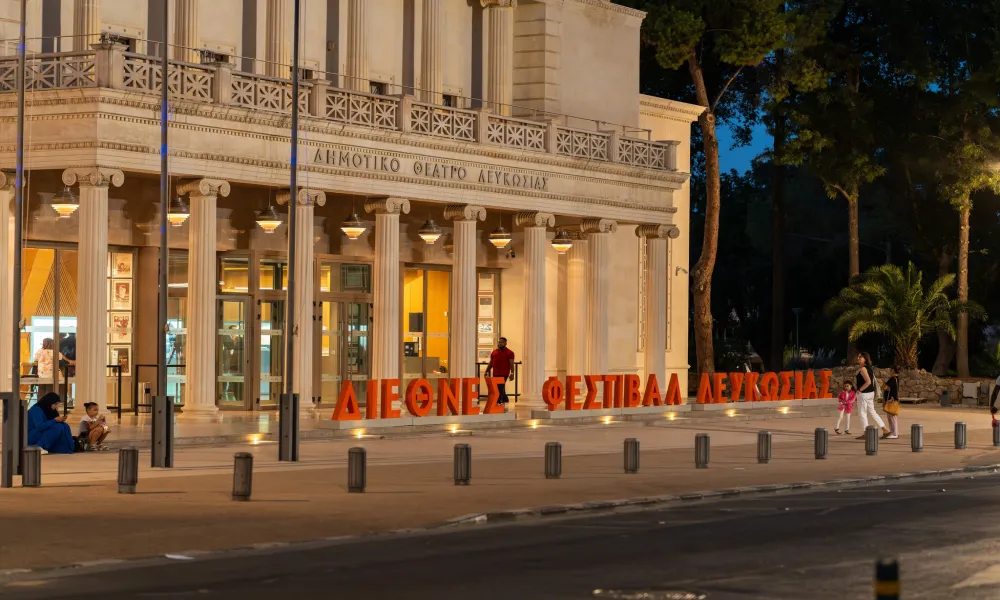
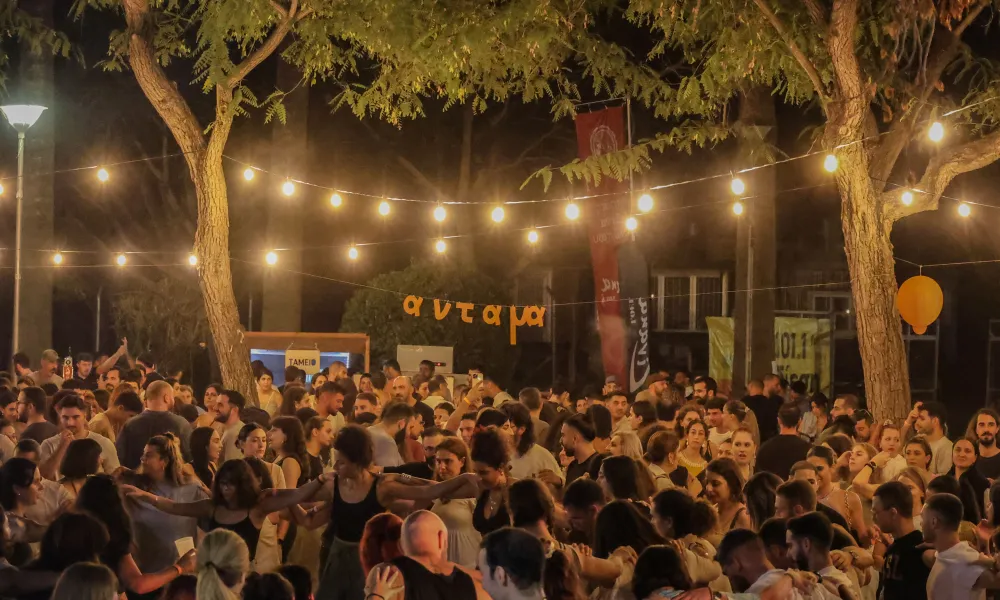
On the domestic front, instead of implementing new CBMs, he argued, “trust, to the extent that it still exists, is being undermined even further by issues such as Barcelona, festivals, property matters, and one-sided, partisan European Parliament resolutions”.
Peace effort at a low point
Well-informed sources on both sides agreed in their assessment that the situation is not looking very bright at present.
A Greek Cypriot source said one would have expected the talks to intensify and find their rhythm after the UNSG’s visit to Cyprus in late July. Instead, there appears to be tension and a slowing down of efforts. As for deliverables, there is no movement.
A Turkish Cypriot source said not only have the sides not moved forwards, they are going backwards in terms of undermining trust.
The source said the effort of the Greek Cypriot side to race to take credit for cancelling musical or sporting events in the north does not send a positive signal. One festival that was cancelled was actually held last year, and that did not lead to recognition of the north, so what was the point, asked the source.
Different viewpoints
On CBMs, the Greek Cypriot source insisted that the UN chief tabled a very reasonable proposal on crossing points which the Greek Cypriot side accepted. It agreed to open Athienou-Pyroi-Aglandjia and Mia Milia simultaneously or to add Louroujina-Lymbia and Kokkina crossings as a package.
The Turkish Cypriot source said Kokkina was not on the table for the past year, while the other crossings were. When the sides came closer to agreement on those, the Greek Cypriot side added Kokkina to the mix, they argued.
To avoid deadlock, the Turkish Cypriot side wanted to take a more holistic approach to CBMs, put more on the table and strike a balance, but the intensification of the effort to cancel events in the north disrupted that, they said.
Regarding methodology, the Greek Cypriot source maintained that the most important points have been addressed – reconfirming political equality and past convergences and ensuring a reasonable timeframe if talks start from where they left off. Only the last point on ensuring no return to the status quo is not considered helpful, said the source.
On the argument that the Turkish side questions the political will of the Greek Cypriot side to go all the way, the Greek Cypriot source said detailed discussions have been held on issues of substance, making such an argument disingenuous. The ultimate test of will is at the negotiating table, they added.
They speculated that the struggling peace effort might be a result of a re-examination of Ankara’s priorities or ambitions in the region.
They also voiced concern that a failed peace effort would also pose risks of further complications unfolding, which cannot be underestimated.