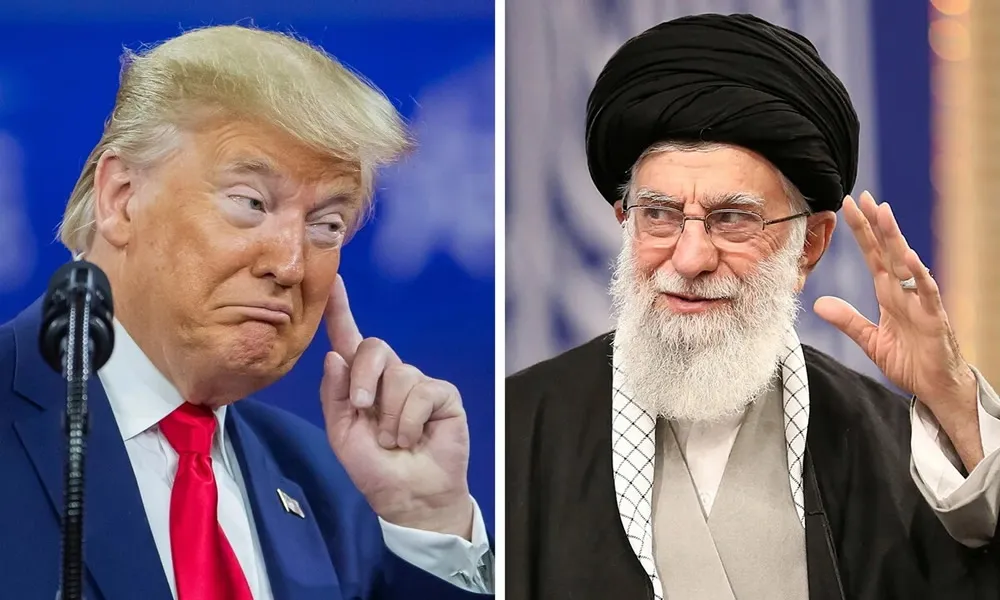
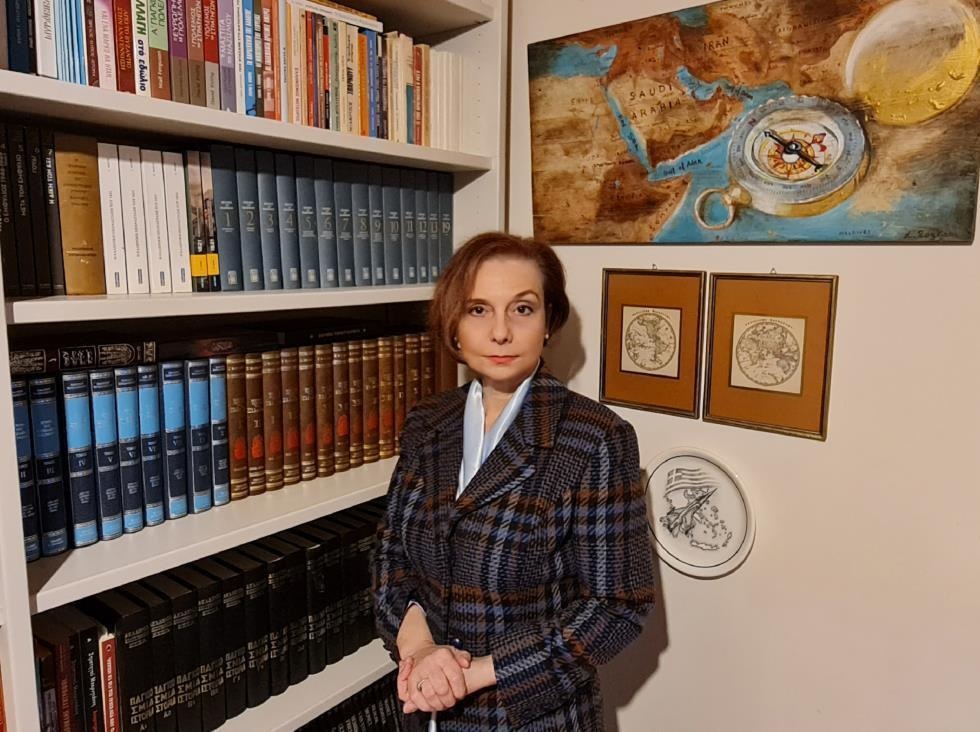
How close are the United States and Iran to open conflict? Middle East analyst Evanthia Koulourioti speaks to Politis.
Iranian President Masoud Pezeshkian has instructed Foreign Minister Abbas Araghchi to enter immediate talks with the United States, on the condition that negotiations proceed without threats or what Tehran describes as unreasonable demands. Washington, however, is pressing Iran to dismantle its nuclear programme, curb its ballistic missile capabilities and end support for Iran-aligned armed groups across the region, including the Houthis, Hezbollah and Hamas.
According to reporting cited by the New York Times, Tehran has recently softened its stance on uranium enrichment and is now prepared to discuss significant concessions, including the suspension of parts of its nuclear programme. The same reports suggest Iran is viewing more favourably a previously floated US proposal for a regional consortium for civilian nuclear energy production.
In parallel, an Iranian official has met Russian President Vladimir Putin to convey a message from Supreme Leader Ali Khamenei, indicating Iran’s readiness to transfer enriched uranium to Russia, as it did under the 2015 nuclear agreement.
Last Monday, US President Donald Trump publicly urged Iran to reach an agreement with Washington, warning that otherwise “bad things could happen”. Talks between US and Iranian officials are expected to take place on Friday, 6 February, in Turkey, following mediation efforts by Egypt, Qatar, Oman and Turkey. The US delegation will be led by Trump envoy Steve Witkoff, while Tehran will be represented by Araghchi.
Trump’s conditions and Washington’s assessment
Despite Tehran’s stated desire to avoid military escalation and its apparent willingness to make limited concessions, Washington remains sceptical, according to Koulourioti.
“The US believes Iran is still trying to buy time and is not serious about accepting Trump’s terms,” she said. Those terms, she explained, cover four pillars: the nuclear programme, missile development, Iran-backed militias, and the human rights situation inside Iran.
With each passing hour, she warned, the prospects for a diplomatic resolution diminish, while the risk of military action increases.
She added that the United States has deployed substantial forces to the Middle East, in a build-up reminiscent of the final weeks before the attempted detention of Venezuela’s Nicolás Maduro. The region now hosts an aircraft carrier, large naval strike groups, air defence systems and advanced combat aircraft capable of penetrating any air defence systems Iran has acquired over the past eight months from Russia or China.
Three military scenarios on the table
Koulourioti outlined three military options available to Trump.
A Limited Strike
The first scenario involves a contained strike targeting facilities linked to the Basij paramilitary force and the Islamic Revolutionary Guard Corps, particularly units allegedly involved in the violent suppression of protesters. Such strikes would rely on Tomahawk missiles and air power.
According to Koulourioti, US intelligence services, with Israeli support, have a detailed operational picture of these units in Tehran and other cities. The aim would be to send a warning to the Iranian leadership while signalling US support for domestic protest movements.
A Heavy but Calibrated Blow
The second scenario envisages a broader strike against all three branches of Iran’s armed apparatus: the regular military, the Revolutionary Guards and the Basij. Command centres and senior officers allegedly involved in mass killings would be targeted.
The objective, she said, would be to force Tehran into concessions both domestically and at the negotiating table.
A Decisive Regime-Change Operation
The third scenario would seek to dismantle the regime entirely, beginning with the leadership at the top, including Khamenei, and extending to senior military and political figures.
Such an operation would target major military bases, missile infrastructure and what remains of Iran’s nuclear programme. It could also involve covert ground operations aimed at protecting protesters and eliminating key figures. The goal would be a rapid collapse of the regime without triggering regional war or internal fragmentation.
Iran’s military capacity and constraints
Koulourioti noted that, according to Israeli intelligence assessments, Iran has partially rebuilt capabilities lost during last July’s 12-day conflict. While China has reportedly supplied medium-range air defence systems, she said these are unlikely to be effective against US forces. Russia has allegedly transferred S-200 and S-300 systems, which had limited effectiveness during the same conflict.
Estimates of Iran’s missile stockpile range from 1,000 to 2,000 missiles, but the more pressing limitation lies in the number of available launchers. Many were destroyed during the July fighting, forcing Tehran to relocate surviving launchers to fortified underground facilities known as “missile cities”.
Iran has also replenished its drone fleet with Russian assistance, though its most dangerous assets, Koulourioti stressed, remain regional rather than purely domestic.
Tehran’s regional leverage
Iran continues to hold powerful pressure points across the Middle East. It has repeatedly threatened to close the Strait of Hormuz, through which roughly eight million barrels of oil pass daily. It also retains the capability to strike major oil and gas facilities in Saudi Arabia, Qatar, Iraq, Bahrain, the UAE and Kuwait.
In addition, Iran maintains aligned militias capable of destabilising the region, including Hezbollah in Lebanon, Kataib Hezbollah and al-Nujaba in Iraq, and the Houthis in Yemen.
Koulourioti argued that Iran still possesses the capacity to deliver a serious response to any non-decisive US strike and could ignite a broader regional crisis. This, she said, remains a key factor in Washington’s calculations. Trump, she added, does not want a prolonged war like Afghanistan or widespread Middle East chaos.
The “poisoned chalice” moment
“We are at a critical juncture that could reshape the Middle East’s balance of power,” Koulourioti said.
Some analysts believe current developments align with Israeli Prime Minister Benjamin Netanyahu’s long-stated vision of a “new Middle East”. Others see Trump’s posture as driven by personal animosity towards Tehran, allegedly linked to two reported assassination plots against him. US officials, however, argue the escalation is a response to the regime’s excessive use of force against recent protests.
Whatever the motivation, Washington appears to view Iran as being at its weakest point in decades. The choice, Koulourioti concluded, may lie between a rapid collapse scenario or a slow-burn regional conflagration, unless Khamenei ultimately “drinks the poisoned chalice”, as Ayatollah Khomeini did at the end of the Iran-Iraq war, by accepting US terms in full.