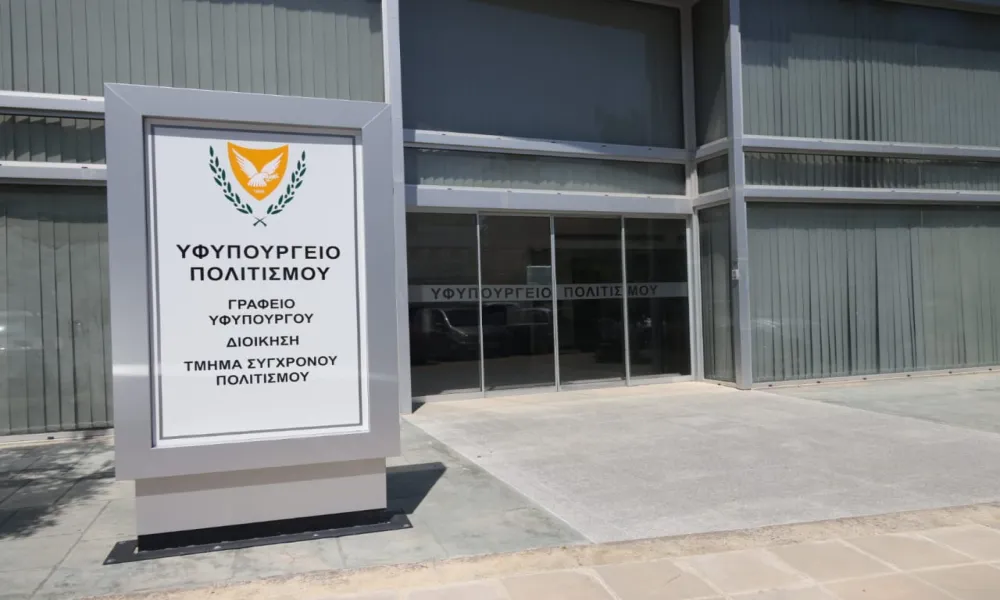

Educational programmes for primary and secondary school groups aimed at fostering engagement with modern and contemporary Cypriot art have been announced by the Deputy Ministry of Culture.
According to the ministry, the programmes have been approved by the relevant education directorates and will run at the Museum of Modern and Contemporary Art (SPEL building) until the end of the current school year.
Participation is free of charge, with a maximum of 25 students per group. Sessions last 90 minutes for primary education and 60 minutes for secondary education. Available time slots are 08:45 and 10:45, with up to two school groups per session.
The programmes were designed by the Deputy Ministry of Culture in collaboration with the National Museum of Contemporary Art Athens. They aim to provide students with a meaningful and experiential introduction to Cypriot art, while encouraging creative thinking, dialogue and critical engagement with artworks.
Exhibition at the centre of the programme
The programmes are built around the museum’s first exhibition, titled “Agropoetics: soils/bodies”, organised in the context of the Cyprus Presidency of the Council of the European Union 2026.
Curated by Elena Parpa, the exhibition explores the relationship between humans, landscape and land through an ecological and social lens, at a time marked by significant environmental, social and geopolitical change.
Running until 30 June 2026, the exhibition invites visitors to reflect on their relationship with nature, place and history, encouraging a more critical and empathetic perspective.
Learning through interaction and creativity
Through participation in the programme, students interact directly with the exhibition and its themes, as well as with the works and practices of Cypriot artists.
Activities are designed to be playful and exploratory, focusing on the use of the body as a tool for connecting with and understanding artworks, alongside visual experimentation through drawing. These approaches aim to stimulate imagination, idea generation and creative interpretation.
For secondary education students, the programme draws on methodologies from non-formal education and museum learning, including inquiry-based and collaborative approaches, to support deeper understanding through dialogue, critical thinking and sensory engagement.
Students are encouraged to express personal interpretations and connect art with their own experiences and emotions, while also developing empathy towards both human and non-human subjects.
The programme further seeks to strengthen critical thinking, dialogue and argumentation skills, while promoting artistic expression. It also introduces contemporary art as a means of understanding broader issues, including power relations, ecology, identity, memory and history, as well as the ways in which people perceive and inhabit their environment.
Source: CNA