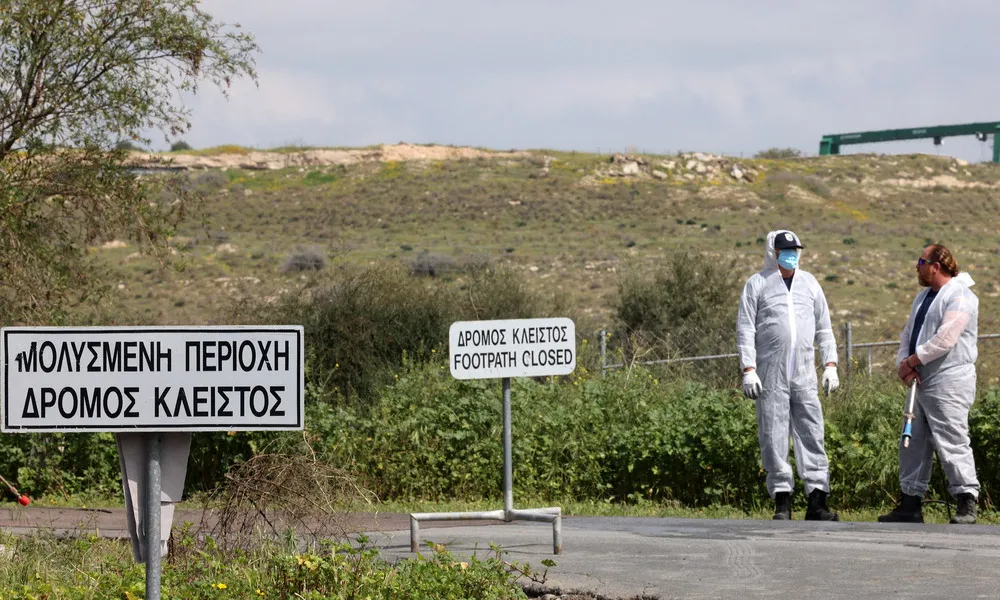
Regardless of whether the first case was detected on a farm in occupied Lapithos or in a unit in Larnaca, the outbreak has already exposed a harsh reality that Cyprus often avoids confronting. Epidemics do not recognise political borders; they do not stop at checkpoints nor follow administrative boundaries. The transmission of the virus – especially in the case of foot‑and‑mouth – makes this even clearer: it can spread through airborne particles, animals, people, vehicles and equipment, and travel swiftly across large distances.
The debate over the origin of the virus, while understandable at first glance, risks distracting from the essential issue: effective crisis management. The fixation on identifying the “initial source” may serve political or communication objectives, but it does little to curb the spread. On the contrary, it may foster an illusion of control while the real challenge lies elsewhere – namely in creating an integrated, coordinated and scientifically grounded response framework.
Invoking the existence of checkpoints or the political situation in northern Cyprus as justification for limited or fragmented action does not withstand serious scrutiny. Checkpoints regulate the movement of people and, to some extent, goods – but they are not biological filters, nor environmental barriers. The air that carries the virus circulates freely across the island, as do wild animals and natural processes capable of transmitting disease. Cyprus’s geography remains unified, regardless of political divisions; the same applies to its ecosystems and the threats that move through them.
A practical necessity
In this context, an all‑island approach to managing foot‑and‑mouth disease is not an idealistic suggestion but a practical necessity. Effective disease surveillance, information sharing, coordinated biosecurity measures, joint compensation for Greek Cypriot and Turkish Cypriot farmers, and timely intervention all require cooperation across political lines. Without this, gaps in one part of the island can easily undermine efforts in another.
Had the Republic of Cyprus not resisted and blocked, with various pretexts, the Bureau Veritas inspections for halloumi quality certification, foot‑and‑mouth disease might have been detected at an early stage and addressed more effectively on an island‑wide basis. Quality‑control mechanisms – particularly for PDO products like halloumi – are not just about compliance with technical standards; they also serve as early‑warning systems for animal‑health problems. Such inspections can detect abnormalities, record suspicious cases and activate preventive procedures before a disease becomes a crisis.
Lessons from the coronavirus pandemic
The coronavirus pandemic offers a useful precedent. Despite political sensitivities, there were moments when a minimum level of coordination and information exchange between the two sides was achieved. It was neither perfect nor seamless, but it showed that when political will and a shared sense of risk exist, channels of communication can be built.
Today, that experience must be used – while avoiding past mistakes. Managing an animal disease like foot‑and‑mouth cannot rely on broad and often improvised measures such as closing checkpoints or imposing blanket movement restrictions, as occurred during various influenza outbreaks. Such actions may create an impression of decisiveness but tend to yield limited results while escalating mistrust and imposing social and economic costs.
Instead, a more targeted, evidence‑based approach is needed. This includes strengthening veterinary services, strictly applying biosecurity measures in livestock units, tracing animal movements, and educating producers. Such an approach also requires full honesty between the two sides of the island, so that any measures taken reflect the actual conditions on the ground. Transparency and timely public information are equally crucial to prevent panic or misinformation.
Economic impact
The economic dimension cannot be ignored. Foot‑and‑mouth disease can severely affect livestock production, disrupt exports and trigger wider economic consequences. For Cyprus – where products such as halloumi are major pillars of agricultural revenue – the stakes are high. This makes coordinated action even more urgent, since failure in one part of the island can impact the entire economy.
The case of the Czech Republic, which faced the disease from May 2025 to February 2026, is instructive. The key lesson is that foot‑and‑mouth disease acts as an economic shock multiplier. It not only harms animals but disrupts trade flows, reduces farmers’ income, burdens the state with heavy compensation costs and creates market uncertainty. Even though foot‑and‑mouth cannot be transmitted to humans through consumption, the crisis reduced meat demand, boosted imports and eroded consumer confidence in domestic production – placing further pressure on local producers.
For that reason, the Czech Republic fully implemented EU protocols, which in confirmed or suspected cases require (a) culling of animals, even of healthy herds, (b) restrictions on animal movements and (c) full farm quarantines.
The lesson for Cyprus is clear:
• the problem is not only health‑related but deeply economic – affecting both communities
• delays in action dramatically increase the national cost
• exports and the country’s reputation are extremely vulnerable, with long‑term implications
And a political dimension
At the same time, crisis management touches deeper political questions. The quick resort to measures such as closing checkpoints – advocated, for example, by ELAM – is not a neutral choice. It can reinforce narratives that favour entrenching division by presenting isolation as a solution. Yet such an approach fails to address the root of the problem and may create more difficulties than it resolves.
This is not to say control measures should never be imposed. Rather, they must be proportionate, targeted and based on genuine risk assessments. Managing an epidemic requires careful balancing of public health protection, economic continuity and the avoidance of unnecessary restrictions with lasting consequences.
Ultimately, foot‑and‑mouth disease serves as a mirror exposing the vulnerabilities—but also the strengths—of Cypriot society and the state. It highlights the limits of existing structures while reminding us that more mature and effective approaches are possible. The challenge is not only medical or economic—it is political and social.
Cyprus is being asked to confront a crisis that, by its nature, transcends dividing lines. The response cannot be retreat behind those lines, but recognition of common responsibility and shared interest. An island‑wide strategy—based on cooperation, science and realism—is not just the most effective path but the only viable one. Yet the way Greek Cypriots and Turkish Cypriots handled both the coronavirus pandemic and today’s foot‑and‑mouth outbreak shows that this approach has not taken root. Our shared problems are not generating a culture of cooperation; instead, they are deepening mistrust and division.