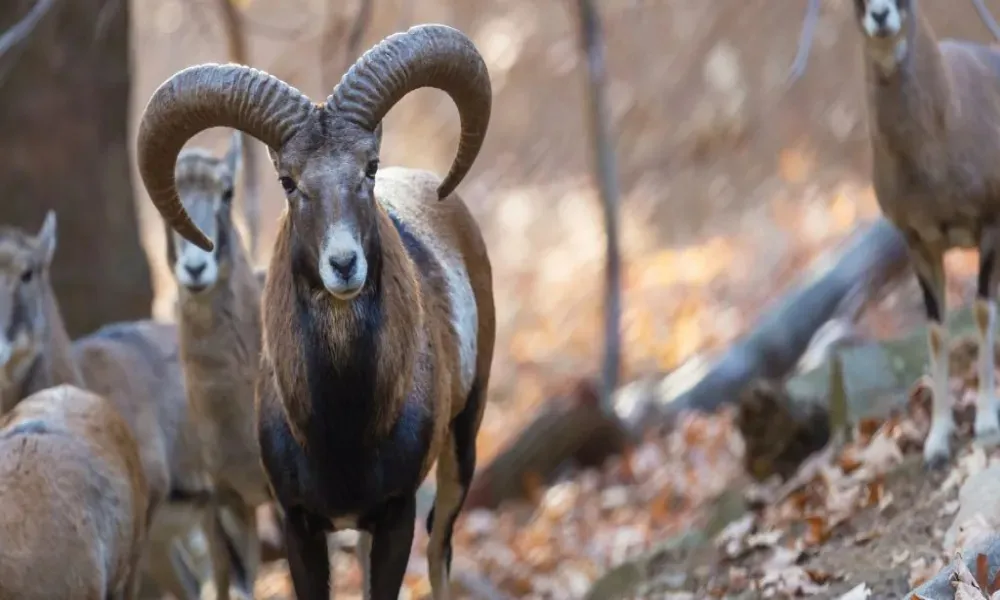

Visitor facilities hosting Cyprus mouflon in Stavros tis Psokas and Platania have been closed as a preventive measure following the emergence of foot-and-mouth disease in the Republic’s free areas. The Department of Forests said the decision aims to safeguard the health of the animals and prevent potential transmission to the endemic species. Authorities emphasise that strict preventive measures are essential for protecting wildlife and preserving Cyprus’ biodiversity.
Preventive closure of mouflon facilities
The Department of Forests announced that the mouflon protection and conservation enclosures open to visitors in Stavros tis Psokas and Platania will remain closed for precautionary reasons. According to the department, the measure has been taken to protect the animals’ health and to reduce the risk of the spread of foot-and-mouth disease. Authorities stress that adherence to preventive measures contributes to safeguarding wildlife and maintaining the island’s biodiversity.
Measures concerning wild mouflon populations
With regard to mouflon living in the wild, the Game and Fauna Service moved to implement immediate measures as soon as the first foot-and-mouth disease case was confirmed in the Republic’s free areas. The service, which is responsible for enforcing legislation protecting the endemic species, has introduced a series of actions under the government’s broader strategy to contain the outbreak. These include a complete ban on hunting and on the training of hunting dogs in areas neighbouring affected livestock units in the Larnaca district.
The Game and Fauna Service is also participating in daily coordination meetings of all involved authorities at the Joint Rescue Coordination Centre (JRCC) as part of the national response to the disease. At the same time, the Veterinary Services noted that the main habitat of the mouflon population lies in the remote geographical area of the Paphos Forest. This location, distant from the current outbreak clusters, provides a natural advantage in efforts to limit the potential spread of the disease.
A long-standing effort to preserve genetic stock
The creation of the fenced enclosure at Stavros tis Psokas dates back to the 1930s, during the period of British administration, when the Department of Forests observed a dramatic decline in the mouflon population in the Paphos Forest.
Facing the risk of the endemic subspecies disappearing from Cyprus, authorities implemented two key measures, according to Haris Nikolaou, an officer at the Department of Forests who spoke in an earlier report.
The first was the prohibition of hunting in the Paphos Forest. The second was the establishment of a fenced enclosure near the forestry offices at Stavros tis Psokas. The enclosure was initially smaller and located in a different area than today, but it served a crucial purpose: preserving genetic stock in case the species became extinct in the wild. Under this strategy, mouflon could be bred in the enclosure and gradually reintroduced into the natural environment until the population recovered. According to Nikolaou, this initiative may represent the first biodiversity conservation action ever undertaken in Cyprus.
In the years that followed, the hunting ban allowed the mouflon population to recover. Public interest in seeing the animals within the enclosure also increased. After the end of colonial rule, authorities decided to maintain the facility, relocating it to a larger site while continuing to use it to preserve genetic material and safeguard the species against potential future threats such as disease or other risks.