
In 1976, a book about women’s sexuality transformed public discussion about sex. Written by American sex researcher Shere Hite, The Hite Report challenged long-standing assumptions about female pleasure and sold millions of copies worldwide. Half a century later, historians and researchers are revisiting her work and asking why a figure once central to the sexual revolution is now largely forgotten.
A study that challenged sexual assumptions
Shere Hite’s landmark book, The Hite Report: A Nationwide Study of Female Sexuality, was published in 1976 and based on more than 3,000 detailed responses from women across the United States. The survey asked participants to describe their sexual experiences in their own words, including how they experienced orgasm, their relationships, and their attitudes toward sex.
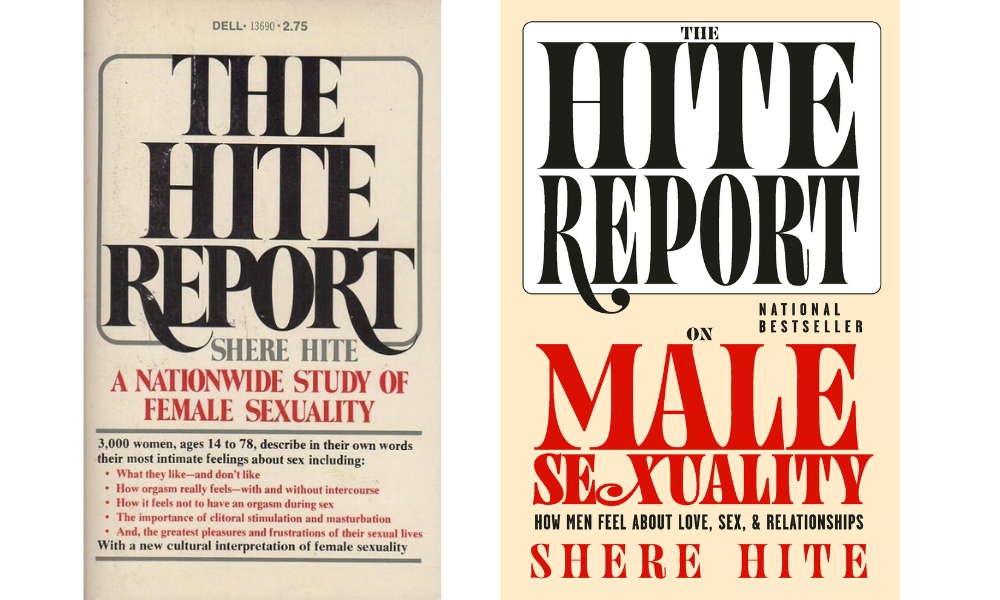
The findings were widely discussed and controversial. According to Hite’s research, around 70 per cent of women in her study reported that they did not reach orgasm through vaginal intercourse alone, but did experience orgasm through clitoral stimulation or masturbation.
At the time, many cultural assumptions about sex were still shaped by earlier psychological theories suggesting that a “mature” female orgasm should occur through penetration. Hite’s work directly challenged this view and argued that women’s bodies and experiences had been misunderstood within male-centred models of sexuality.
A feminist approach to sex research
Unlike many sexologists of the mid-20th century, Hite did not work primarily through laboratory observation or clinical interviews. Instead, she collected anonymous written testimonies from participants, encouraging them to describe their experiences in detail.
Her method prioritised personal accounts rather than controlled sampling. Critics argued that the self-selected participants meant the results could not be considered statistically representative. Hite responded that traditional random sampling was often impossible in sex research because many people were unwilling to discuss intimate experiences openly.
The approach nevertheless produced unusually detailed descriptions of sexual experience, and the book became a bestseller translated into multiple languages. It is estimated that The Hite Report sold tens of millions of copies worldwide.
Fame, controversy and backlash
Following the book’s publication, Hite became a prominent public figure in the late 1970s and 1980s, appearing regularly on television talk shows and in media debates about sexuality.
Her later books expanded the research to men and relationships, including The Hite Report on Male Sexuality (1981) and Women and Love (1987). These works explored men’s insecurities about changing gender roles and women’s dissatisfaction within relationships.
The publications also generated strong criticism from some academics and media commentators. Critics questioned the research methods and conclusions, while others attacked the work on ideological grounds during a period of political backlash against feminism.
Leaving the United States
The intense public scrutiny eventually affected Hite’s career in the United States. In the 1990s she moved to Europe and later renounced her American citizenship, citing years of hostile media coverage and personal attacks.
She continued writing and lecturing internationally, living mainly in Germany, France and the United Kingdom. Hite died in London in 2020 at the age of 77.
Renewed interest in her legacy
In recent years, scholars and filmmakers have revisited Hite’s work. The 2023 documentary The Disappearance of Shere Hite, directed by Nicole Newnham, examined her impact on feminist thought and the cultural reaction that followed.
Researchers argue that her work helped bring female sexual experience into mainstream discussion and contributed to later studies of what social scientists call the “orgasm gap”, the documented difference in orgasm frequency between men and women in heterosexual encounters.
Half a century after the publication of The Hite Report, debates about sexual education, gender expectations and equality in relationships remain active. For many historians of sexuality, Hite’s work represents an important moment when women’s personal experiences became central evidence in understanding sex.
Sources: academic publications and historical reporting on Shere Hite and The Hite Report*, including archival research and recent media coverage.*