
As Limassol continues to expand vertically and densify inland, questions around public parks and shared green space are moving closer to the centre of urban debate. Parks, pedestrian corridors and coastal open areas are treated as core infrastructure tied to public health, climate resilience and everyday quality of life.
The city’s relationship with public space is uneven. While Limassol is widely associated with its seafront and flagship coastal areas, access to neighbourhood-level green space remains limited in many inland districts. This contrast has increasingly shaped how residents experience the city.
The city’s best-known green spaces
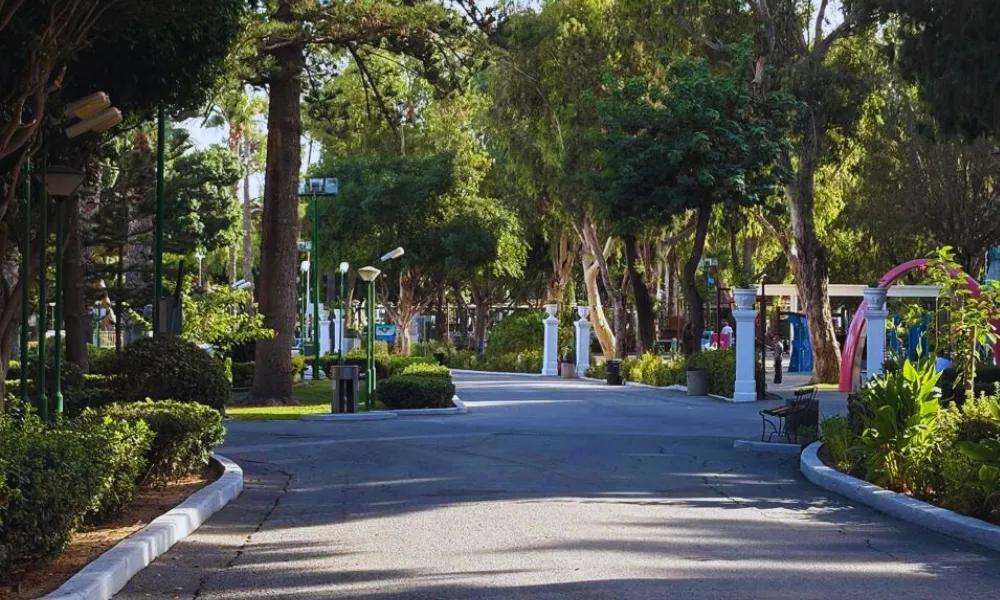
Limassol’s most recognisable public park remains the Municipal Garden, located near the seafront in the city centre. The Garden functions as a rare continuous green area within the urban core, hosting mature trees, walking paths, playgrounds, cultural events and the municipal zoo. It is one of the few spaces that serves multiple age groups throughout the day.
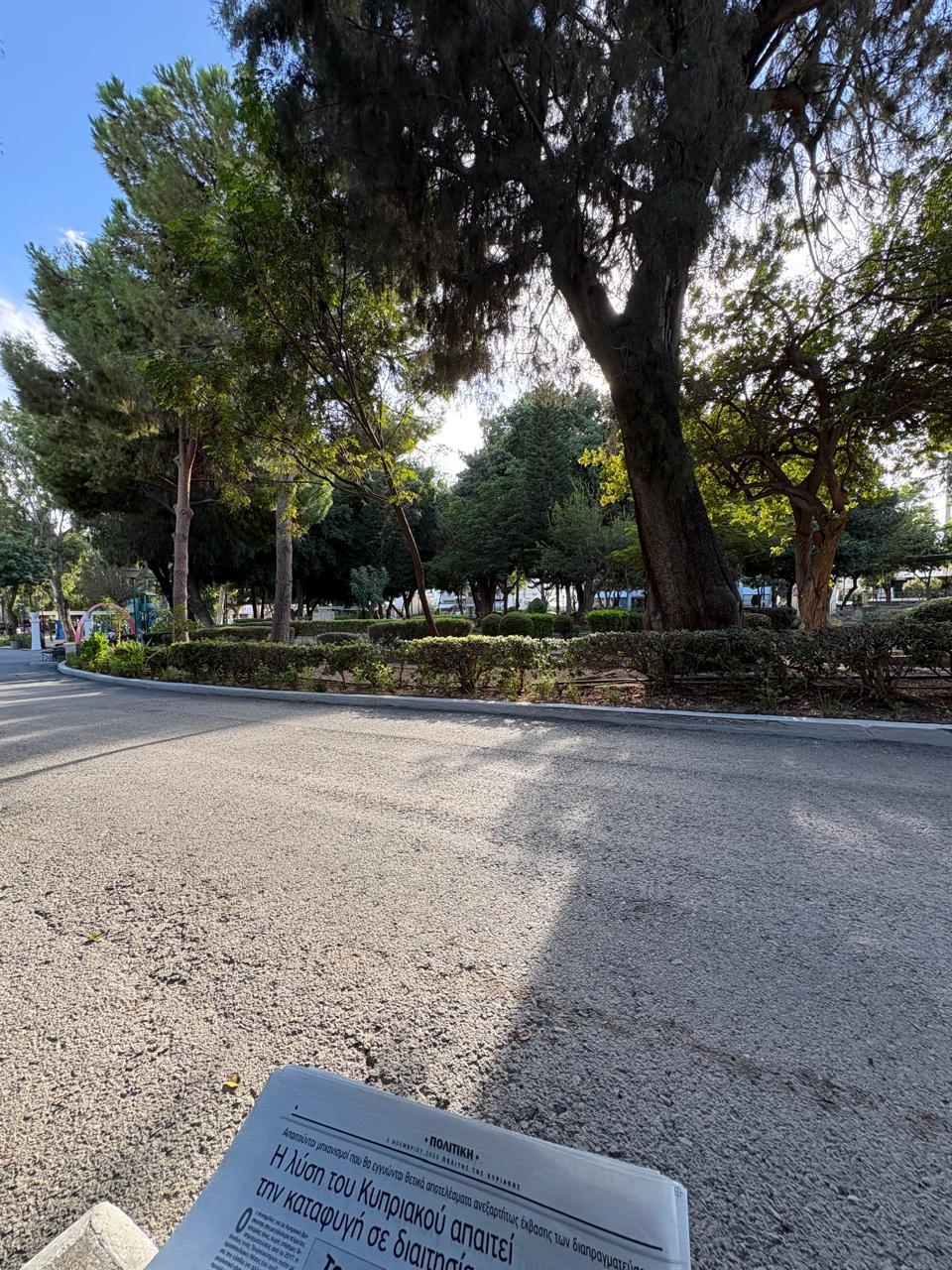
However, the future of the Municipal Garden as a partially public zoo is now in question. Politis reports that the Limassol Zoo is heading towards permanent closure and its conversion into the “Fysi” Environmental Centre, an open biodiversity park with an educational, research and social character, aimed at strengthening environmental awareness and sustainable urban development.
Molos promenade
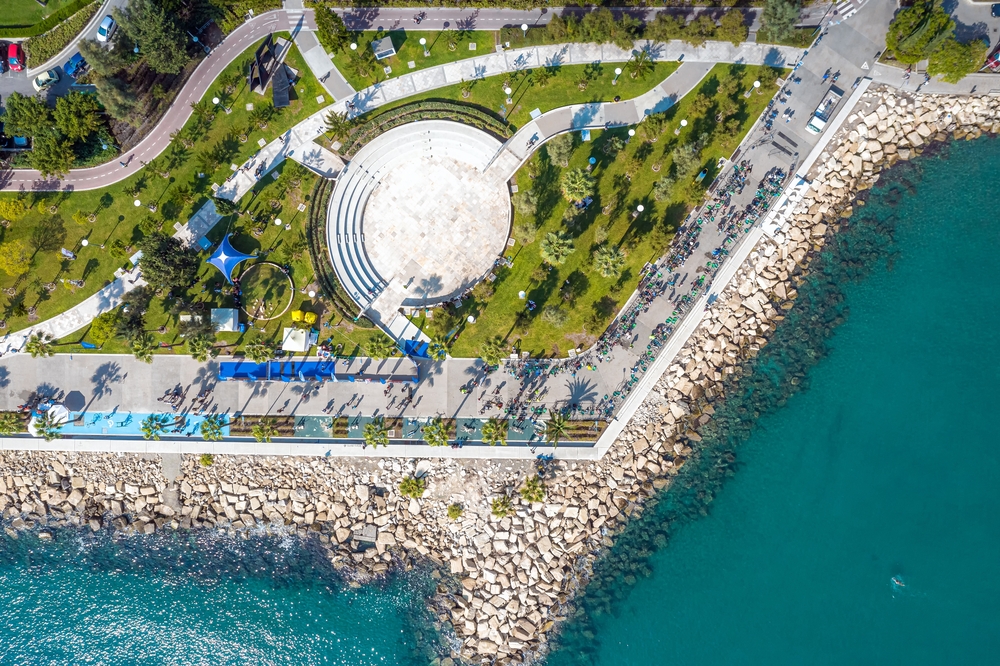
Along the coastline, the Molos promenade operates as a hybrid public space. With landscaped sections, open plazas, pedestrian and cycling paths, and exercise areas, it has become one of the city’s most intensively used public corridors. Its popularity, however, also highlights a structural imbalance. Coastal access is strong, while inner neighbourhoods often rely on smaller, fragmented parks.
Dasoudi Park
Another widely used green area is Dasoudi Park, a shaded coastal parkland that functions as a running and cycling destination for most residents. Along the coast of Dasoudi many bars and sports clubs house their beach courts and exercise corners. Its dense tree cover and proximity to the beach have made it a daily destination for any type of recreational activity or informal gathering.
Green space beyond the coastline
Away from the seafront, public green space is more limited and unevenly distributed. In several neighbourhoods, residents rely on small municipal parks or playgrounds that offer limited shade and seating. The absence of larger, interconnected green areas has become a recurring concern in public discussions around liveability and urban planning.
Plans for a very large new park in the Kourion municipality, referred to as Kourium Central Park, became the subject of intense public opposition in recent weeks. The proposal, which would have covered nearly 2 million square metres of agricultural land between the districts of Ypsonas, Trachoni and Kolossi, was presented as a long-term green space and flood-protection initiative.

The concept approved in principle by the local council envisioned extensive green areas, recreational facilities, cycle paths, artificial lakes and flood-control infrastructure as part of a phased plan with a proposed 20-year horizon. Around 400 landowners in the area would have been affected by compulsory land transfers and expropriations.
Reporting by Yiannis Pazouros notes that more than 300 residents attended a public town hall meeting to voice opposition to the plan, arguing that the scale of compulsory land acquisition was excessive and that fair compensation had not been clearly defined. A local committee of landowners formed to push back against the proposal.
Following these reactions, the Mayor of Kourion confirmed that the park project has been “frozen” and removed from the municipal budget. Only necessary flood-control works will proceed for now, and the larger park initiative is no longer a priority until there is broader local support and clearer planning.
Planned green corridors and new parks
Limassol Municipality has outlined plans for a series of green corridors and new neighbourhood parks intended to improve access to green space across the city. These include two major green routes with walking and cycling infrastructure, along with the creation of multiple new parks within residential areas.
The stated goals include increasing tree cover, improving pedestrian connectivity and integrating green infrastructure into daily movement rather than confining it to isolated destinations. If implemented as planned, these corridors would function not only as recreational routes but also as cooling and mobility infrastructure.
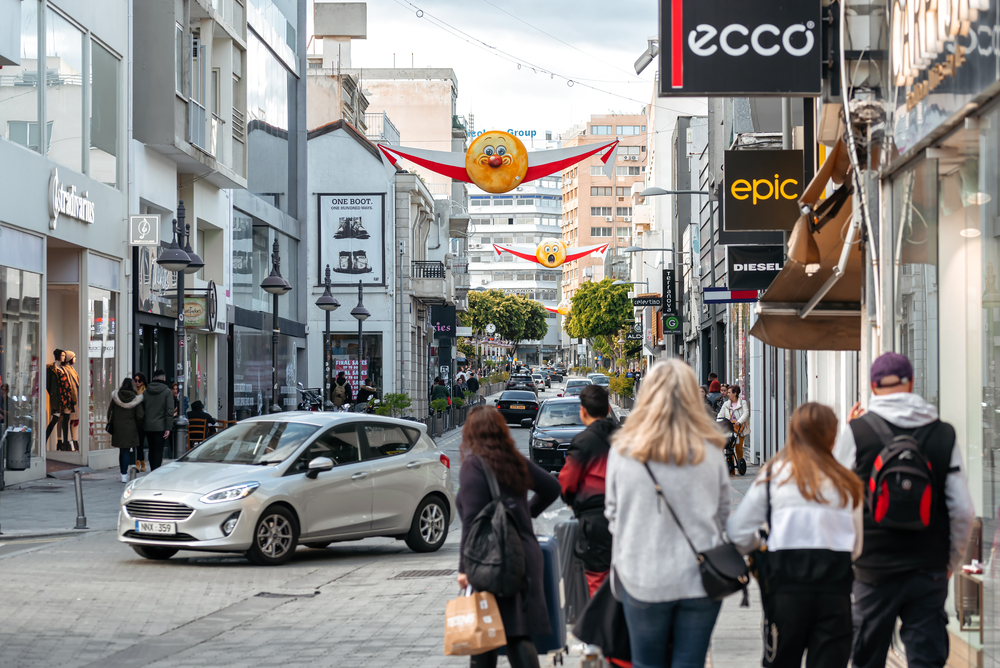
Limassol Municipality has advanced a formal plan for the urban redevelopment of Anexartisias Street, centred on changes to its physical layout and traffic management. The plan calls for wider pavements, new seating and rest areas, expanded tree planting and shaded zones, and upgraded street lighting. It also includes measures to reduce through traffic, with the introduction of a one-way traffic configuration on a pilot basis from the end of 2025, to be tested in each direction before finalisation. The municipality has launched consultancy tenders through the national eProcurement system for the technical studies and design work needed to mature the project, while separate approvals cover traffic pattern changes and preparatory engineering work.
Public space and climate policy
In the context of climate adaptation, Limassol is positioning itself within broader European policy frameworks.
In March 2026, the city will host the international Climate Neutral Blue Cities by 2030 conference, organised by Limassol Municipality under the auspices of the Cyprus Presidency of the Council of the European Union. The conference is linked to the EU Mission for Climate-Neutral and Smart Cities and places public space, sustainable mobility, coastal resilience and urban design at the centre of local climate action.
The everyday test
For residents, the success of these plans will be measured less by policy alignment and more by daily experience. Shade, proximity, accessibility and maintenance remain decisive factors in whether parks and corridors become part of everyday life or remain underused.
In a city shaped by heat, density and rapid development, public parks function as shared ground in the most literal sense. Their distribution, design and upkeep increasingly determine how inclusive and resilient Limassol’s urban future will be.