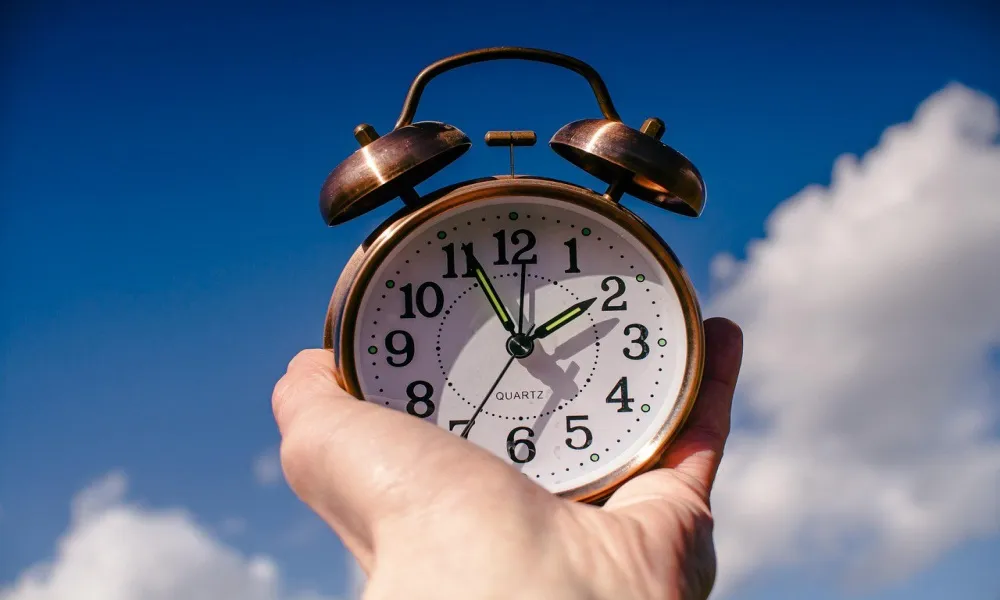

Cyprus will proceed with the seasonal clock change in 2026, as the existing European Union framework on summer and winter time remains in force. Despite discussions in recent years at EU level regarding a possible abolition of the measure, no relevant decision has been adopted.
As a result, the transition from winter to summer time and back will be applied again during the coming year.
Date of transition to summer time
The first change will take place on Sunday, 29 March 2026. At 03:00, clocks will move forward by one hour to 04:00, marking the start of summer time.
The return to winter time will occur on Sunday, 25 October 2026. At 04:00, clocks will move back by one hour to 03:00, reverting to standard time.
Impact on devices and manual adjustments
During the spring transition, one hour of sleep is effectively lost, as the clock moves directly from 03:00 to 04:00. In October, one hour is gained when the time shifts from 04:00 back to 03:00.
Most mobile phones, computers, tablets and smart watches adjust automatically, provided the time zone is correctly set and the device is connected to the internet. However, analogue clocks, wall clocks, alarm clocks, ovens and vehicle clocks require manual adjustment.
European Union framework for seasonal time changes
The time change is applied uniformly across the European Union, with all Member States moving to summer time on the last Sunday of March and returning to winter time on the last Sunday of October.
The objective of this common arrangement is to ensure synchronisation in transport, markets, services and broader economic activity, maintaining a unified time framework across the European Union.
Effects on sleep patterns
The change in time affects sleep patterns and may cause sensations similar to jet lag, fatigue and drowsiness. In autumn, one additional hour of sleep is gained, while in spring one hour is lost.
The human body typically requires approximately five days to two weeks to fully adjust, with gradual adaptation to sleep schedules and daily routines.