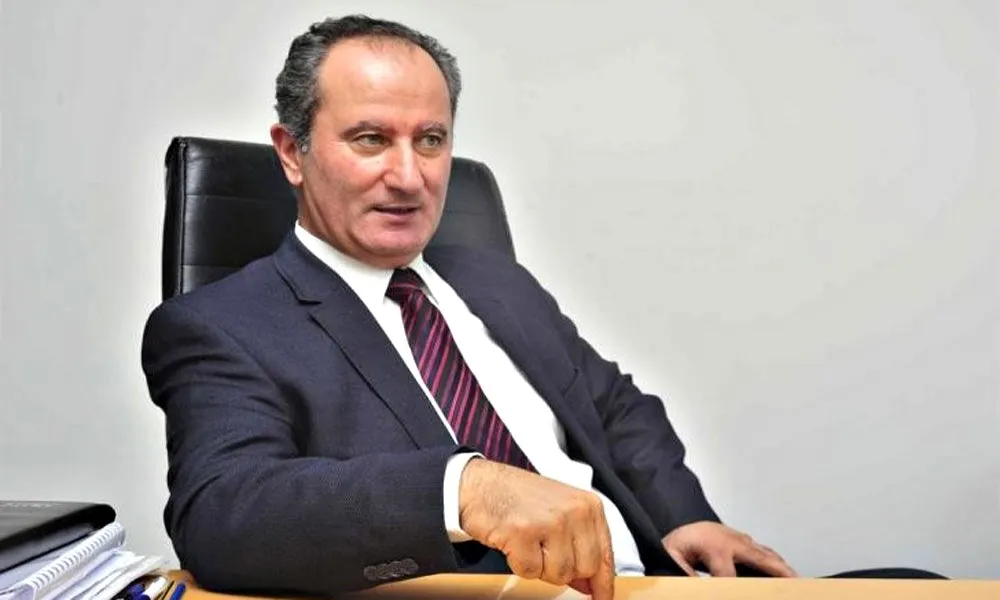
Culling infected livestock is essential to contain the spread of the virus, Dr Stavros Malas said, warning that failure to act decisively would allow it to spread rapidly across farms.
Speaking on the “Proini Epitheorisi” programme on Politis radio, Malas, who chairs the Cyprus Institute and heads the scientific committee on livestock restructuring, said the practice has long been standard across the European Union due to the virus’s high transmissibility and ability to mutate.
He explained that once a single animal in a unit is infected, cases can multiply within a day and quickly spread throughout the facility. The objective of culling, he said, is to limit that multiplication and prevent wider transmission. He added that misinformation surrounding the measure has misled parts of the public.
Turning to how the outbreak unfolded, Malas said five distinct clusters have been identified across 105 livestock units, with authorities having a clear understanding of the transmission pathways. He linked the outbreak in Oroklini to the illegal movement of infected animals before 19 February, stressing that it is not connected to areas such as Dromolaxia or Dali. Cases in western Nicosia remain under investigation, though he ruled out airborne transmission.
He further indicated that the virus entered from the north through human activity, saying it was knowingly transported illegally.
Cross-species transmission is also raising concern. A new case has been detected in a sheep and goat unit in Paliometocho, the first in the area, following earlier infections in three nearby pig farms. This, he said, shows the virus is spreading within the same geographical zone and between different animal species.
According to the latest data, 104 livestock units have been affected overall.
Despite the extent of the outbreak, Malas struck a cautiously optimistic tone, noting that vaccination efforts appear to be starting to yield results, particularly in areas such as Athienou where they were implemented early. He cautioned, however, that managing the virus will be a long-term process and that society will need to adapt to living with it as conditions gradually improve.