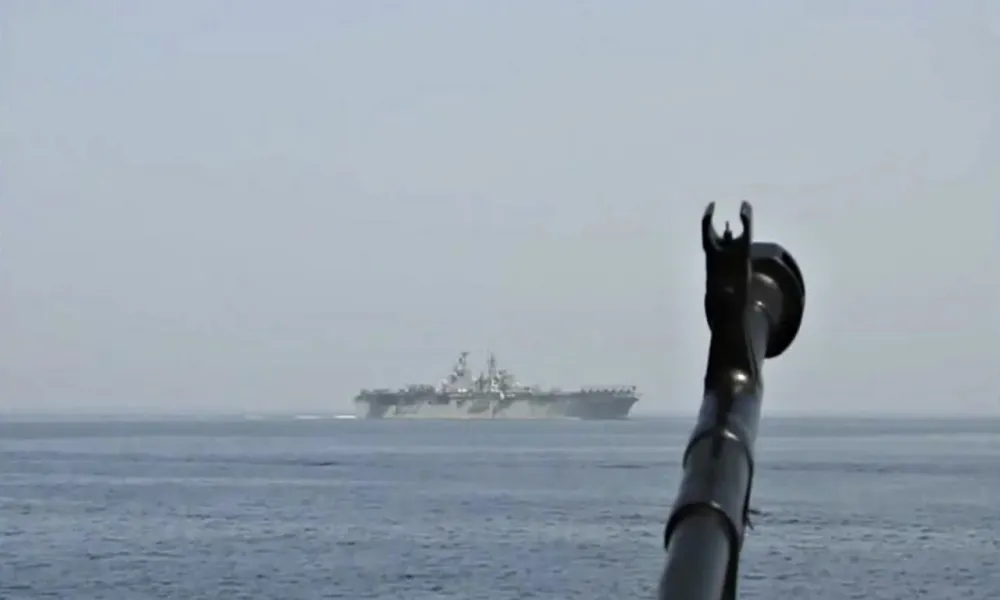
The International Maritime Organization (IMO) has strongly condemned threats and attacks attributed to Iran against commercial vessels, as well as its purported attempts to close the Strait of Hormuz, in a decision welcomed by the United Arab Emirates.
During its 36th extraordinary session, the IMO Council said such actions run counter to the organisation’s principles, pose a grave danger to life at sea - particularly to seafarers - and present a serious risk to the marine environment. The Council also condemned attacks against Gulf Cooperation Council (GCC) states and Jordan, describing them as a breach of international law.
Calls to cease any dangerous actions
The declaration, tabled by the UAE and co-sponsored by more than 115 IMO member states, marks the highest number of co-sponsors in the organisation’s history. It underscores the scale of international concern and a shared commitment to safeguarding freedom of navigation through the Strait of Hormuz.
In its decision, the Council called on Iran to immediately cease any actions or threats aimed at obstructing international navigation or targeting merchant vessels in and around the strategic waterway. It reaffirmed that the navigational rights and freedoms of commercial shipping must be respected at all times.
The Council further highlighted the importance of ensuring the safety and welfare of seafarers. It also referenced UN Security Council Resolution 2817 (2026), which states that any attempt to impede lawful transit or freedom of navigation through international waterways constitutes a serious threat to global peace and security.
Unified international stance
The declaration urges IMO committees to assess the implications of the situation and consider appropriate measures to uphold international maritime standards. It also welcomed the adoption of a proposal by Japan to explore the creation of a maritime security corridor aimed at facilitating the safe evacuation of seafarers from the Strait.
Mohamed Khamis Saeed AlKaabi, the UAE’s Permanent Representative to the IMO, said the decision reflected a unified international stance. He noted that the Council had “spoken in clear terms” in calling on Iran to meet its obligations under international law and ensure safe and open passage through what he described as a vital global waterway.
'Undermining regional stability'
The UAE emphasised the strategic importance of the Strait of Hormuz, through which a significant proportion of the world’s oil and gas supplies pass, alongside other goods such as fertilisers, minerals and petrochemicals. Any disruption, it warned, could have far-reaching consequences for global markets, economic stability and the cost of living, particularly in vulnerable regions.
Reiterating its position, the UAE said any attempt to use the Strait as a tool of economic coercion or to threaten international shipping is unacceptable and risks undermining both regional stability and the wider global economic order.
The UAE added that it remains committed to engaging in multilateral efforts to address the impact of what it described as Iran’s unlawful actions, warning that threats to maritime security and freedom of navigation pose serious risks to both regional and international stability.