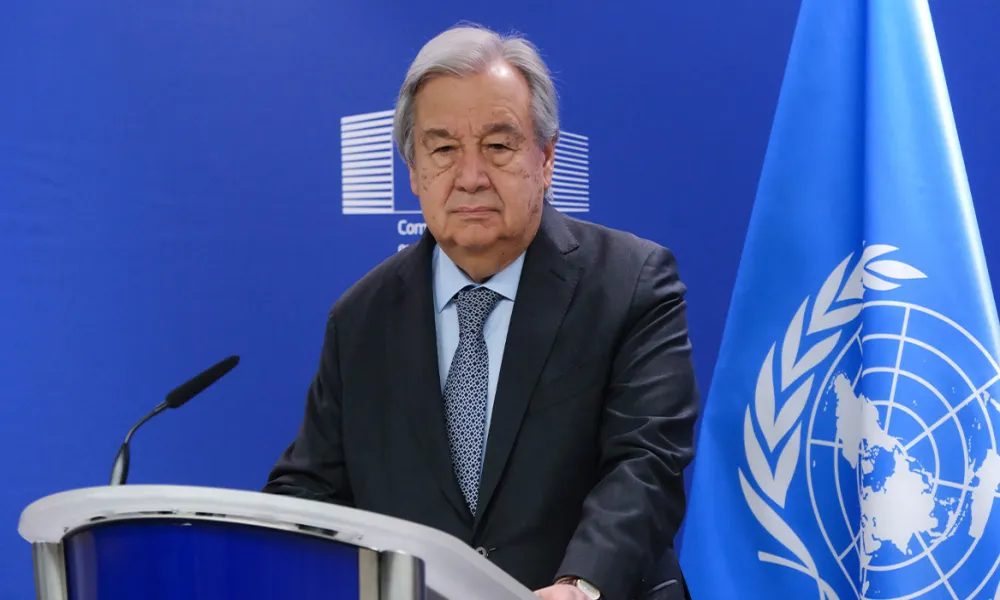
Leaders of the European Union members states held a working lunch with António Guterres, Secretary-General of the United Nations, to discuss the state of multilateralism and the evolving international landscape on Thursday.
According to an EU official who briefed the press, Mr Guterres thanked EU leaders for the bloc’s strong support for multilateralism and international law, as well as for its close cooperation with the United Nations.
War will 'spiral out of control'
The UN chief stressed that the EU has a key role to play in shaping a multipolar world by strengthening cooperation and trade with like-minded partners, while reinforcing a rules-based international order. The meeting also provided an opportunity to discuss ongoing reforms across UN institutions and entities, which the EU supports.
Discussions also focused on recent developments in the Middle East, with particular attention to the worsening situation in Lebanon, Gaza and Iran, and possible ways to improve conditions in the region.
Speaking on arrival at the summit, Guterres delivered a stark message to both the United States and Israel, urging an end to the conflict. He warned that the war risks spiralling out of control, causing immense suffering for civilians and severe repercussions for the global economy, particularly for less developed countries.
Calls to reopen Strait of Hormuz
In a separate message directed at Iran, he called on the country to halt attacks against its neighbours, noting that they were not parties to the conflict.
Guterres added that the United Nations Security Council had condemned the attacks and called for them to cease, while also urging the reopening of the Strait of Hormuz. He warned that any prolonged closure of the vital waterway would inflict widespread hardship on people around the world with no connection to the conflict.
He described EU–UN cooperation as exemplary, praising the bloc’s “fundamental support” for both the United Nations and multilateralism. He also underlined the EU’s central role in advancing a rules-based international order, promoting justice, strengthening climate action, and ensuring greater oversight of technological developments.